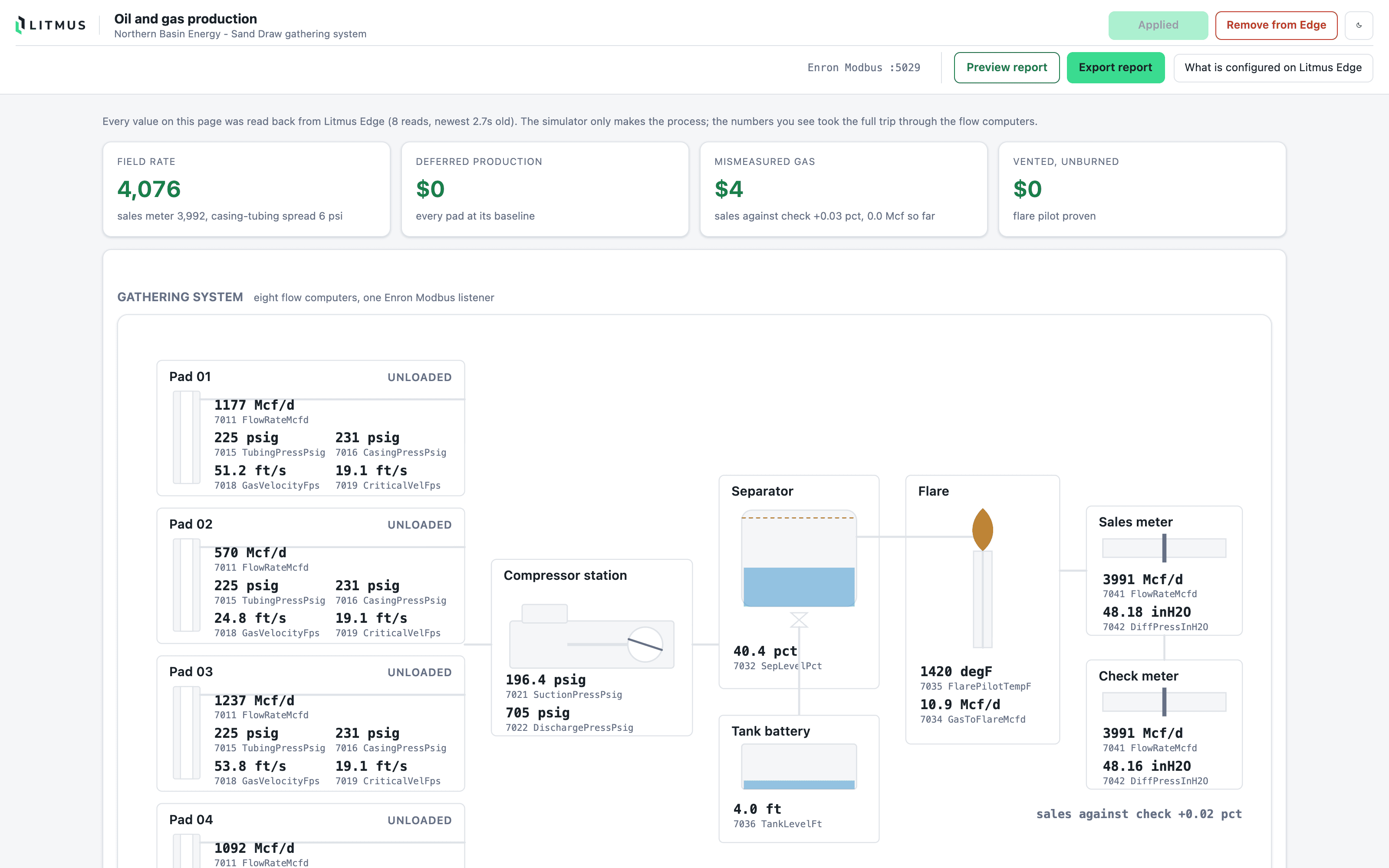
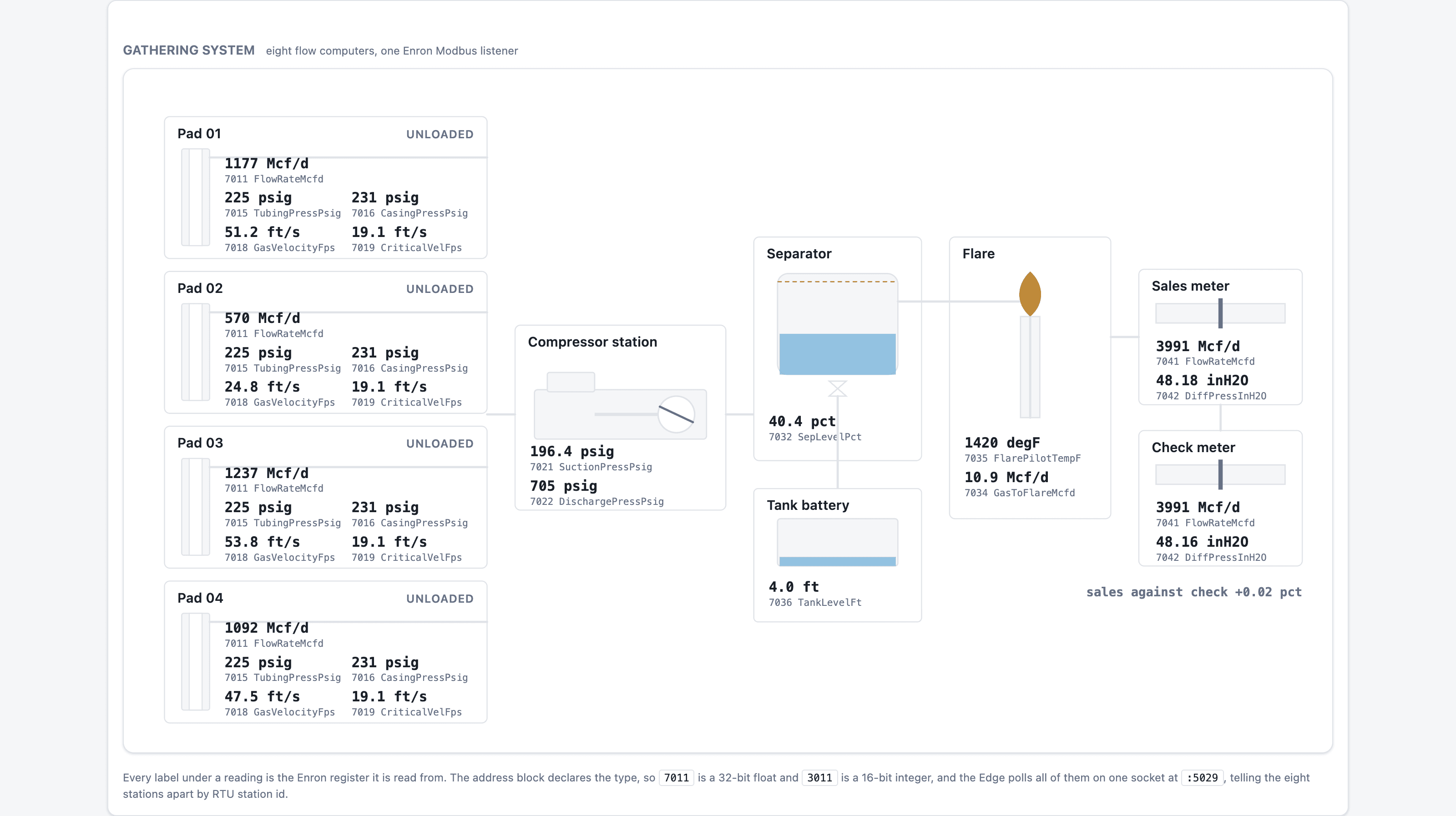
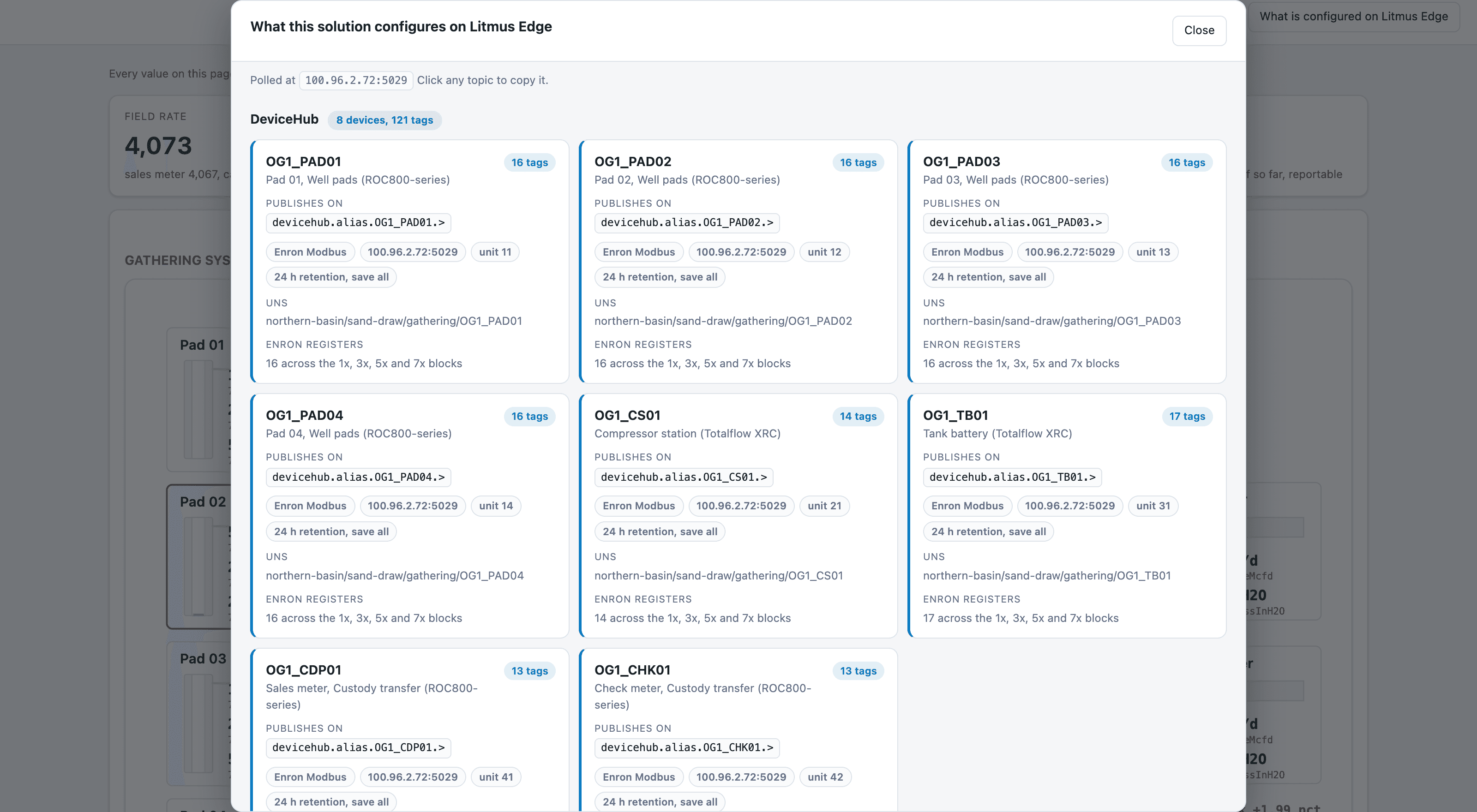
An upstream gas gathering system: four well pads, a compressor station, a tank battery and a custody transfer meter run with its check meter in series. Eight flow computers, 121 registers, over Enron Modbus.
Enron Modbus is what gas flow computers actually speak, so a 32 bit value lives at a single 7000 series address rather than across two registers, which is the detail that decides whether a tag reads at all.
tubing, casing and line pressures per well
orifice differential, static pressure and temperature at each meter
separator levels, compressor station conditions and flare status
What it configures on Litmus Edge
On startup, and it removes exactly what it created when you are finished:
8 DeviceHub devices on the Enron Modbus driver, 121 registers
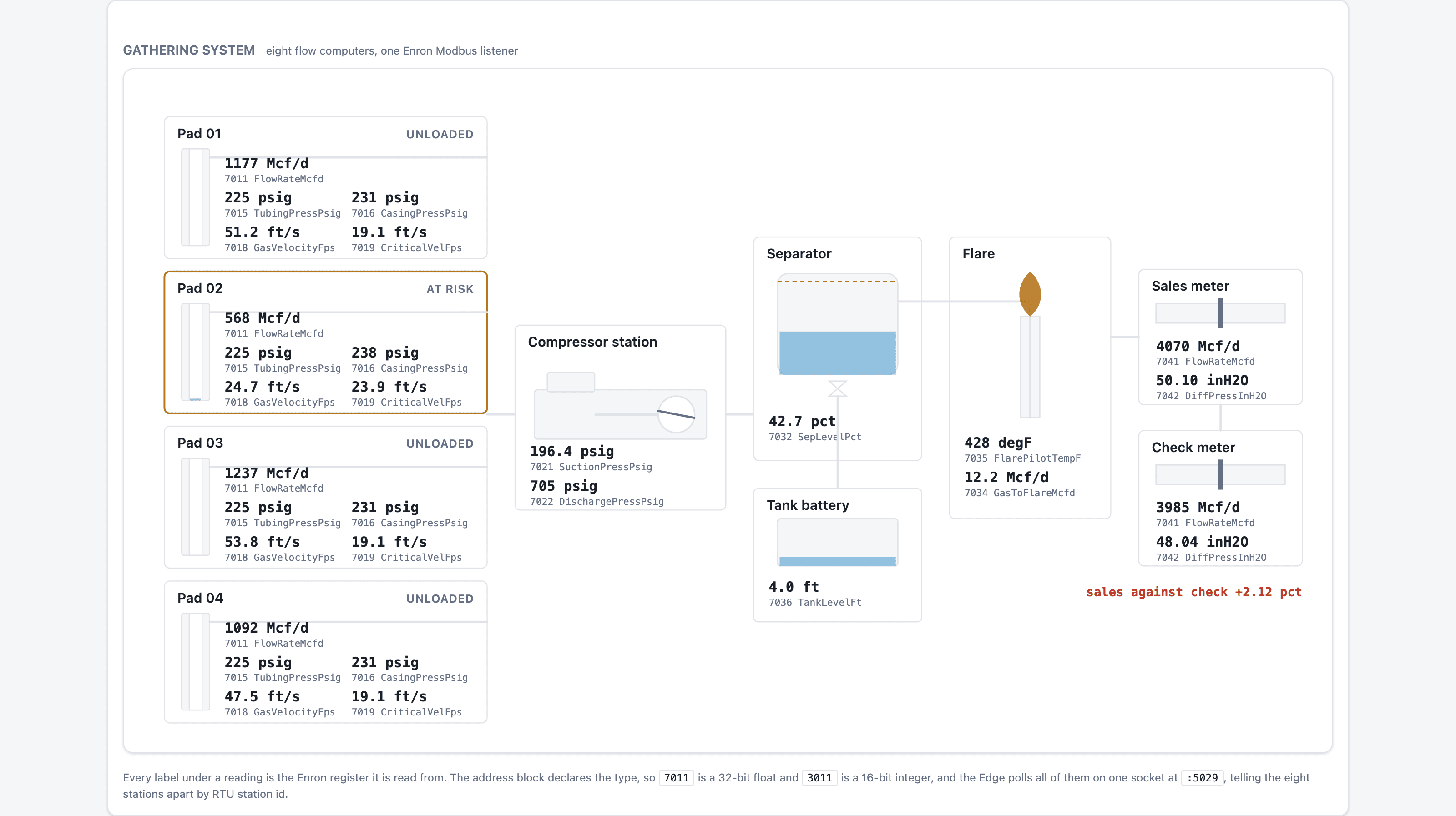
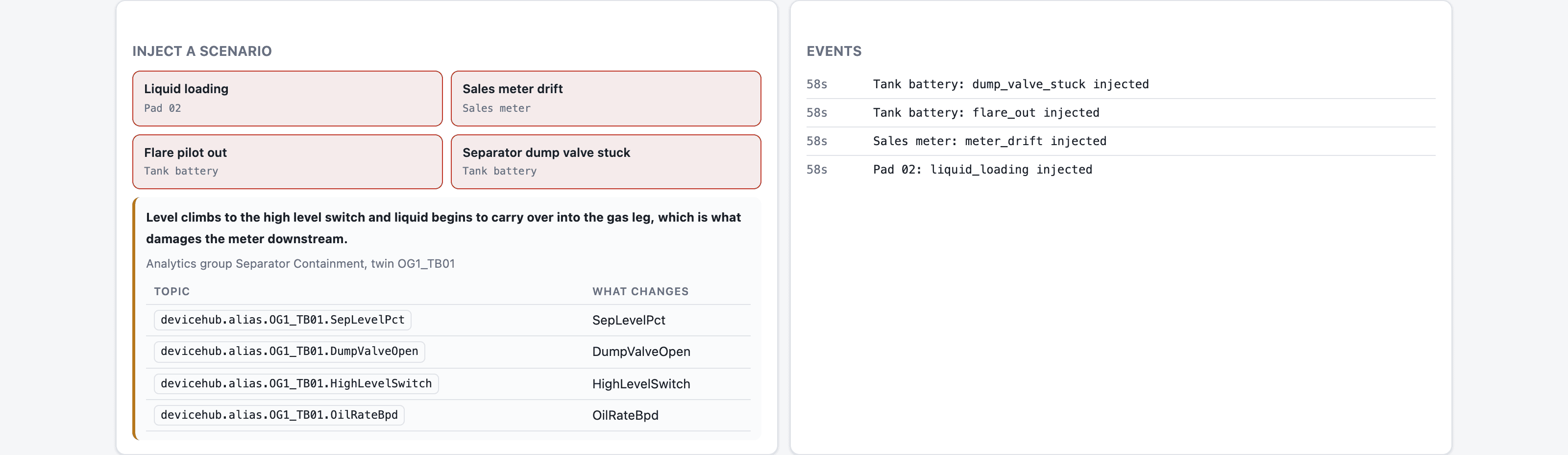
A well loading up with liquid falls below the velocity it needs to lift its own produced water, and the column that forms raises bottomhole pressure until the rate collapses on its own
A sales meter losing its zero drifts the measured volume without alarming, and only the check meter in series says so
A flare pilot going out or a separator dump valve sticking shut turns an unlit stack or a rising level into something visible before it is a release
Stay in the loop! Get notified when we publish new solutions.