LITMUS + Databricks INTEGRATION

AI-Ready Industrial Data from Edge to Lakehouse

Connect industrial assets, structure OT data at the edge, and deliver trusted data into Delta Lake, Unity Catalog, and Databricks AI workflows.

Databricks Hero

Trusted by manufacturers scaling industrial data and AI


  • Philips Logo
  • JLR Logo New
  • SLB Logo New
  • Pfeifer and Langen Logo New
  • Parker Logo New
  • NatureFresh Logo New
  • Microsoft Logo Cloud New
  • Google Logo Cloud New
  • AWS Logo Cloud New
  • Databricks Logo Cloud
  • Oracle Logo Cloud New
  • Dell Logo Cloud New

How Litmus integrates with Databricks

Databricks powers analytics, machine learning, and GenAI but only when data is structured and governed. Litmus prepares plant-floor data at the edge and delivers it into the Lakehouse with consistent schemas, context, and quality.

Databricks Diagram

What you get with Litmus + Databricks

Everything you need to turn plant floor data into trusted, Databricks-ready data for operational intelligence.

Connect industrial assets for Lakehouse-ready data

Connect plant-floor systems and prepare operational data for Databricks analytics, AI, and manufacturing intelligence.
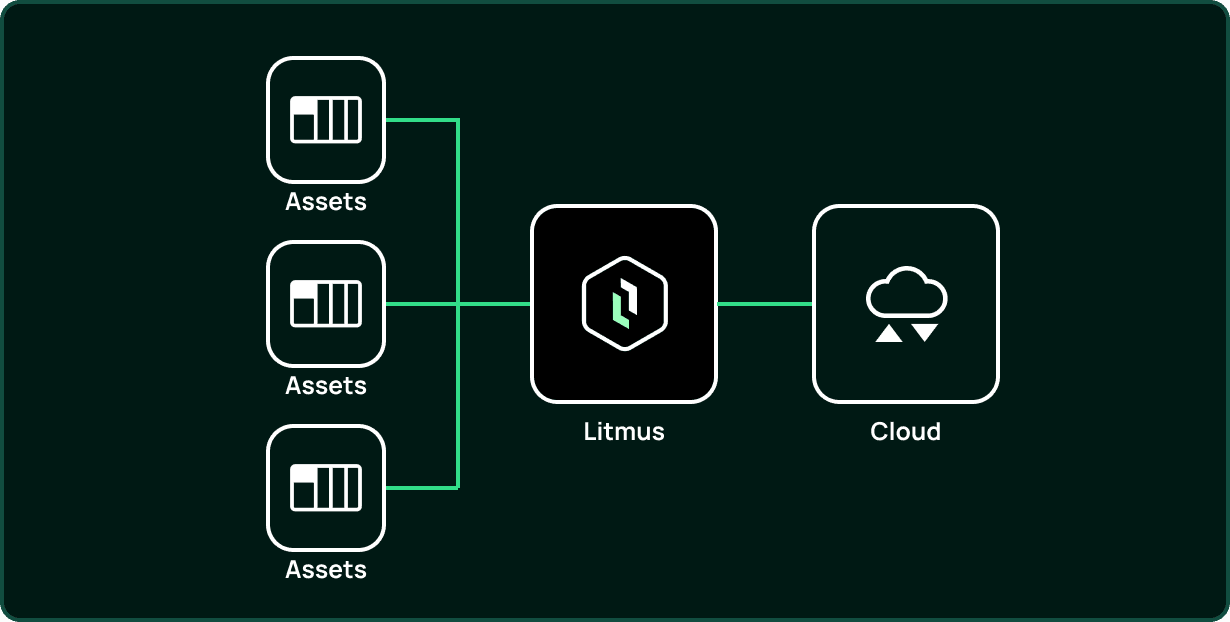
  • Connect PLCs, SCADA, historians, sensors, CNCs, MES, and production systems
  • Use 250+ native drivers to reduce custom integration
  • Consistent data foundation for Databricks Lakehouse and AI
Databricks Image 1

Clean, contextualized data at the edge

Turn raw machine signals into structured operational data before sending it to Databricks.
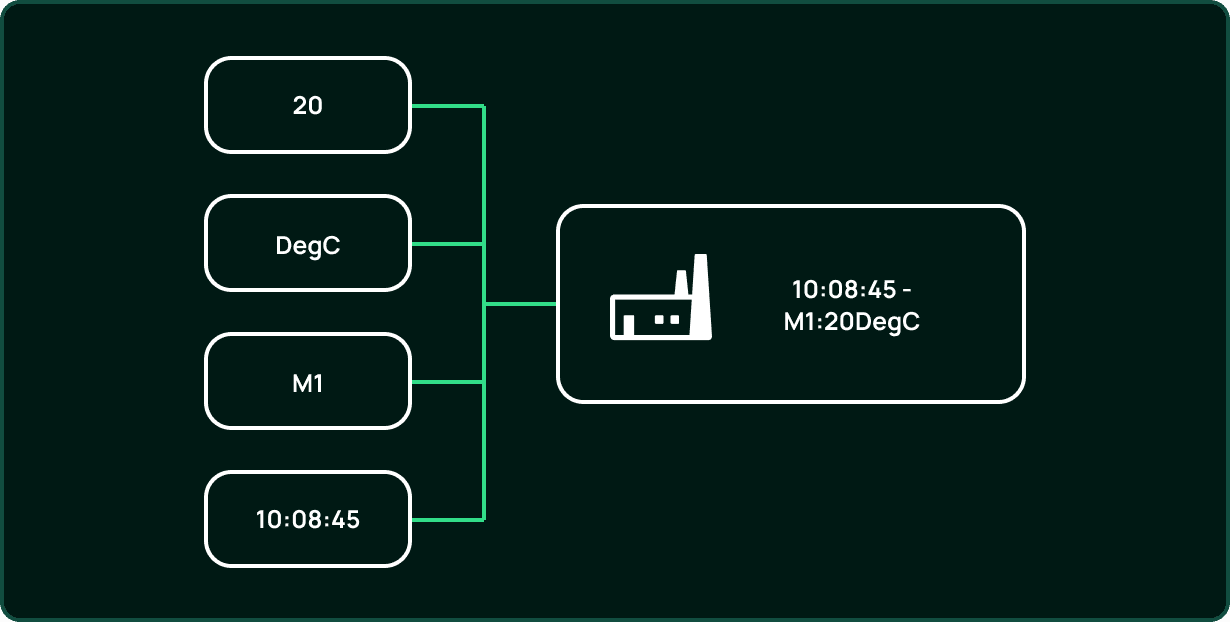
  • Normalize tags, units, timestamps, and data types
  • Add asset, line, machine, work center, and process context
  • Prepare high-fidelity data for Delta Lake, Unity Catalog, and AI workflows
Databricks Image 2

Databricks Zerobus ingest from Litmus Edge

Publish industrial data directly fromo Litmus Edge into Databricks Unity Catalog Delta Tables using Zerobus ingest.
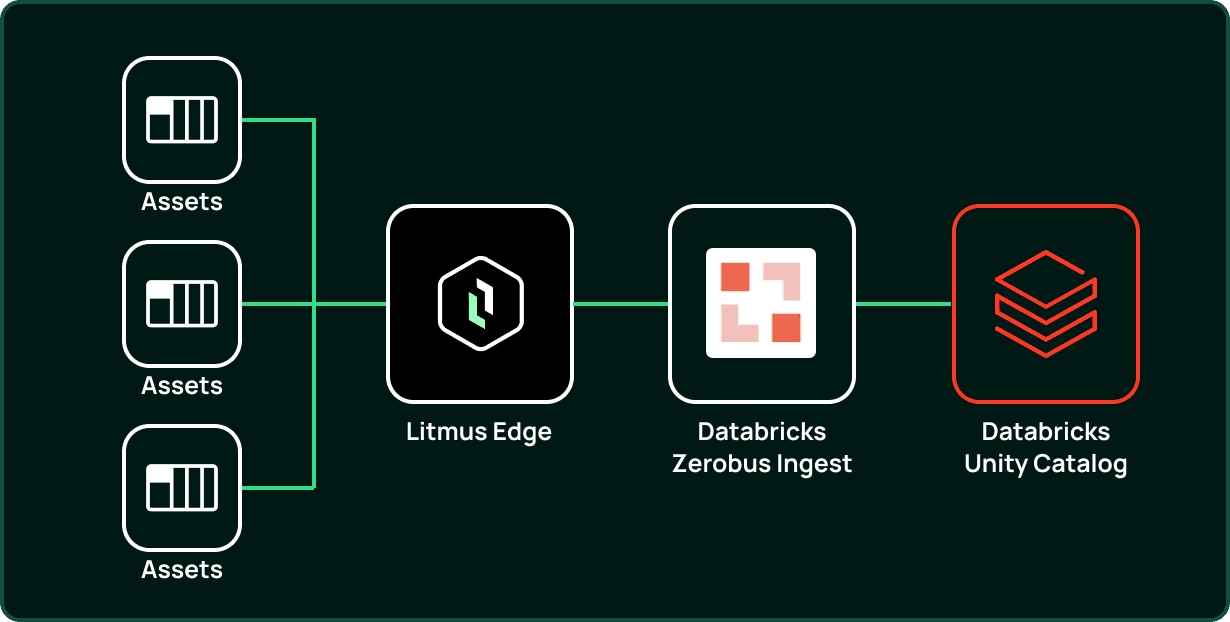
  • Publish industrial data directly into Delta Tables
  • Support JSON payloads from DeviceHub and analytics
  • Use governed ingestion with service principals, catalogs, and schemas
Databricks Image 3

Litmus Edge Bridge for Databricks Lakehouse

Move industrial data into Databricks with a scalable edge-to-Lakehouse integration pattern.
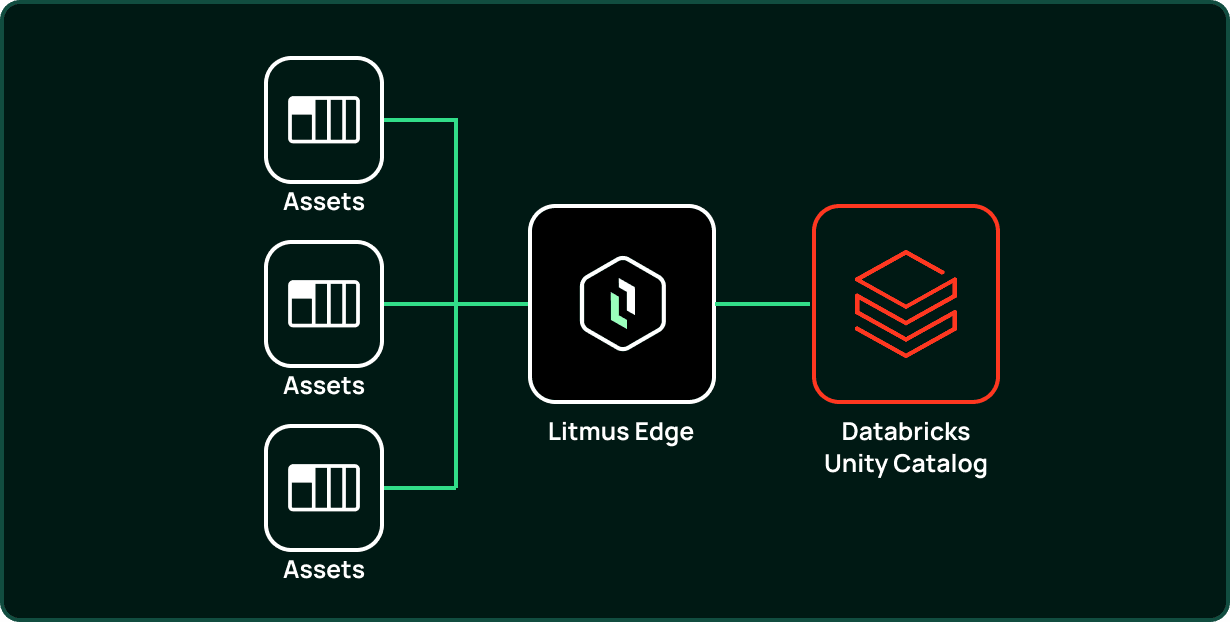
  • Deliver real-time and historical OT data into Databricks
  • Reduce reliance on middleware, brokers, and duplicate storage layers
  • Scale pipelines across sites and global operations
Databricks Image 4

Streaming and batch data pipelines

Support both real-time manufacturing use cases and deeper historical analysis in Databricks.
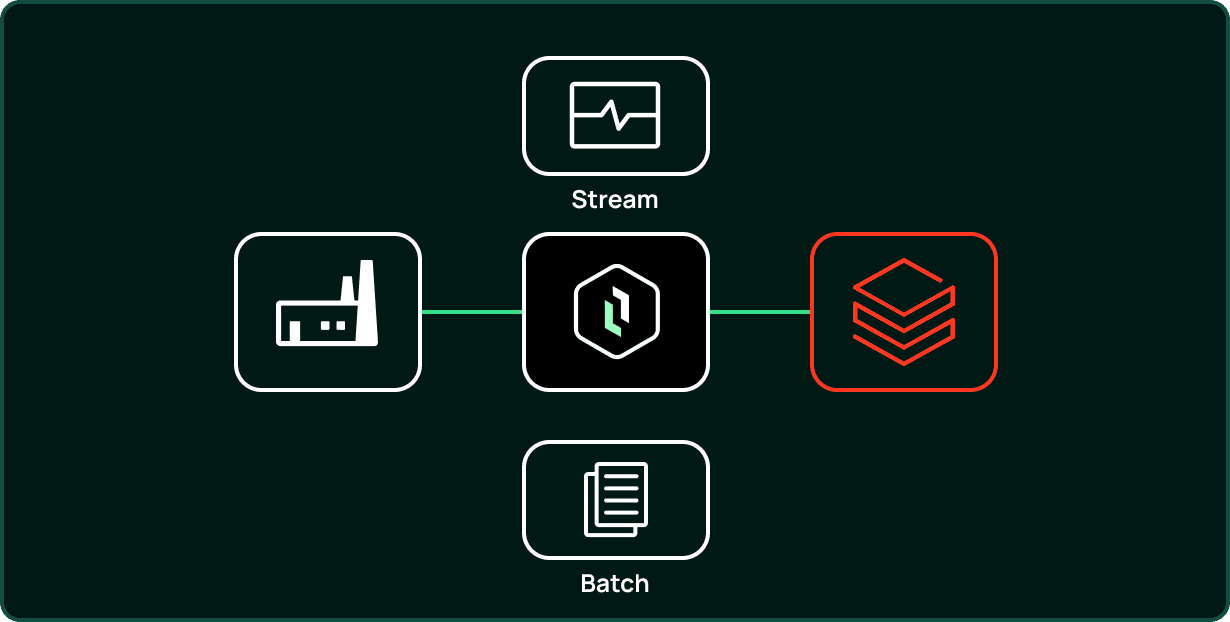
  • Stream high-frequency OT data for near real-time insights
  • Send historical datasets for model training, trend analysis, and benchmarking
  • Organize data using Bronze, Silver, and Gold medallion layers
Databricks Image 5

Edge intelligence and closed-loop AI

Run processing close to machines and support feedback loops between Databricks and the plant floor.
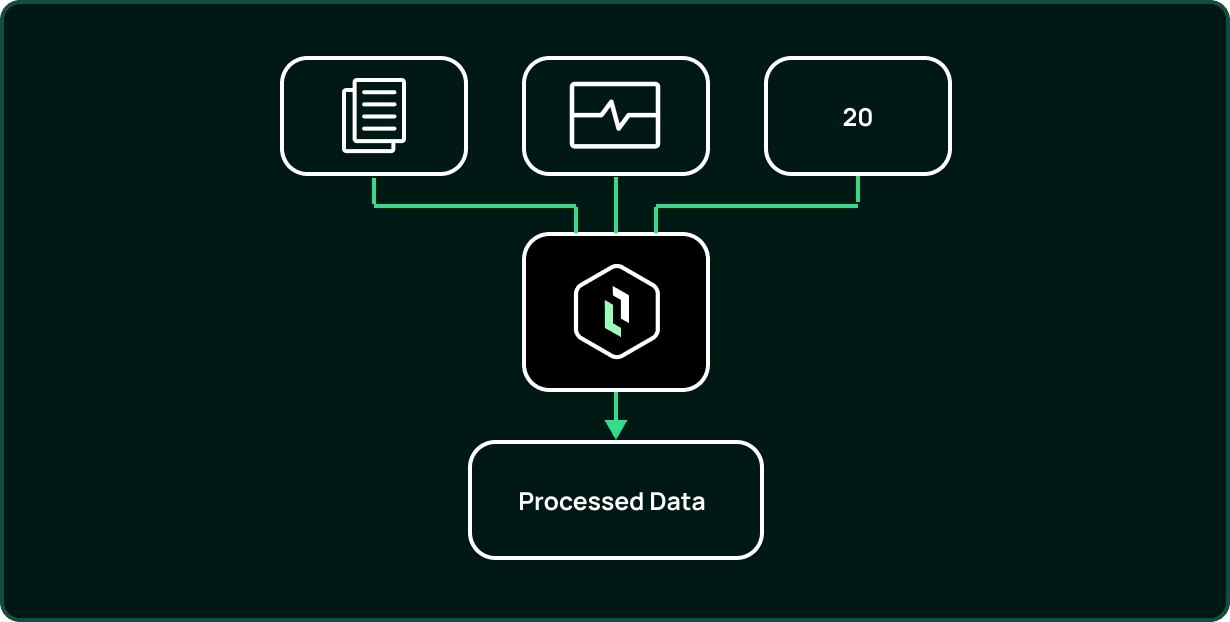
  • Filter, enrich, and transform data at the edge
  • Run KPIs, alerts, thresholds, and event logic locally
  • Train and improve models in Databricks and deploy decisions back to the edge
Databricks Image 6

Secure OT-to-Databricks data movement

Control how industrial data moves into Databricks, making trusted data accessible for enterprise analytics and AI.
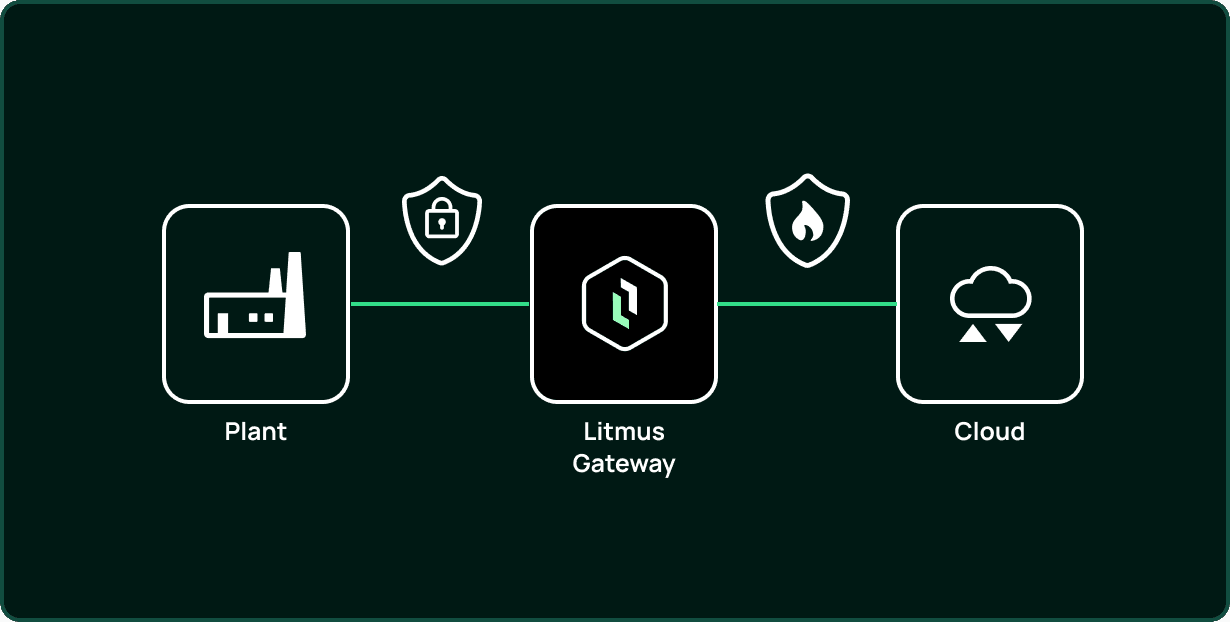
  • Role-based access control
  • Encryption in transit and at rest
  • Govern how data flows into Databricks and is consumed
Databricks Image 7

Manufacturing use cases

Databricks Icon 1

Predictive maintenance

Use real-time and historical data to train and run Databricks ML models.

Databricks Icon 2

Quality optimization

Combine machine and process data to identify risks and improve yield.

Databricks Icon 3

OEE and production performance

Standardize production data for Databricks SQL dashboards and analytics.

Databricks Icon 4

Process optimization

Analyze high-frequency OT data to improve throughput and reduce bottlenecks.

Databricks Icon 5

Energy optimization

Track energy usage and efficiency using contextualized data in Databricks.

Databricks Icon 6

Digital twins and operational models

Publish structured data to support simulations and factory intelligence.

Databricks Icon 7

Smart manufacturing data foundation

Create a repeatable edge-to-Lakehouse architecture across plants.

CTA gradient main section