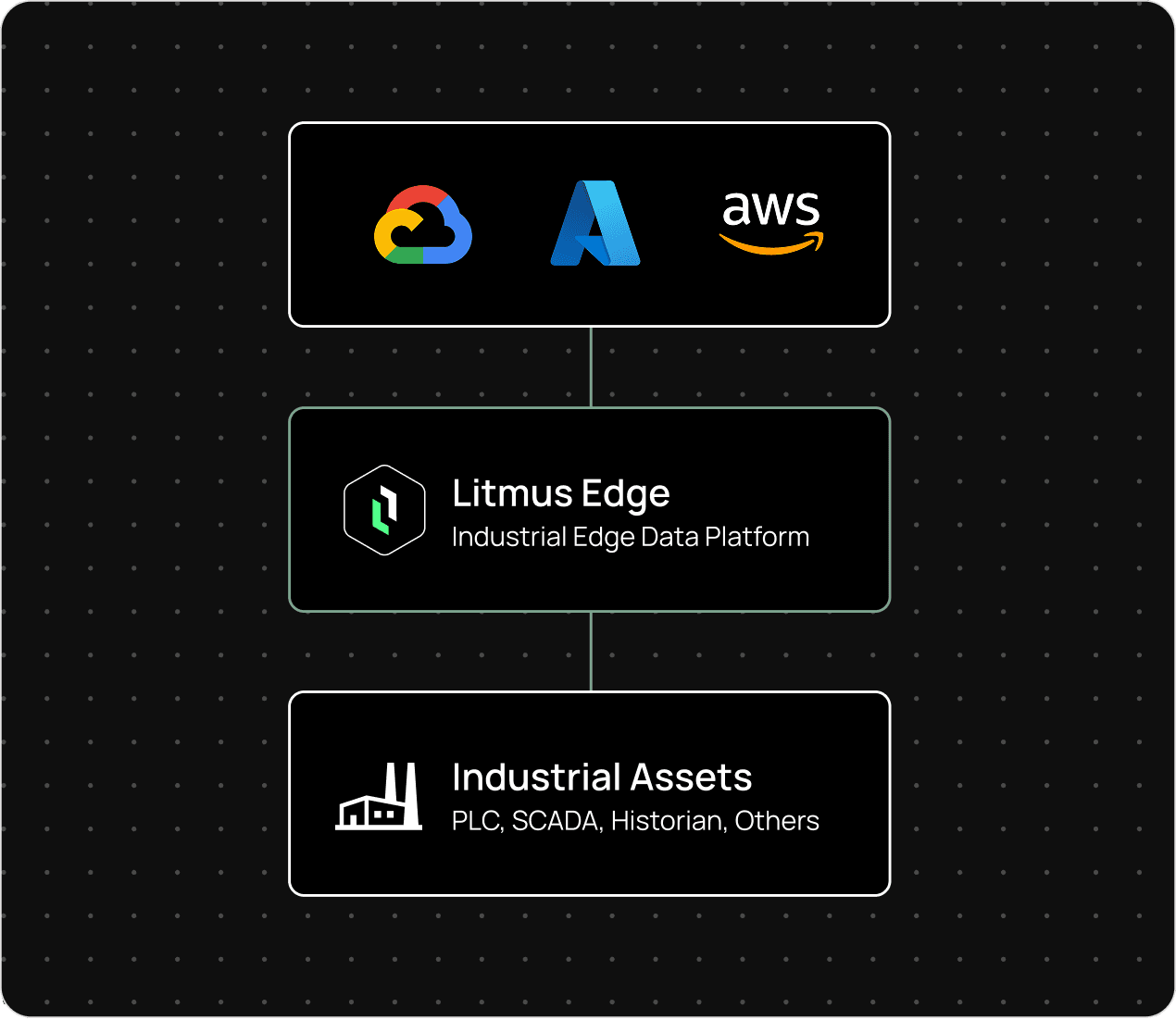









Industrial environments span machines, control systems, historians, sensors, and applications that produce data in different formats and at different speeds. Without a unified connectivity layer, onboarding slows, data is inconsistent from the start, and downstream systems inherit fragmentation.
Data connectivity establishes a direct path from raw asset communication to structured, operational data—creating the foundation for standardization, governance, and Industrial AI.
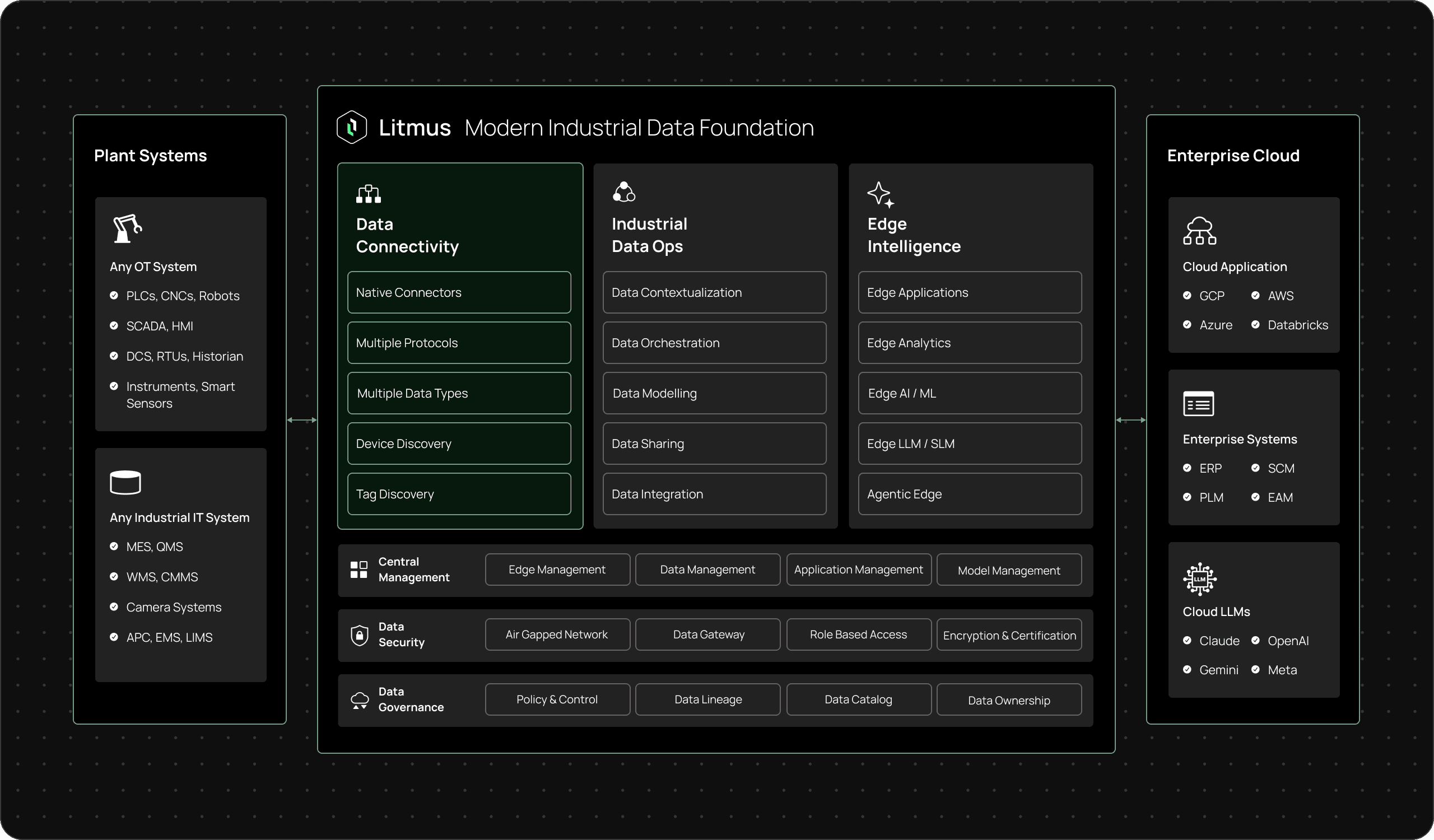
Data connectivity is the first layer of the industrial data foundation. It determines how quickly assets can be onboarded, how consistently data is structured, and how reliably it can scale across plants. By establishing a direct path from raw asset communication to normalized operational data, this layer enables downstream standardization, governance, and Industrial AI.
This is where industrial data becomes usable—before it is modeled, governed, and scaled across the enterprise.
standardized industrial data architecture

optimized packing and volume tracking

Real-time equipment monitoring across sites
Real-time monitoring and corrective action
Connect industrial assets, ingest operational data, and standardize it at the source so downstream systems receive consistent, usable data.
Native Connectors
Connect directly to industrial devices using a high-performance library of native drivers—reducing custom integration work and accelerating time-to-first-data.
What this enables:
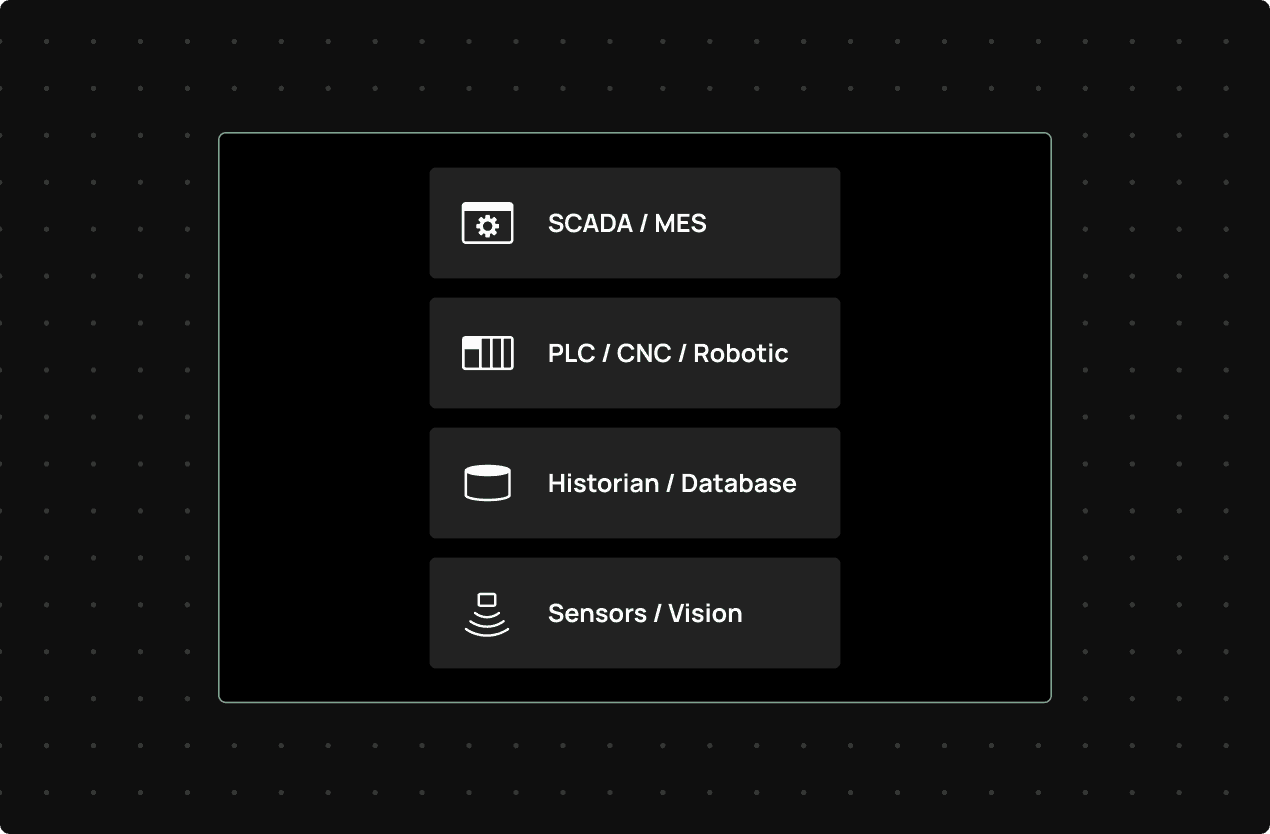
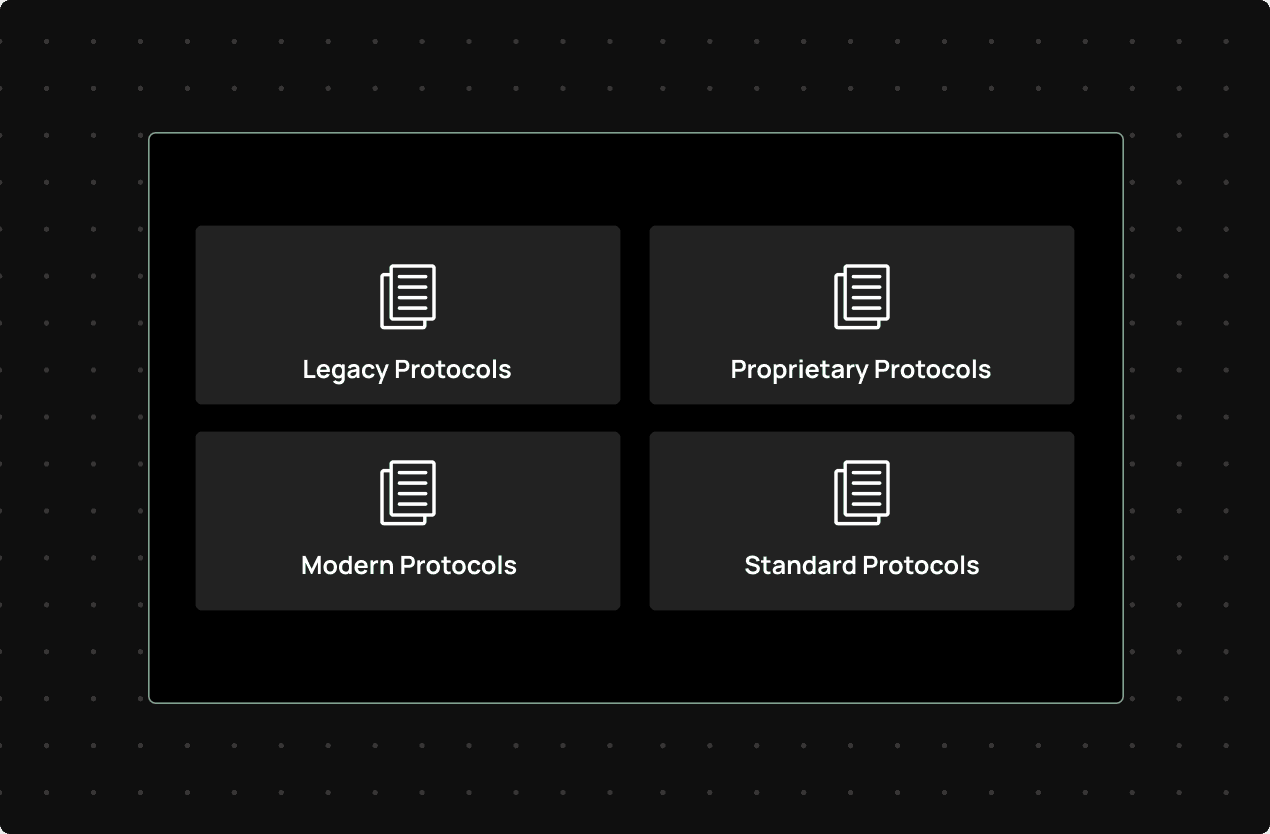
Multiple Protocols
Industrial environments require different ingestion methods depending on network load, polling behavior, and reliability requirements. Litmus supports multiple communication approaches to balance responsiveness, throughput, and scale.
What this enables:
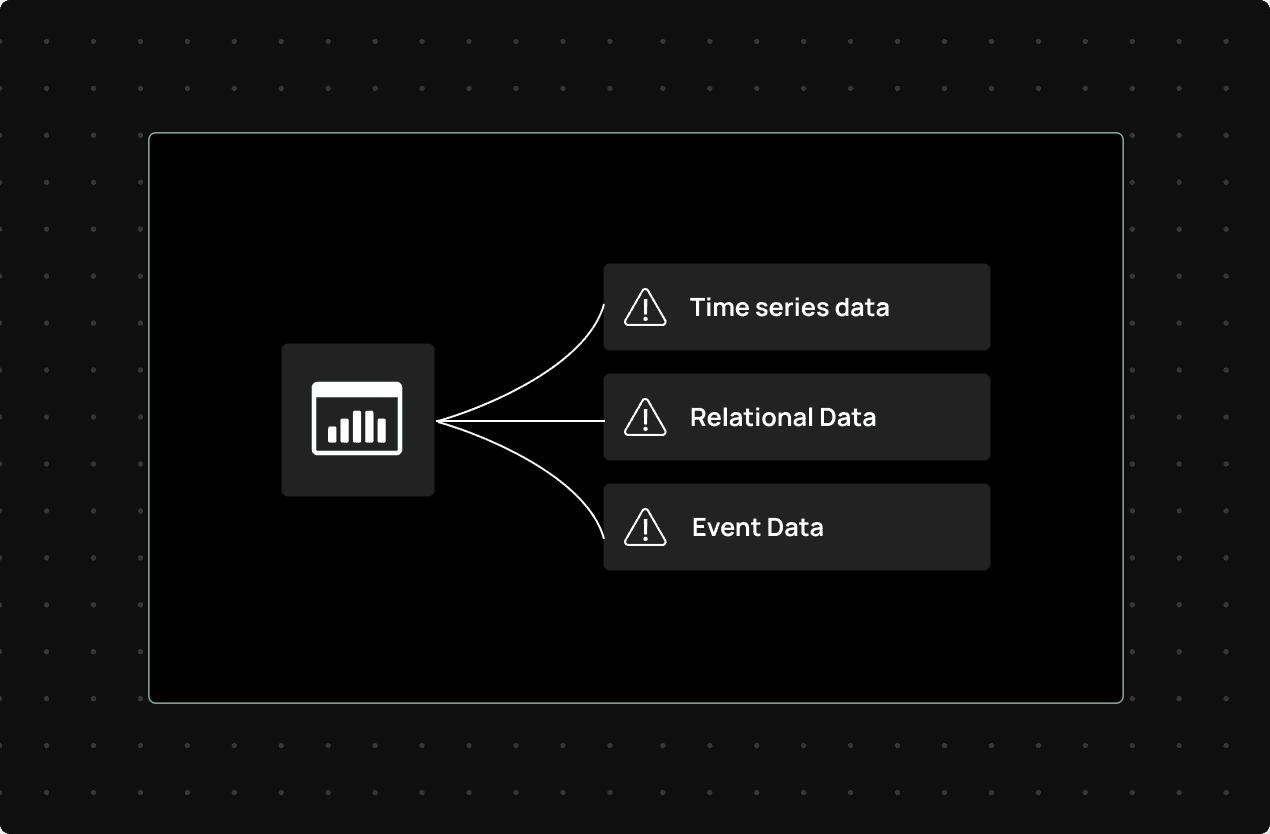
Multiple Data Types
Industrial operations rely on more than telemetry. Litmus ingests time-series data, events, alarms, batches, and structured records into a consistent operational model.
What this enables:
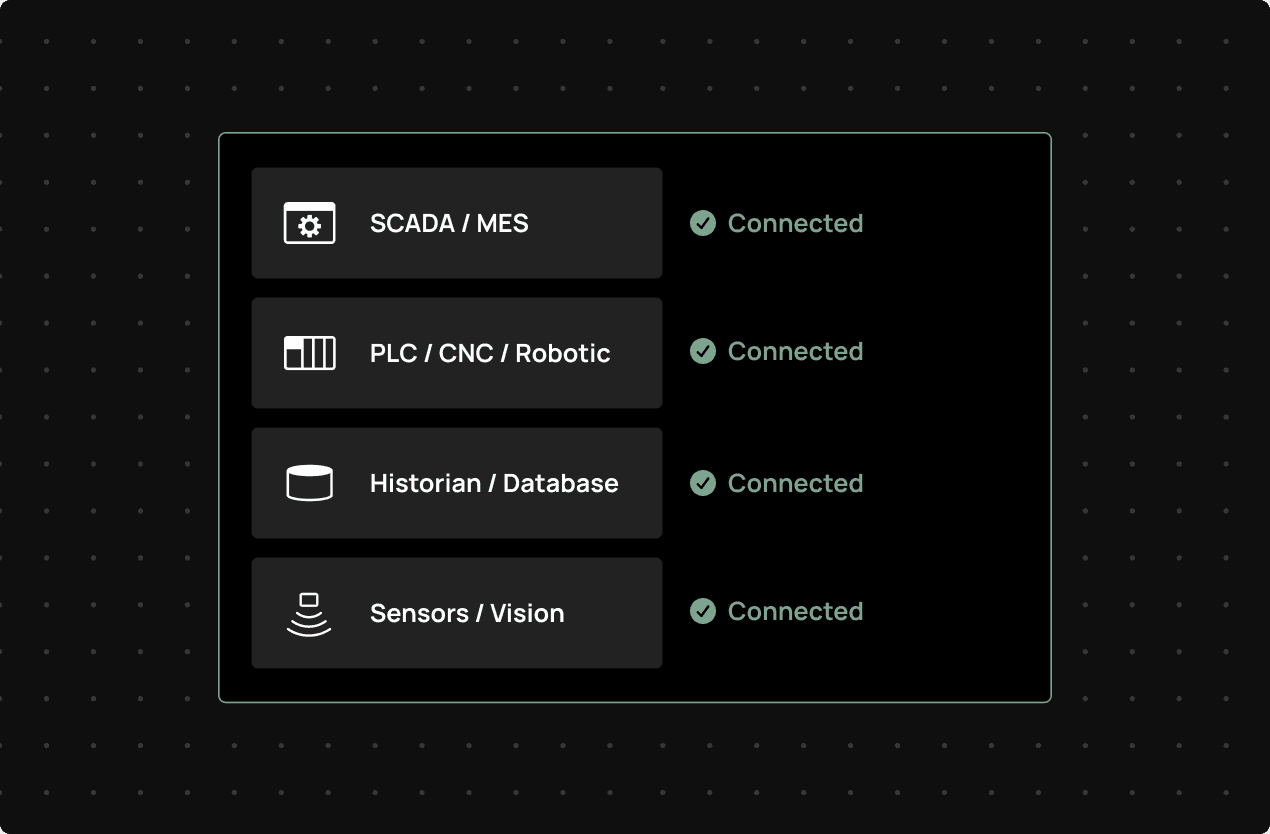
DEVICE DISCOVERY
Manual asset inventory slows deployment and creates visibility gaps. Automatically identify assets on the network and surface key connection details to accelerate deployment and improve visibility.
What this enables:
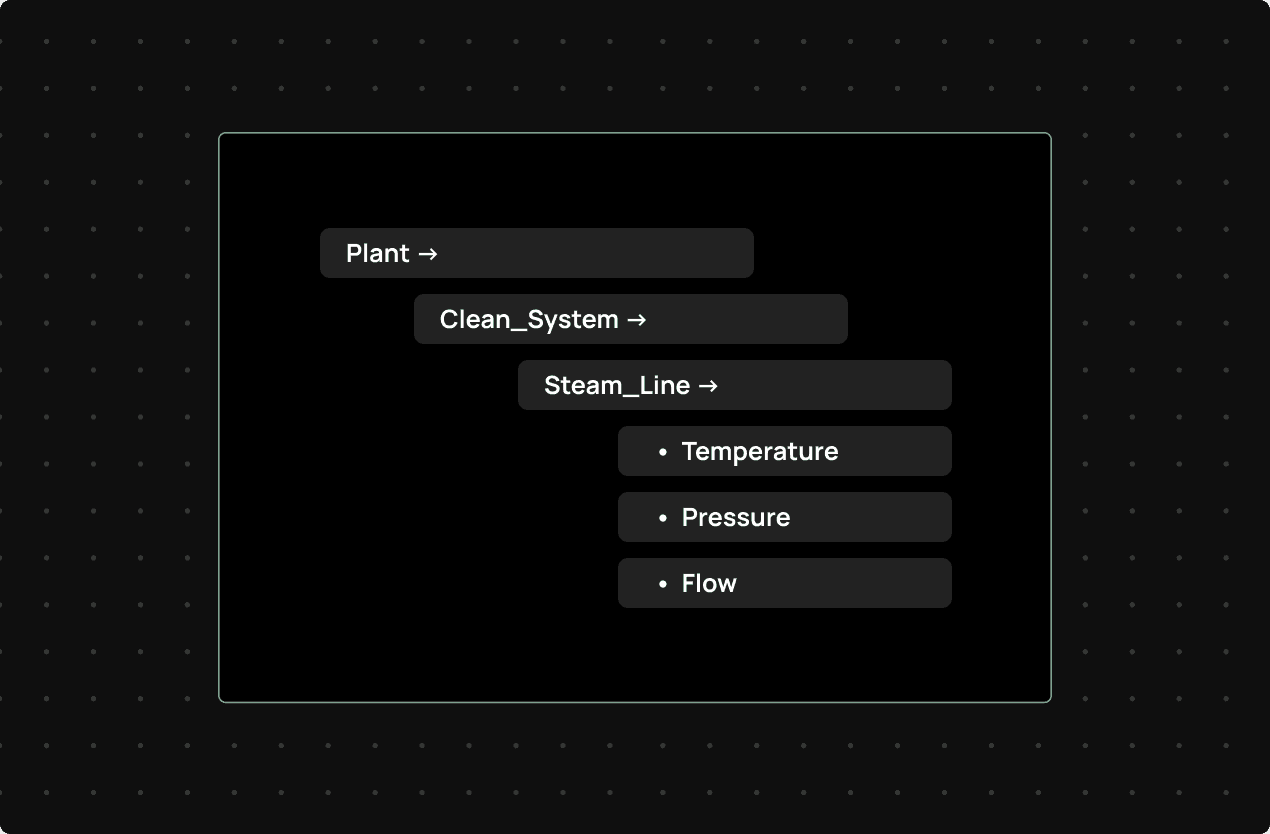
TAG DISCOVERY
Browse, search, and organize signals at scale to eliminate manual tag configuration bottlenecks.
What this enables:
Faster time-to-value from machine to usable data

More assets connected without increasing engineering overhead

Consistent data before it reaches analytics or enterprise systems

Scalable deployments across plants and environments

A stronger foundation for DataOps, governance, and Industrial AI

Quick answers to your industrial data questions.