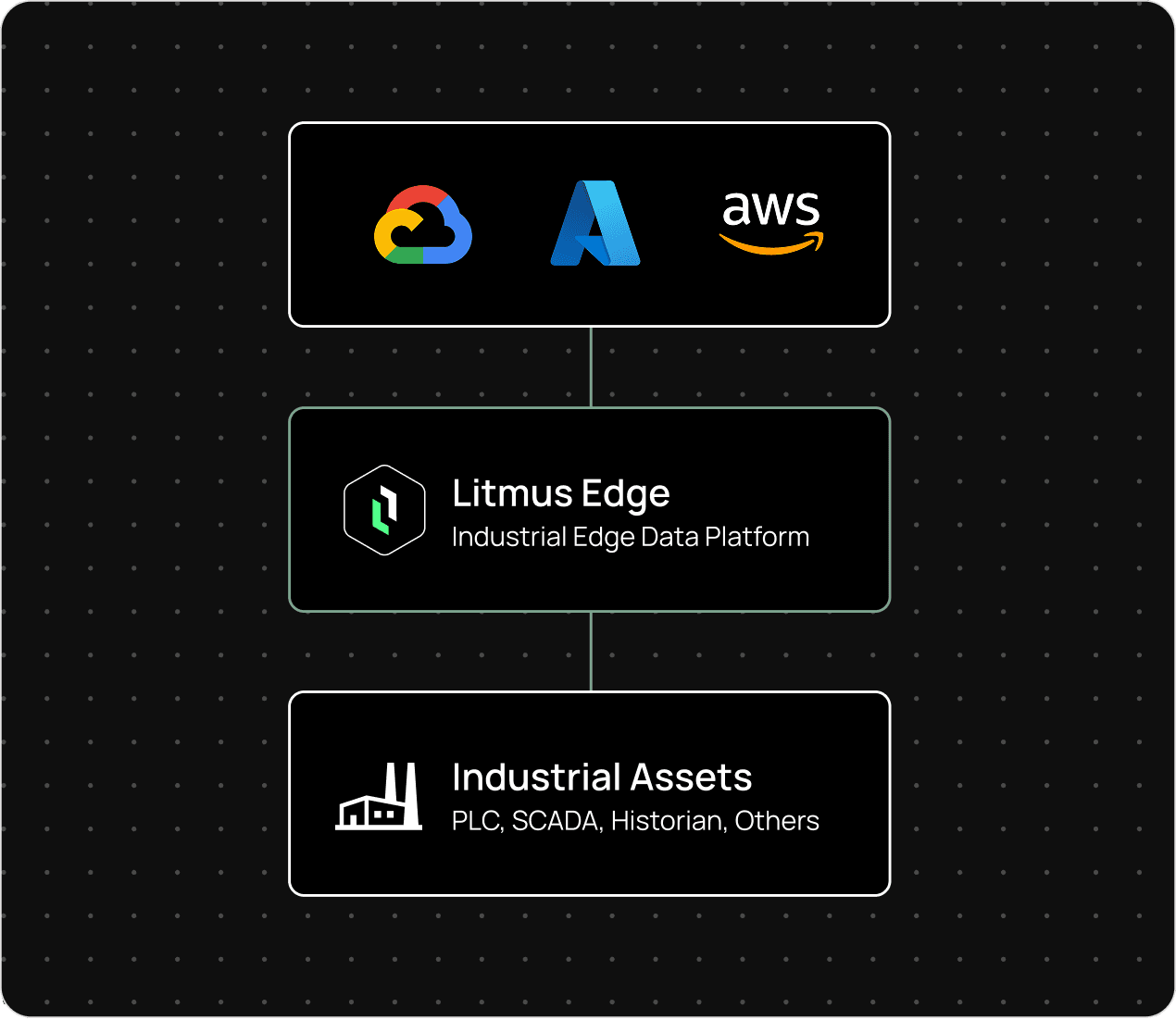









Industrial data programs struggle to scale when every plant publishes data differently and downstream systems must interpret inconsistent topics and payloads. As integrations multiply and data models drift, applications, analytics, and AI become difficult to deploy consistently across sites.
Litmus UNS introduces a governed data layer that standardizes how operational data is structured, published, secured, and distributed across the enterprise through a Unified Namespace built on secure pub / sub infrastructure.
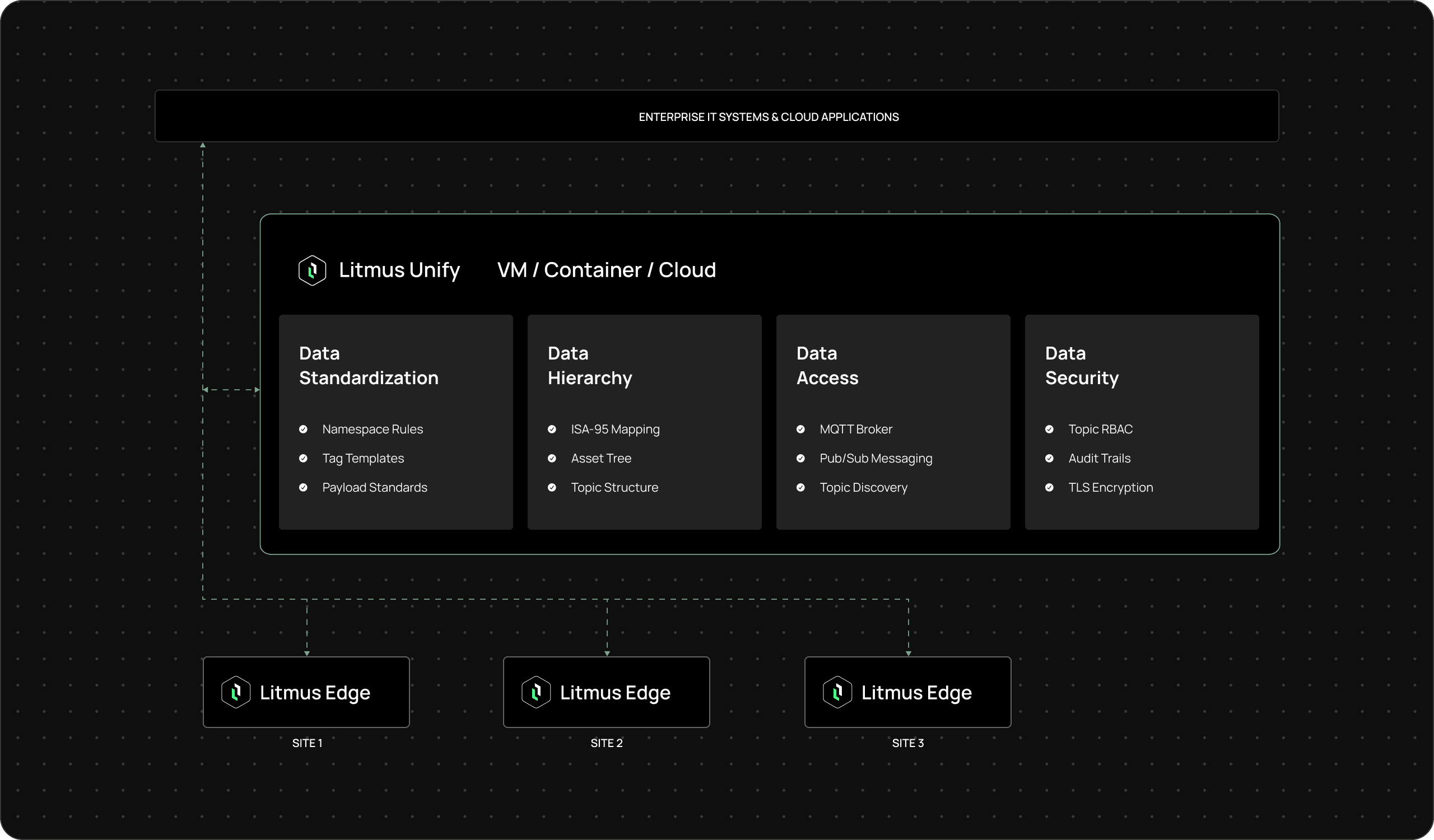
Litmus Unify acts as the governed real-time data exchange layer between industrial systems and enterprise platforms. Operational data produced at machines and edge systems is published into the Unified Namespace, where it is structured, secured, and distributed through a scalable MQTT-based pub / sub architecture.
By decoupling producers and consumers, Litmus Unify eliminates brittle integrations and enables scalable data sharing across the enterprise.
standardized industrial data architecture

optimized packing and volume tracking

Real-time equipment monitoring across sites
Real-time monitoring and corrective action

Core capabilities that structure, govern, and distribute real-time operational data across industrial environments.
Data Standardization
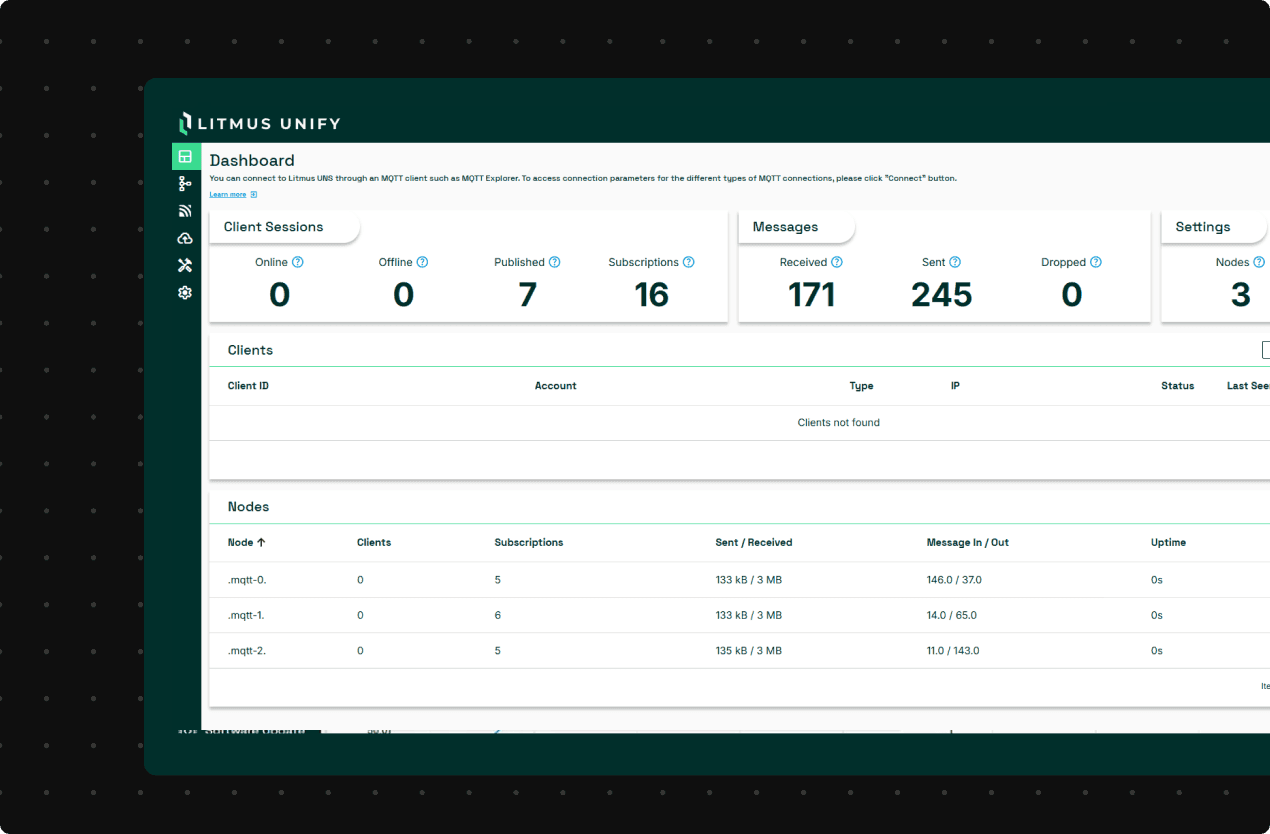
Industrial data becomes difficult to scale when naming conventions, payload structures, and publishing patterns vary across sites. Litmus UNS enforces consistent publishing rules so data can be reliably consumed across analytics, enterprise systems, and AI workflows.
Key features:
Data Hierarchy
A Unified Namespace must reflect real operational structure. Litmus UNS supports ISA-95-aligned hierarchy modeling so enterprise, site, area, line, and machine data can be organized consistently and navigated at scale.
Key features:
Data Access
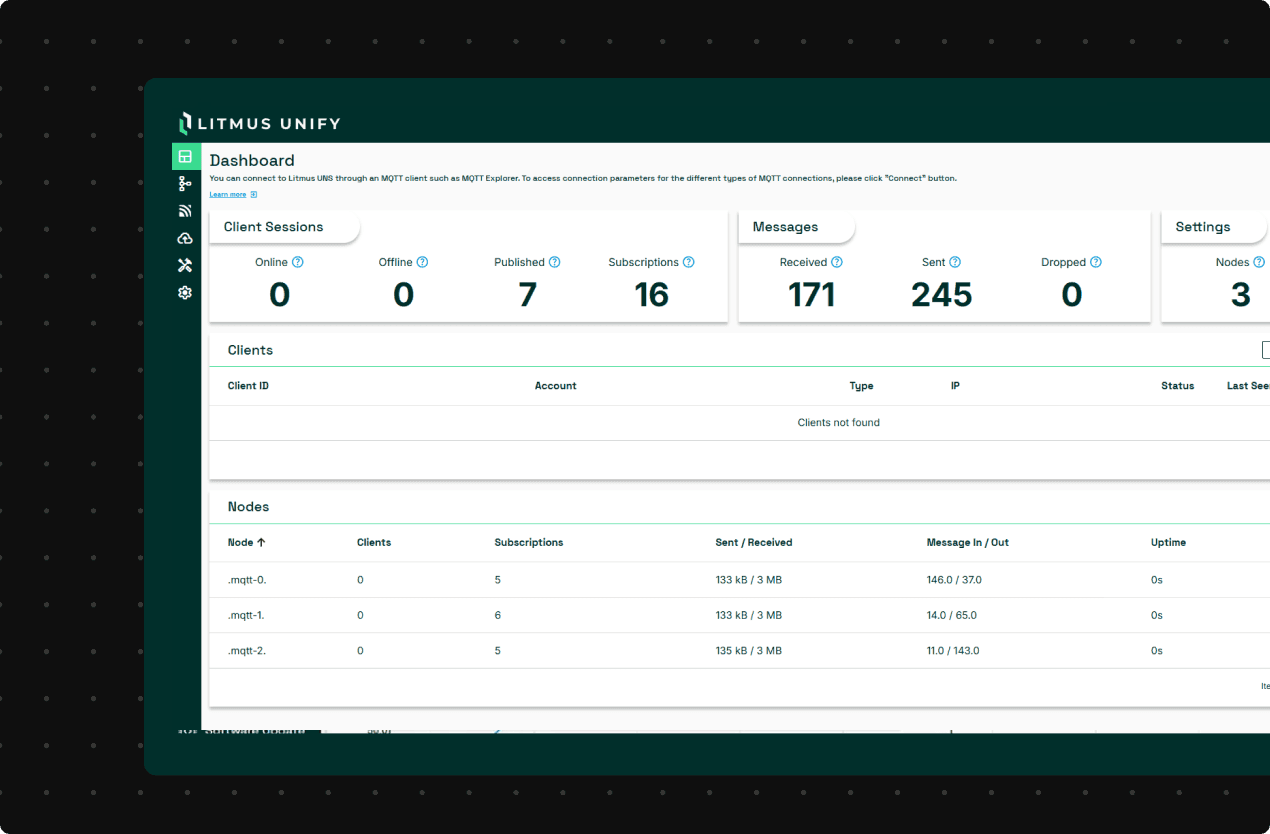
Litmus UNS provides a high-performance MQTT broker that distributes operational data across applications, analytics platforms, enterprise systems, and cloud environments. Pub / sub messaging decouples producers and consumers so data can flow across the enterprise without brittle integrations.
Key features:
Data Security
Industrial data exchange must be secure and governed across sites, teams, and applications. Litmus UNS provides topic-level permissions, encrypted communications, and role-based policies to maintain strong governance across distributed environments.
Key features:
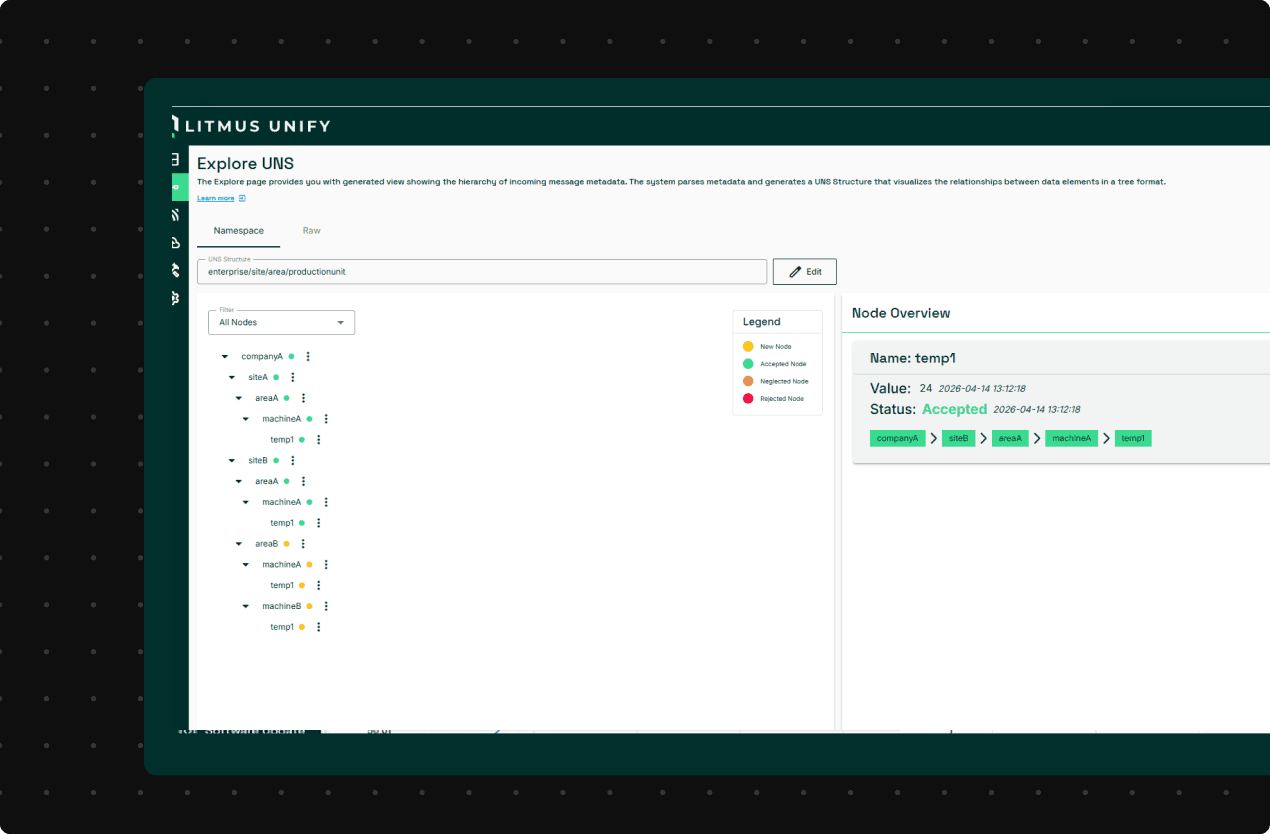
Standardize topics and payloads across producers and consumers

Establish a single source of truth for operational data

Reduce integration complexity with decoupled pub / sub architecture

Govern data access through hierarchy rules and security policies

Scale operational data models across plants without schema drift

Enable analytics, enterprise integration, and Industrial AI initiatives

Industrial teams use Litmus to standardize data architecture across plants and scale analytics and AI in production environments.
Case Study
La Lorraine deployed Litmus Edge and Litmus UNS to standardize how operational data flows between machines, MES, and enterprise systems. Using a Unified Namespace, the organization enabled real-time communication across production assets while maintaining consistent data structure and governance.
Impact:

Quick answers to your industrial data questions.