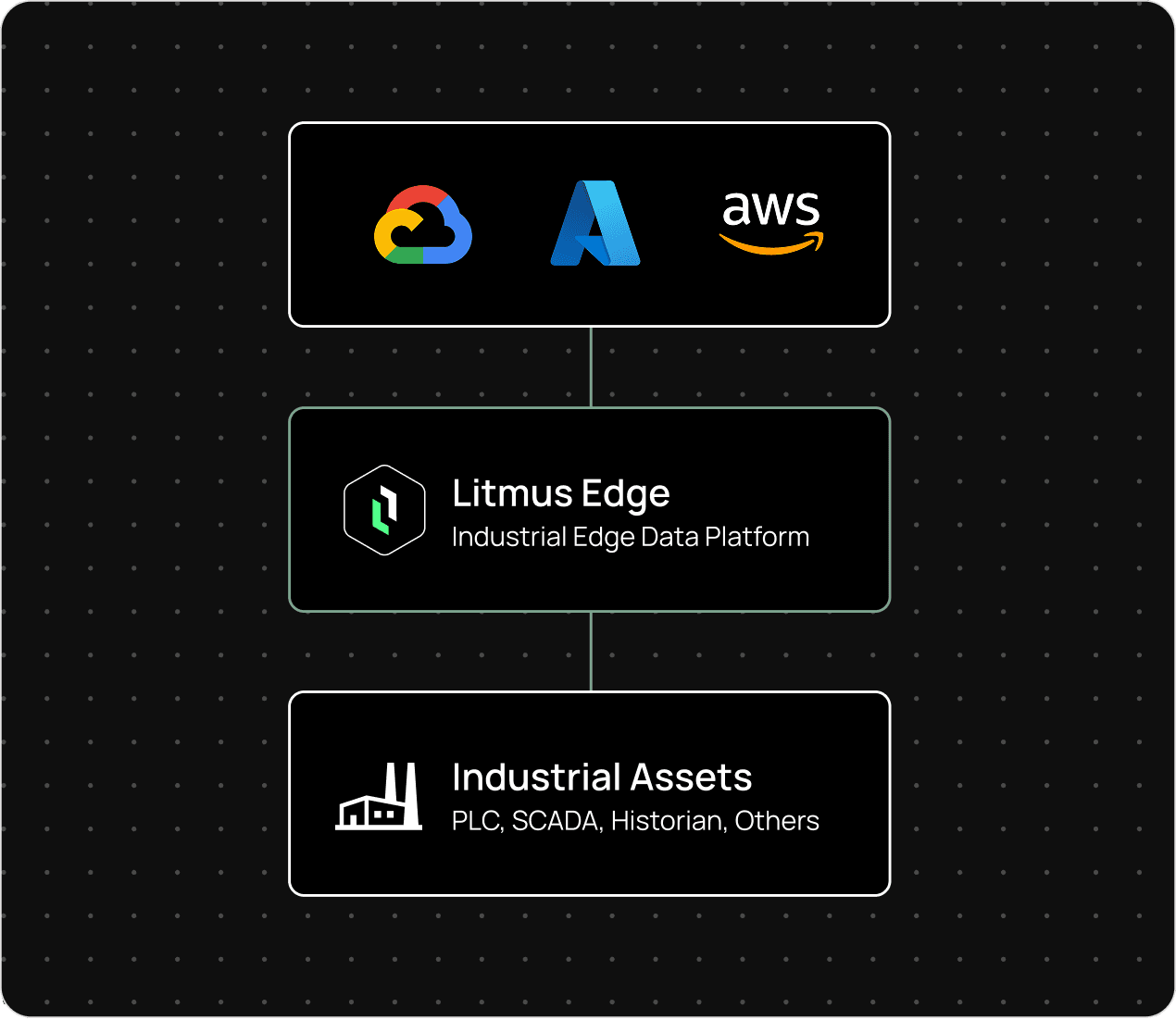








Industrial data doesn’t scale through isolated tools. It requires a coordinated foundation to connect, structure, govern, and manage data across systems and sites. Litmus brings these capabilities together in one seamless platform.
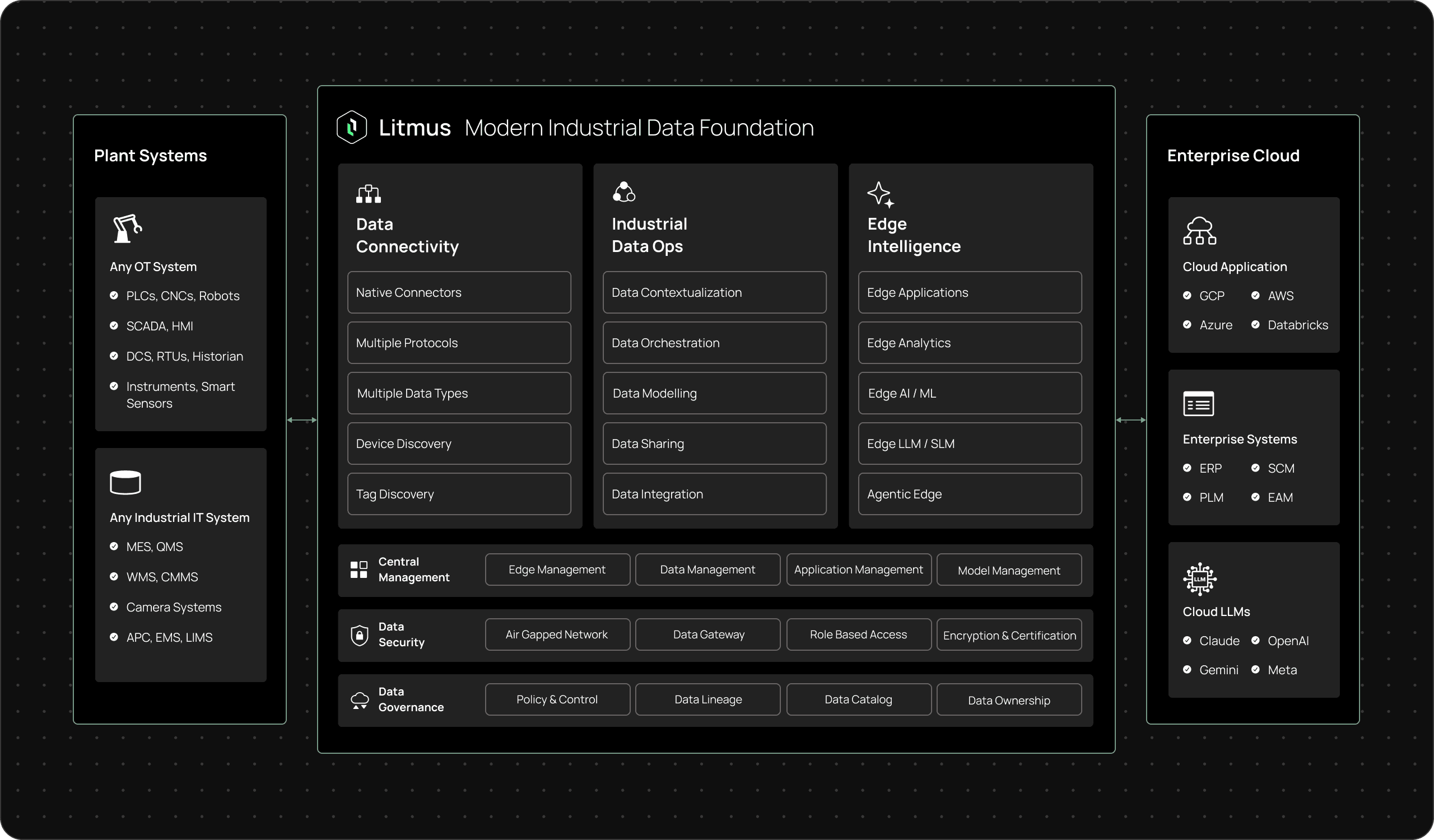
standardized industrial data architecture

optimized packing and volume tracking
Real-time equipment monitoring across sites
Real-time monitoring and corrective action
Each layer plays a distinct role—from connecting data to governing, securing, and scaling it—working together as one system to support analytics, automation, and Industrial AI.
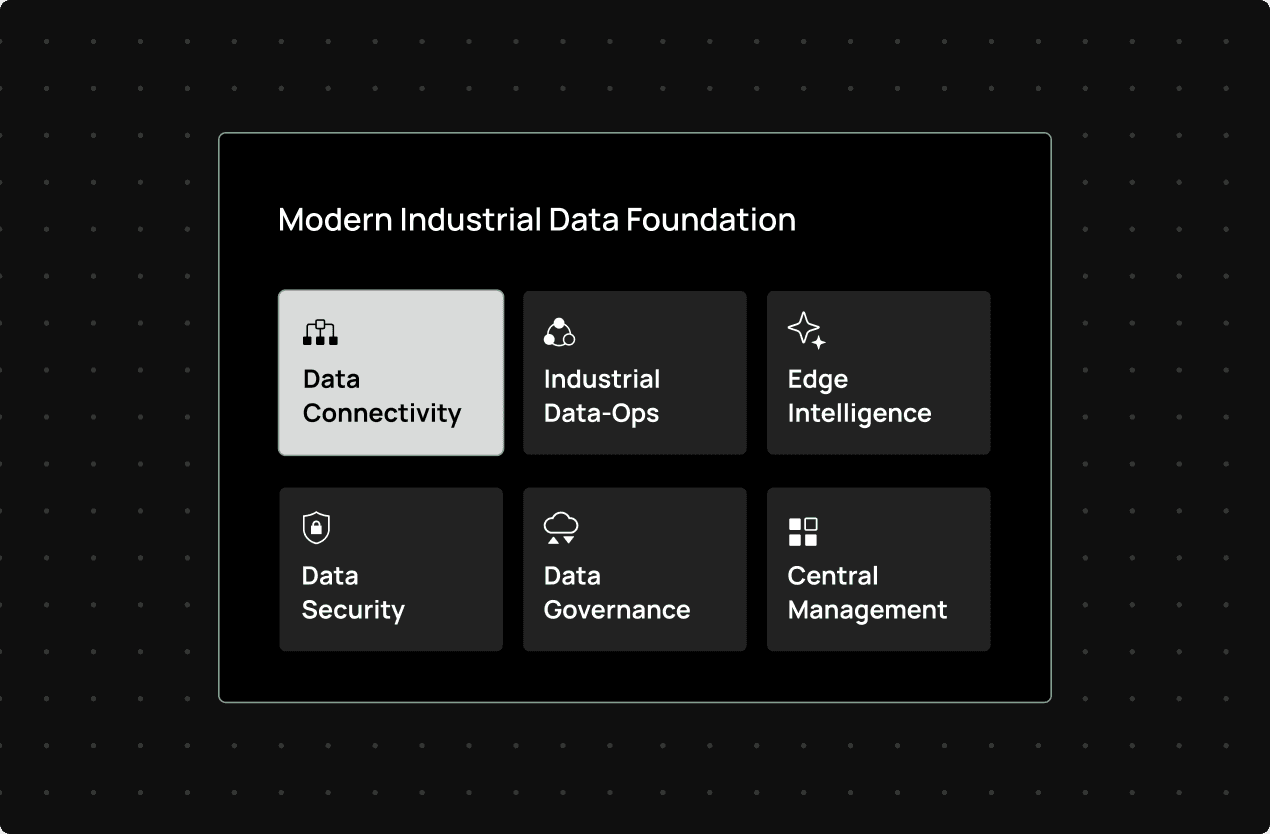
Data Connectivity
Every industrial data strategy starts with reliable access to source data. Data Connectivity establishes a high-throughput foundation for connecting machines, control systems, historians, and applications across heterogeneous environments—reducing onboarding complexity and preparing data for downstream use.
Key features:
Industrial Dataops
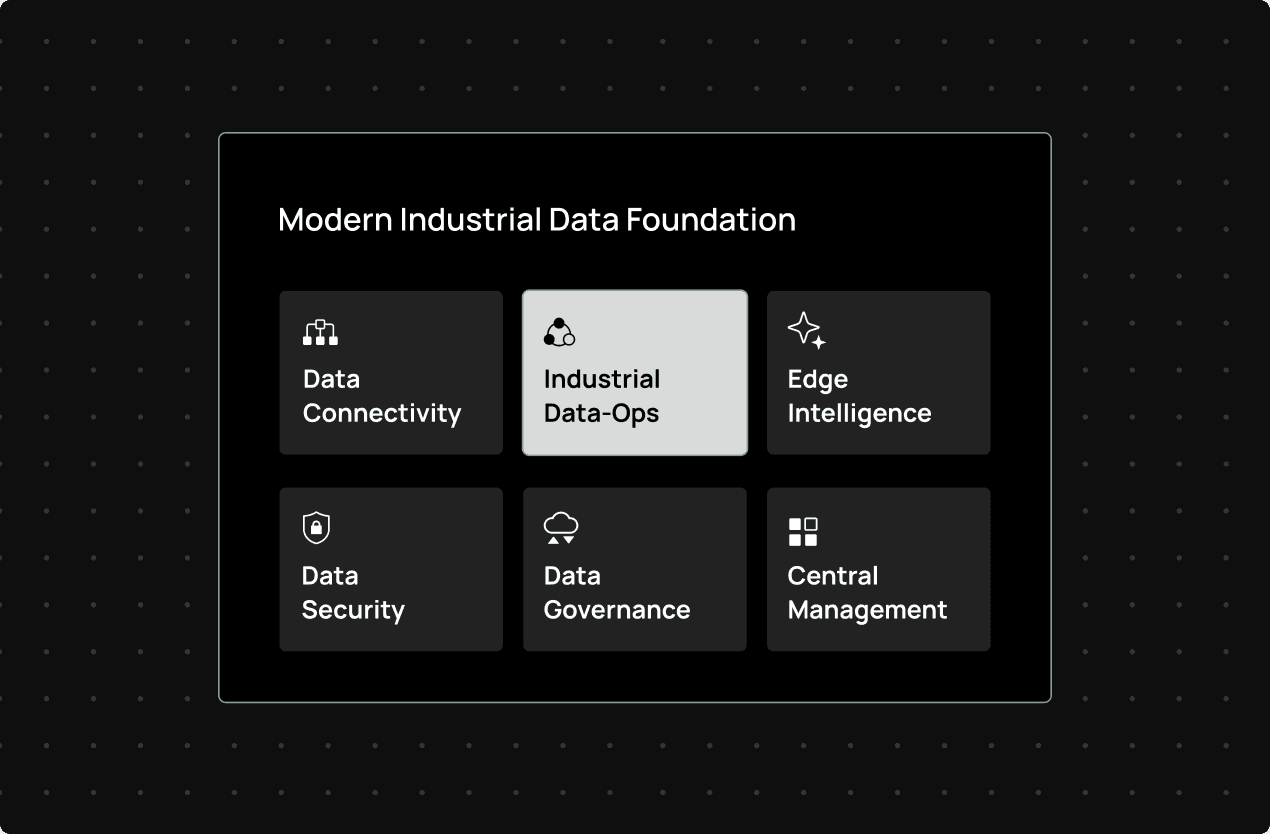
Connectivity alone doesn’t create value. Industrial DataOps transforms raw signals into contextualized, modeled, and orchestrated data that can move reliably across OT and IT systems—creating a consistent foundation for analytics, automation, and AI.
Key features:
Edge Intelligence
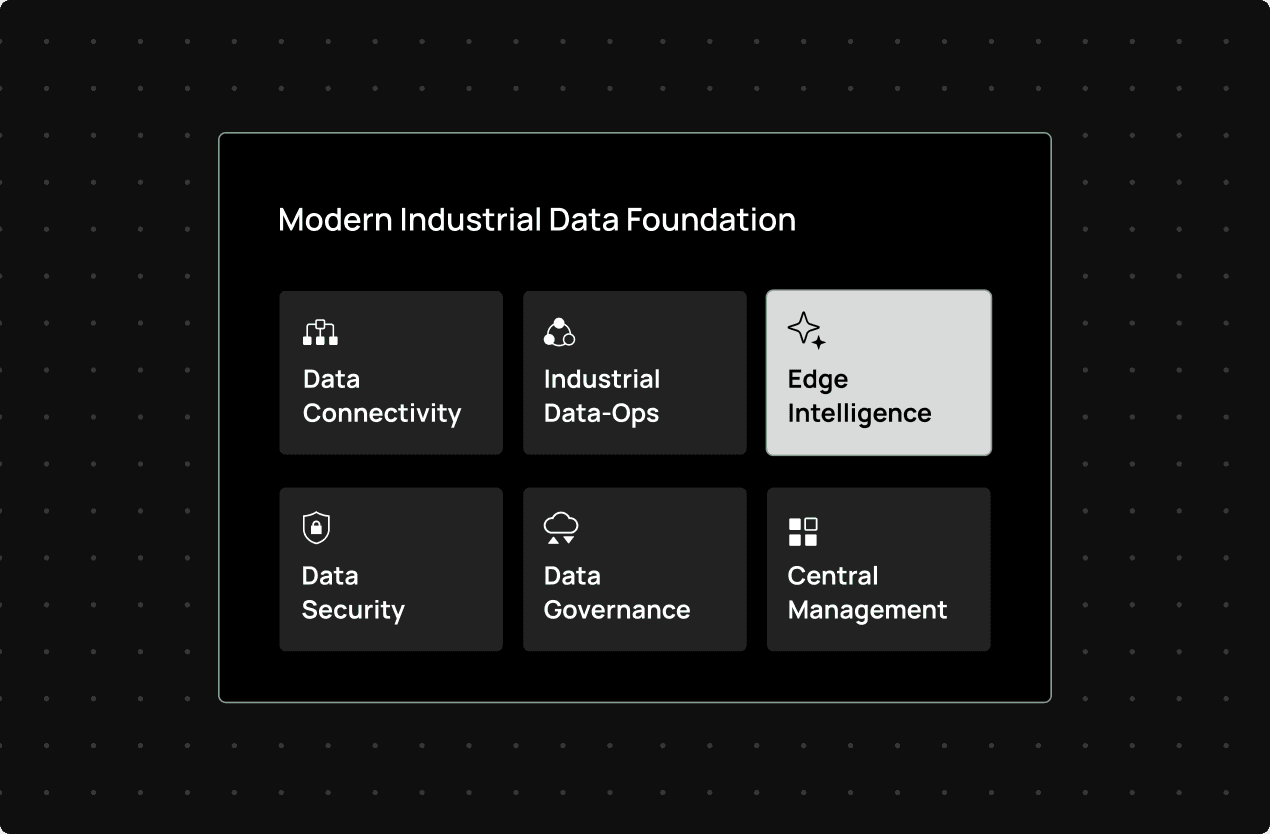
Industrial decisions are most effective when execution happens close to the process. Edge Intelligence creates a local execution layer for applications, analytics, and AI—improving responsiveness, reducing latency, and enabling resilient operations across distributed environments.
Key features:
Data Security
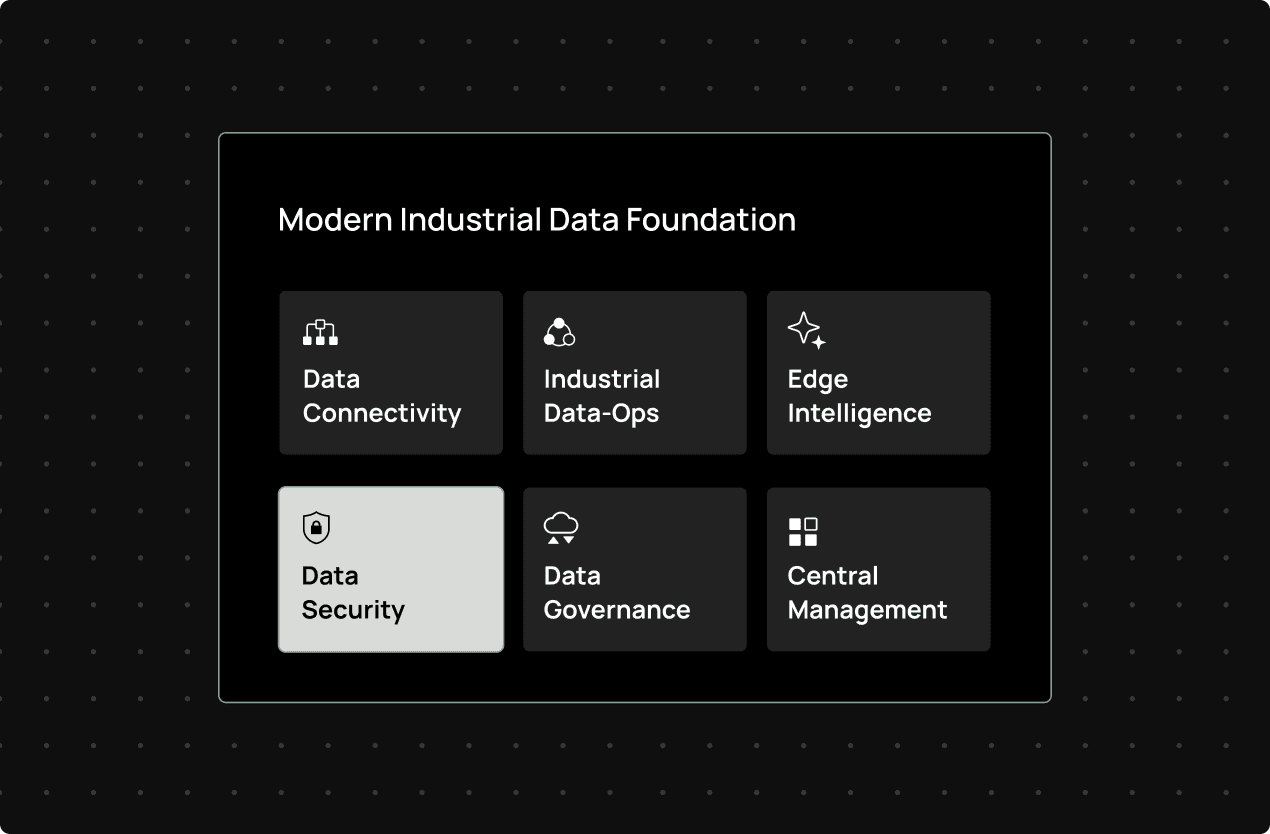
Industrial data must move securely across connected, segmented, and isolated environments. Data Security protects systems, controls access, and secures communication.
Key features:
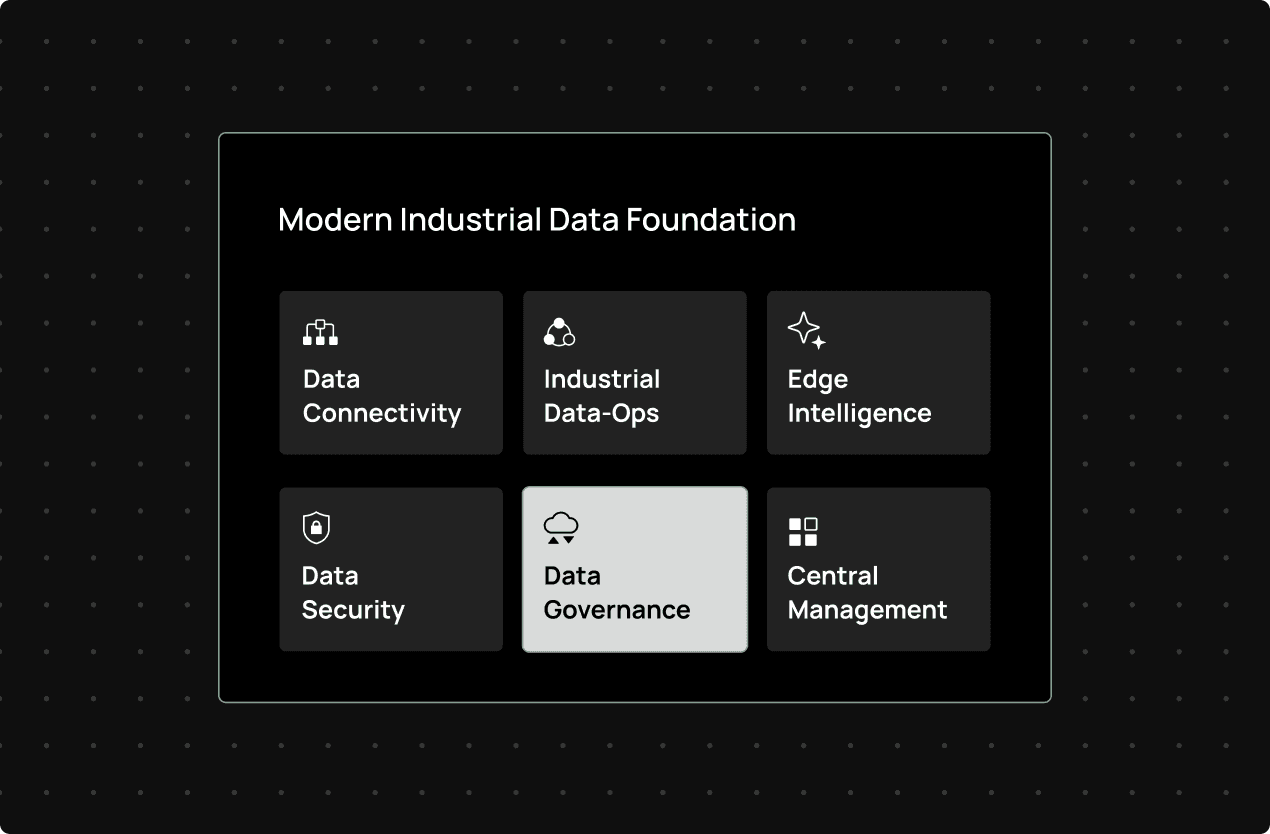
DATA GOVERNANCE
As data grows, governance ensures it remains trusted and usable. Data Governance defines how data is controlled, understood, traced, and owned across systems and teams.
Key features:
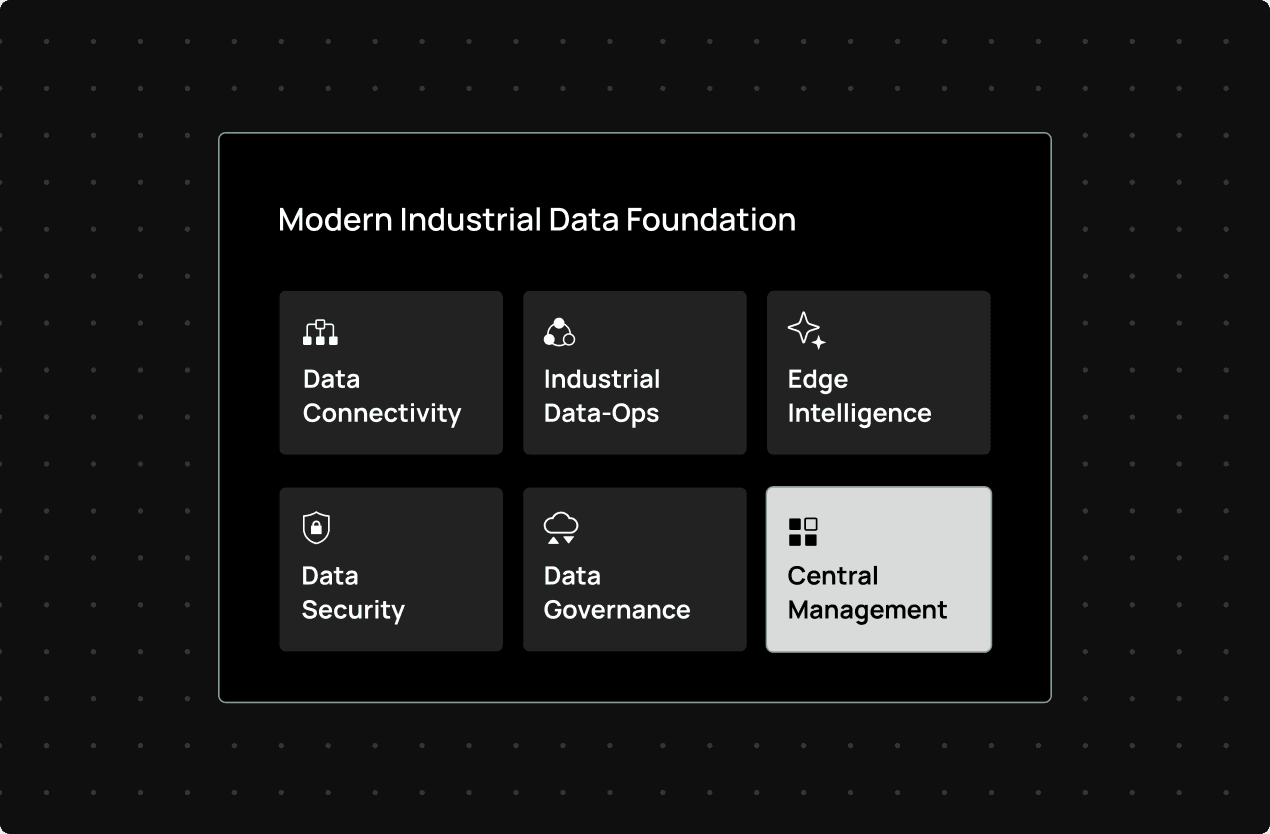
Central Management
Industrial scale requires centralized control over distributed environments. Central Management provides the operational framework to deploy, monitor, and govern devices, data, applications, and AI models—ensuring consistency across plants.
Key features:
Connect industrial assets and systems

Transform raw data into structured, reusable information

Run applications, analytics, and AI at the edge

Govern meaning, lineage, ownership, and policy

Protect systems, users, and data flows

Manage distributed operations from a central control layer

Industrial teams use Litmus to standardize data architecture across plants and scale analytics and AI in production environments.
Case Study
Niagara Bottling deployed Litmus Edge across 50+ plants to standardize industrial data from production lines and utility systems. Data is normalized at the edge and streamed to Databricks for advanced analytics and AI. This architecture establishes a consistent, trusted data layer across operations.
Impact:
Quick answers to your industrial data questions.