


AI IN MANUFACTURING
Industrial AI applies machine learning, computer vision, language models, and AI agents to manufacturing operations. It runs on operational technology (OT) data from PLCs, SCADA systems, and historians —data that
must be connected, contextualized, and governed before any model output can be trusted. Litmus builds that Industrial Data Foundation once, then activates AI on it at the asset, site, and enterprise levels.
standardized industrial data architecture

optimized packing and volume tracking

Real-time equipment monitoring across sites
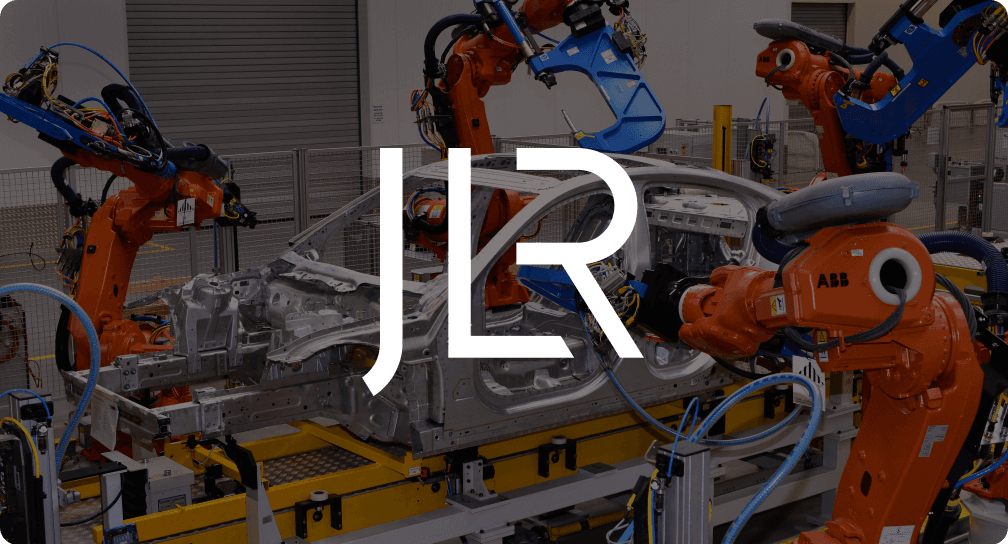
Real-time monitoring and corrective action

The economics of Industrial AI changed in 2026. LLM inference costs fell far enough that use cases which once cost millions of dollars a year to run now cost thousands, and models can hold context across long, multi-step tasks.
The plant has not changed nearly as fast. OT data still sits across PLCs, SCADA systems, historians, and other control systems. It arrives without enough context, and its structure varies from site to site.
Litmus closes that gap. Connect, contextualize, and govern OT data once in the Industrial Data Foundation, then activate AI on it anywhere—at the machine, at the site, or across the enterprise.
TWO TYPES OF AI
Industrial AI divides into two types with different latency budgets, deployment models, and data requirements: Operational AI, which runs at the edge in real time, and Enterprise AI, which runs in the cloud across sites.
The LLM shift added the first without replacing the second. Most stalled AI programs picked one and assumed it covered everything.
OPERATIONAL AI
Real-time, localized, prompt-driven
Runs at the edge, next to the machine
ENTERPRISE AI
Continuous, high-compute, inference-driven
Runs in the cloud across all sites
The two types need different data, in different shapes, delivered to different systems—from the same governed source. That source is the Industrial Data Foundation.
ASSET · SITE · ENTERPRISE
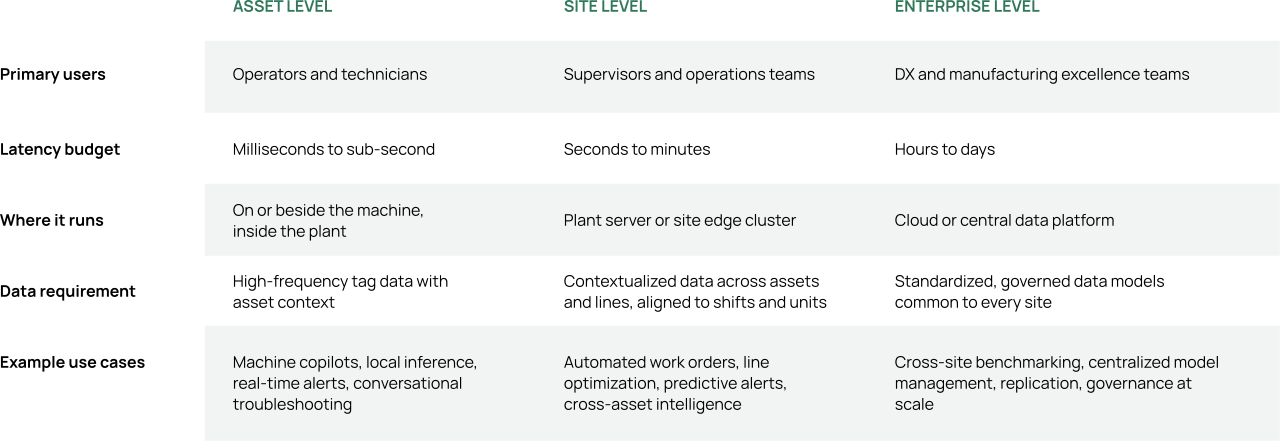
Industrial AI operates across three layers—asset, site, and enterprise—each with different users, latency requirements, and data needs.
Choosing an AI strategy means choosing which layer you are solving for first. Most manufacturers will eventually need all three.
REFERENCE ARCHITECTURE
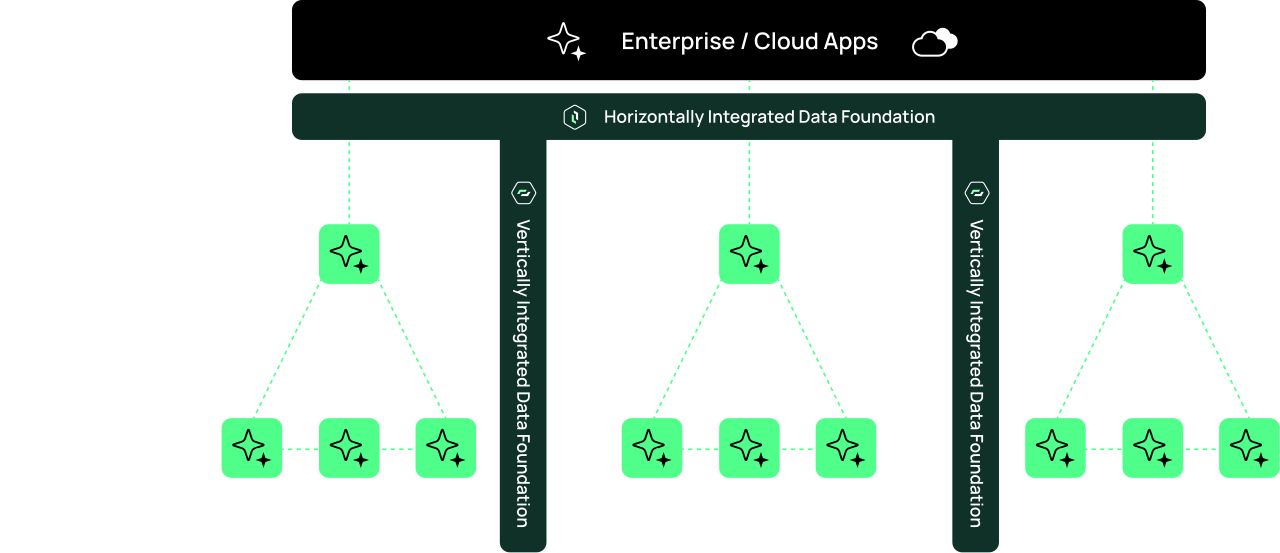
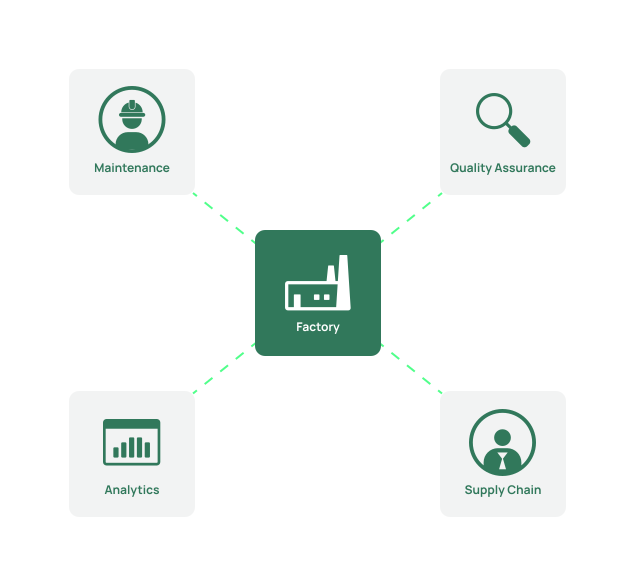
Litmus connects machines, PLCs, SCADA systems, and historians into a single Industrial Data Foundation, then serves contextualized, governed data upward to AI at the asset level, the site level, and the enterprise level—vertically within each plant and horizontally across the fleet.
THE PLATFORM
Litmus connects the data, runs the models, grounds the agents, and manages AI consistently across every site.
EDGE AI EXECUTION
Edge AI execution means running inference inside the plant, on hardware next to the machines and data it depends on, instead of sending data to the cloud and waiting for a response.
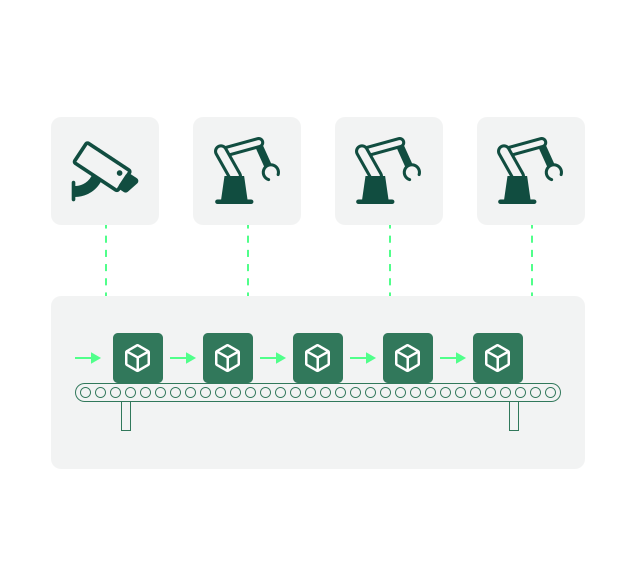
Closed-loop decisions have a latency budget measured in milliseconds, not seconds—a vision reject on a packaging line has to resolve in under 100ms. Litmus Edge is the execution environment for that work: optimized NVIDIA GPU driver support for computer vision and GPU-intensive workloads, plus small language models running locally so sensitive data never leaves the site.
AI AGENTS & MCP
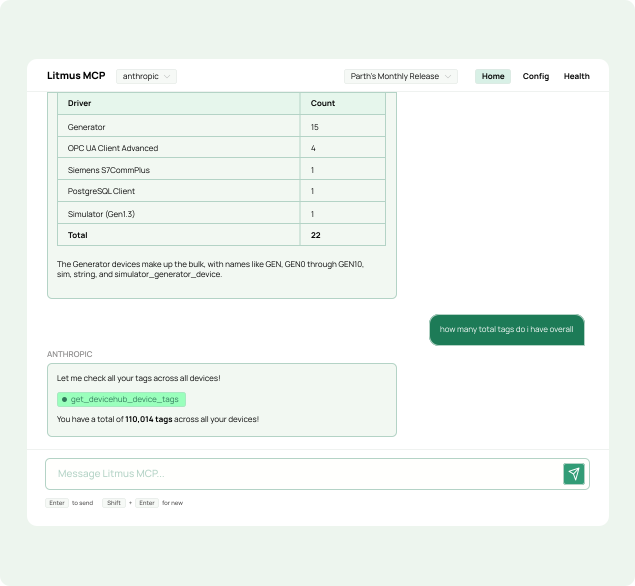
Litmus MCP Server is the open-source Model Context Protocol (MCP) server for Litmus Edge. It exposes live edge operations as callable tools, so LLMs and AI agents work from the real operational environment instead of guessing.
Agents fail in industrial settings for one reason: they invent answers. Litmus MCP Server runs in Docker inside the OT network with a built-in chat UI and an HTTP SSE endpoint for external clients—nothing has to leave the plant for agents to work.
INDUSTRIAL DATA FOUNDATION
An Industrial Data Foundation is the layer that connects, contextualizes, governs, and secures OT data so that every AI use case draws on the same trusted source.
Industrial AI does not stall because manufacturers lack models. It stalls when operational data is disconnected, inconsistent, or missing the context that makes model output useful. Litmus establishes that foundation once, so AI use cases repeat across machines, lines, and sites rather than getting rebuilt plant by plant.
THE INDUSTRIAL AI WORKFORCE
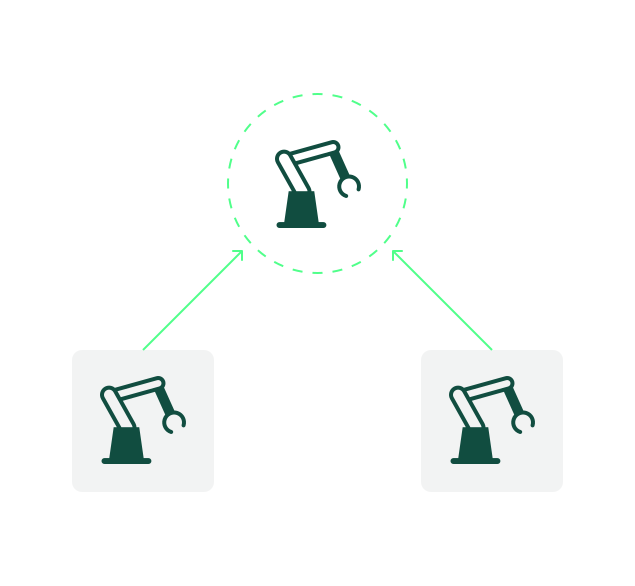
The Industrial AI workforce is a set of AI assistants that absorb repetitive analytical work across every site, grounded in Litmus data and deployed through Litmus MCP Server.
Every plant has more operational work than expert hours available. These assistants run always-on, at every site, working from the same trusted operational context.
AI-NATIVE DEVELOPMENT
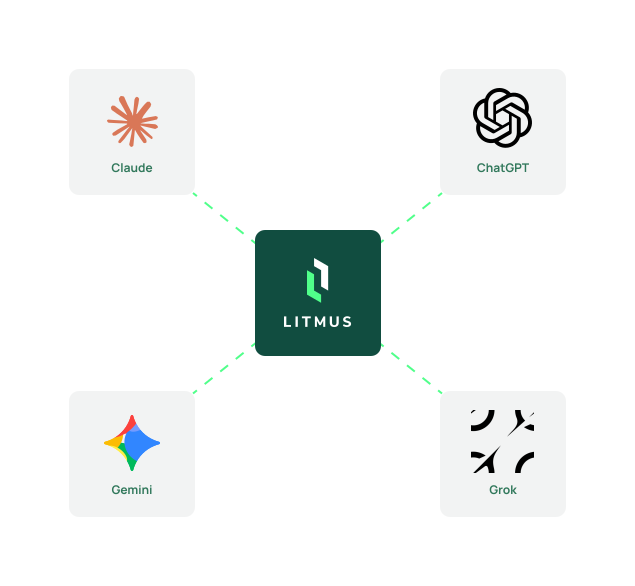
The Litmus API Portal at api.litmus.io is a machine-readable, always-current API reference that lets teams configure industrial data infrastructure by prompt.
It covers more than 2,000 REST and GraphQL endpoints across Litmus Edge, Litmus Edge Manager, and Litmus Unify, with a structured llms.txt index and an agents reference mapping common operations to ordered API call sequences. Because the model fetches live documentation at query time, output is accurate rather than approximated from stale training data.
DEPLOYMENT
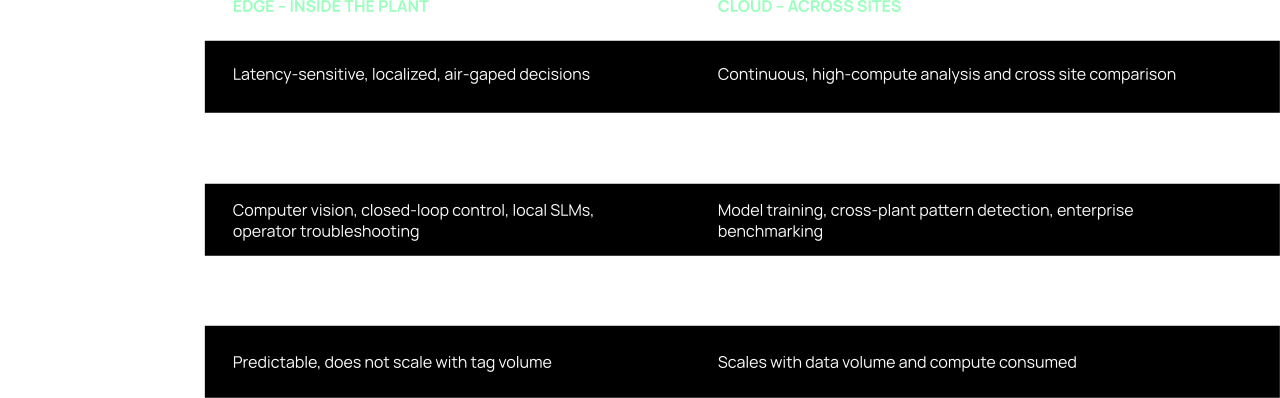
Industrial AI runs in both places, for different work. The edge handles latency-sensitive, localized, and air-gapped decisions at the machine.
The cloud handles continuous, high-compute pattern detection and benchmarking across sites. Litmus supplies consistent, governed data to both.
outcomes
The question is no longer “did we deploy AI?” but “what work did AI complete, and what outcome did it improve?” The goal is to turn AI into measurable operational outcomes and repeat those results across the enterprise.
Litmus spent a decade building this foundation before most manufacturers knew they would need it. We did not pivot to AI—the market caught up to the problem we set out to solve.
Production hours and downtime avoided

Scrap reduced, energy saved, quality investigations closed faster
Work orders created without waiting on scarce engineering expertise
One proven use case replicated across sites instead of rebuilt per plant
AI models governed, versioned, and traceable at fleet scale
Answers to your common Industrial AI deployment questions.