


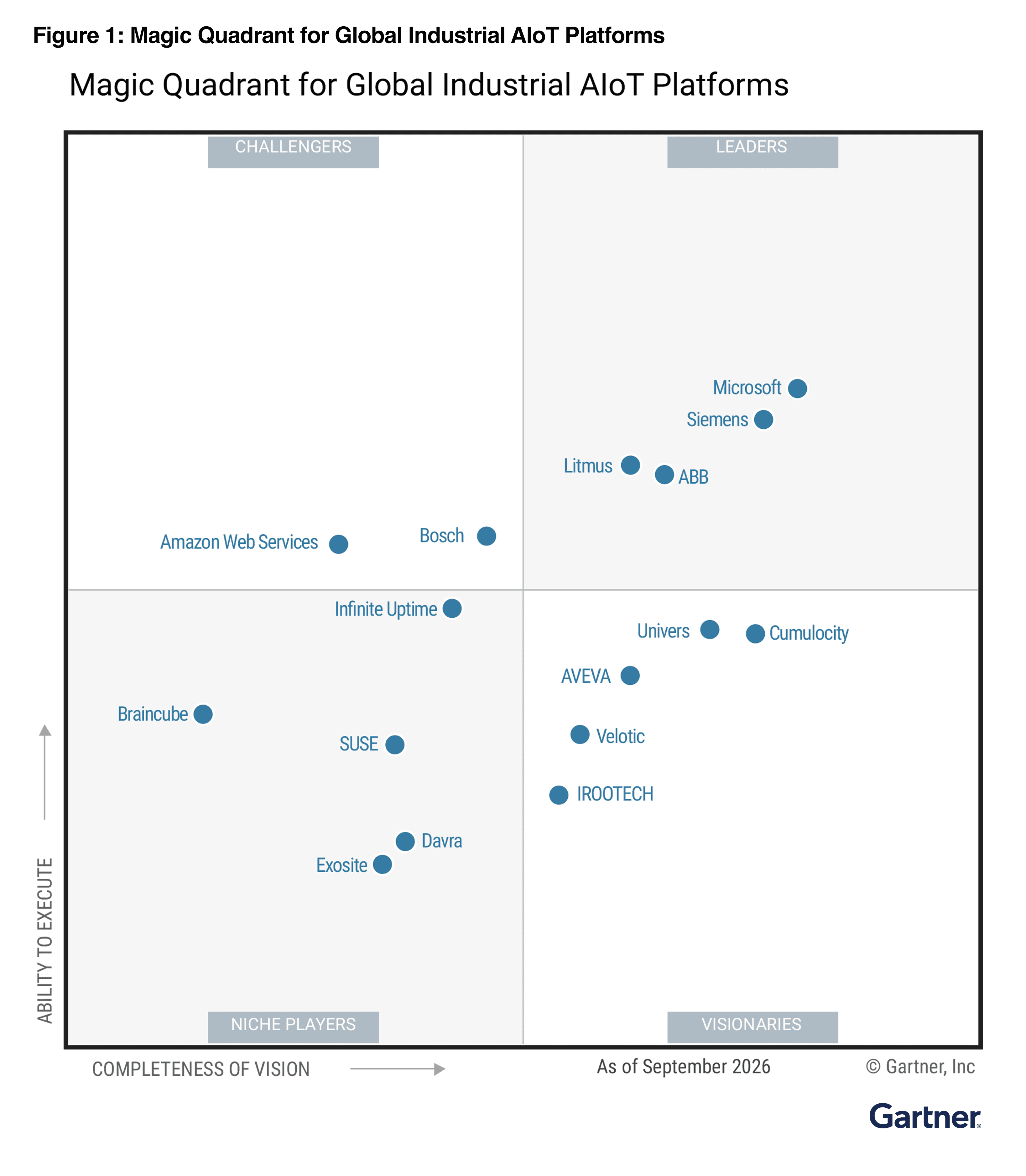
Litmusは、2026年版「Gartner® Magic Quadrant™:グローバル産業用AIoTプラットフォーム」において「リーダー」に位置付けられました。この評価は、製造業がAIのパイロット導入から企業規模での展開へと移行する中で、統合された産業用データ基盤の重要性が高まっていることを反映していると考えています。このブログでは、業界が直面している機会と、製造業がその機会を掴む上で立ちはだかる課題について、Litmusの見解をまとめています。
ハイパースケーラー各社は、製造業の次なる波を牽引するAIインフラの構築に数十億ドルを投じています。3年前には誰も予想しなかったほどのスピードで、産業用ワークロードに特化したコンピューティングリソース、モデル、サービスが開発されています。
この投資は真の機会を生み出しますが、それは産業用データを大規模にそれらのプラットフォームに提供できるメーカーに限られます。工場データは、AIによる成果が単なるデモンストレーションにとどまらず確実なものとなるよう、適切に管理・コンテキスト化・ガバナンスが行われなければなりません。
これこそが、現在のほとんどの産業用AIプログラムが立ち往生している原因です。問題はAIそのものではなく、その基盤となる部分にあるのです。
根本的な課題は構造的なものであり、より優れたモデルを導入したからといって解消されるものではありません。工場は一つとして同じものがなく、設備も異なります。さらに、タグの意味、標準的なシフトのあり方、3つのセンサーのうちどれが重要かといった「コンテキスト」も拠点ごとに異なります。また、工場は異なる年代に、異なるチームによって、異なる制約の下で建設され、その一部は買収によって加わったものであるため、各拠点の展開や管理方法も異なっています。
その結果、影響は雪だるま式に膨らんでいきます。ある工場でパイロット運用が成功し、チームがそれを2番目の工場に移そうとしたとします。しかし、そこの設備はより新しく、命名規則はそこで19年間勤務している制御エンジニアの頭の中にしか残っていません。さらに、最初のバージョンを構築したインテグレーターは契約を終えて別の現場に移っています。本来なら単純な展開作業で済むはずだったものが、2つ目のシステム統合プロジェクトになってしまうのです。自由度が仇となり、これが40番目の工場へと続いていきます。
こうした一貫性の欠如こそが、標準化を妨げ、パイロットの運用を停滞させ、運用に活用できるほど信頼性の高いAI成果の創出を阻む原因となっています。
一般的な対応策は、変動性を下流で吸収することです。つまり、すべてを一旦クラウドに送信し、データが到着した後にデータエンジニアリングによって整合性を取ろうとします。
エンタープライズAIプラットフォームは、その本来の目的においては並外れた能力を発揮します。しかし、それらは工場の現場で稼働するようには設計されていません。データが生成される現場に設置されていないため、送られてくるデータをそのまま受け入れるしかありません。そして、事後に構築されたクリーンアップ層を経由して送られてくるデータは、技術的には揃っていても、実質的には情報が乏しいものとなってしまいます。
これに伴い、2つのコストが発生します。
レプリケーション:新しいサイトが追加されるたびに新しいマッピングと照合ジョブが必要となり、パイプラインの規模がデプロイのペースよりも速く拡大してしまいます。
コンテキストの喪失:データに意味を与えていたメタデータこそ、下流のクリーンアップ層を通過させることが最も困難な要素です。
一度も記録されなかったコンテキストを、後から再構築することはできません。AIの成果がその基盤となるデータの質に左右されるのであれば、データは生成されたその場で正確でなければならないのです。
Litmusは、工場システムとクラウドシステム間にあるギャップを大規模なレベルで埋めます。
Litmusは、すべての拠点にまたがる統合された「産業データ基盤」を提供します。これは、工場ごとにアーキテクチャを再構築することなく、工場データを接続、コンテキスト化、管理し、企業のAIに配信するための単一の共通データレイヤーです。データが生成される現場で動作するため、各拠点から送信されるデータは、すでに次のシステムで利用可能な形式になっており、その形式はすべての拠点で統一されています。
これは、以下の6つの機能を網羅する単一のプラットフォームです。そのうちのどれか一つでも欠けてしまうと、問題が再び下流に押しやられてしまうからです。
データ接続:プロトコルや導入時期を問わず、あらゆる資産に対応
製造データ運用:データソースでのコンテキスト化を実現
エッジ・インテリジェンス:セキュリティ、遅延、または帯域幅の制約によりクラウドへの往復通信が不可能な環境で、分析やAIを実行
データセキュリティ:OTとITの境界を越えたアクセス制御
データガバナンス:デプロイメントの拡大に伴い、データの信頼性を維持
集中管理:1か所からエッジインスタンスを展開・運用
これらを組み合わせることで、断片化された産業データを、AIを導入するための再現性のあるシステムへと変えます。つまり、一度行った作業を、あらゆる場面で活用できるようになるのです。
あるグローバルメーカーでは、Litmusのチームが90か所以上の生産拠点において、6か月足らずで導入を完了させました。この数字こそが何よりの証拠です。90という数字が大きいからではなく、最初の生産拠点と90番目の生産拠点との間の距離が十分に近かったため、この展開を「プログラム」ではなく「スケジュール」として進めることができたからです。
すべての工場が同じ形式でデータを生成すれば、ある工場で実証されたユースケースは、40件もの連続した統合作業ではなく、ネットワーク全体への展開として適用されることになります。これこそが、単なるAIイニシアチブと、持続的なAI能力の違いなのです。
Microsoft、Google Cloud、AWS、Databricks、Oracle、Dellなどとの戦略的パートナーシップにより、工場データが、メーカーがすでに利用している分析・AIサービスに直接取り込まれるようになります。
これは、単にロゴのリストが示す以上の重要な意味を持ちます。ハイパースケーラーへの投資が現場に届くのは、産業データが管理された一貫性のある形式で伝送される場合に限られます。また、メーカーが既存の標準化済みプラットフォームを活用でき、並行して新たなインフラを構築する必要がない場合にのみ、その投資は価値を生み出します。こうしたパートナーシップこそが、基盤とそれより上位のあらゆる要素を結びつける架け橋なのです。
「リーダーに位置付けられたことを大変光栄に思っています。私たちはAIへ方向転換したわけではありません。最初からAIを見据えて計画を立ててきました。創業当初から、工場データの課題を大規模に解決するために設計された製品を開発し続けてきたのです。」— Litmus共同創業者 兼 CEO Vatsal Shah
2014年にLitmusが創業した当時、業界では工場データをクラウドに保存すべきかどうかについて、議論が交わされていました。しかし私たちは、もっと難しい問題が後になって浮上すると確信していました。それは、誰もがデータを手に入れたとしても、もともと互換性を考慮して設計されていない工場のネットワーク間で、そのデータが実際に活用できるのか、という問題です。
それが、今やすべての製造企業が直面している課題です。これは私たちがこれまでずっと築き上げてきたものであり、私たちと共にこの課題に取り組んでくださったお客様に心から感謝しています。
複数の工場からなるネットワーク全体でAIの導入を計画しているなら、まずこの部分をしっかりと整えておく価値があります。
Litmusがなぜリーダーに位置づけられたのか?Gartnerのレポート全文をダウンロードしてご確認ください。
GartnerとMagic Quadrantについて
Gartnerは、経営幹部およびそのチームに対して、客観的で実行可能なインサイトを提供しています。Gartnerの専門的なガイダンスとツールは、組織の最も重要な優先事項において、より迅速でスマートな意思決定と優れたパフォーマンスの実現を支援します。
Gartner Magic Quadrantは、特定の市場における研究の集大成であり、市場内で競合するベンダーの相対的な位置付けを視覚的に示します。「実行力(Ability to Execute)」と「ビジョンの完全性(Completeness of Vision)」という基準に基づいてベンダーを評価するものです。本レポートにおいてLitmusが評価されたことは喜ばしいことです。Magic Quadrantの詳細はこちらをご覧ください。
出展:Gartner, Magic Quadrant for Global Industrial AIoT Platforms, By Scot Kim, Sudip Pattanayak et al., 15 September 2026
GartnerおよびMagic Quadrantは、Gartner, Inc.またはその関連会社の米国およびその他の国における登録商標およびサービスマークです。
Gartnerは、リサーチレポートに掲載された特定のベンダー、製品、サービスを推奨するものではありません。また、最高評価やその他の指定を受けたベンダーのみを選択するようテクノロジーのユーザーに助言するものでもありません。Gartnerのリサーチ出版物は、Gartnerのリサーチ&アドバイザリー組織の見解で構成されており、事実の表明として解釈されるべきではありません。Gartnerは、明示的か黙示的かを問わず、本リサーチに関して、商品性や特定目的への適合性の保証を含め、一切の保証を否認します。