









産業チームは、ダッシュボードをナビゲートしたり、タグを検索したり、テレメトリーをエクスポートしたり、運用上の質問に答えるために単発のスクリプトを書いたりする時間を失っています。デバイス・ステータスのチェック、信号の検証、履歴の確認、エッジ・アプリケーションの管理などのタスクは、しばしば複数のツールを切り替える必要があります。
リトマスMCPサーバー
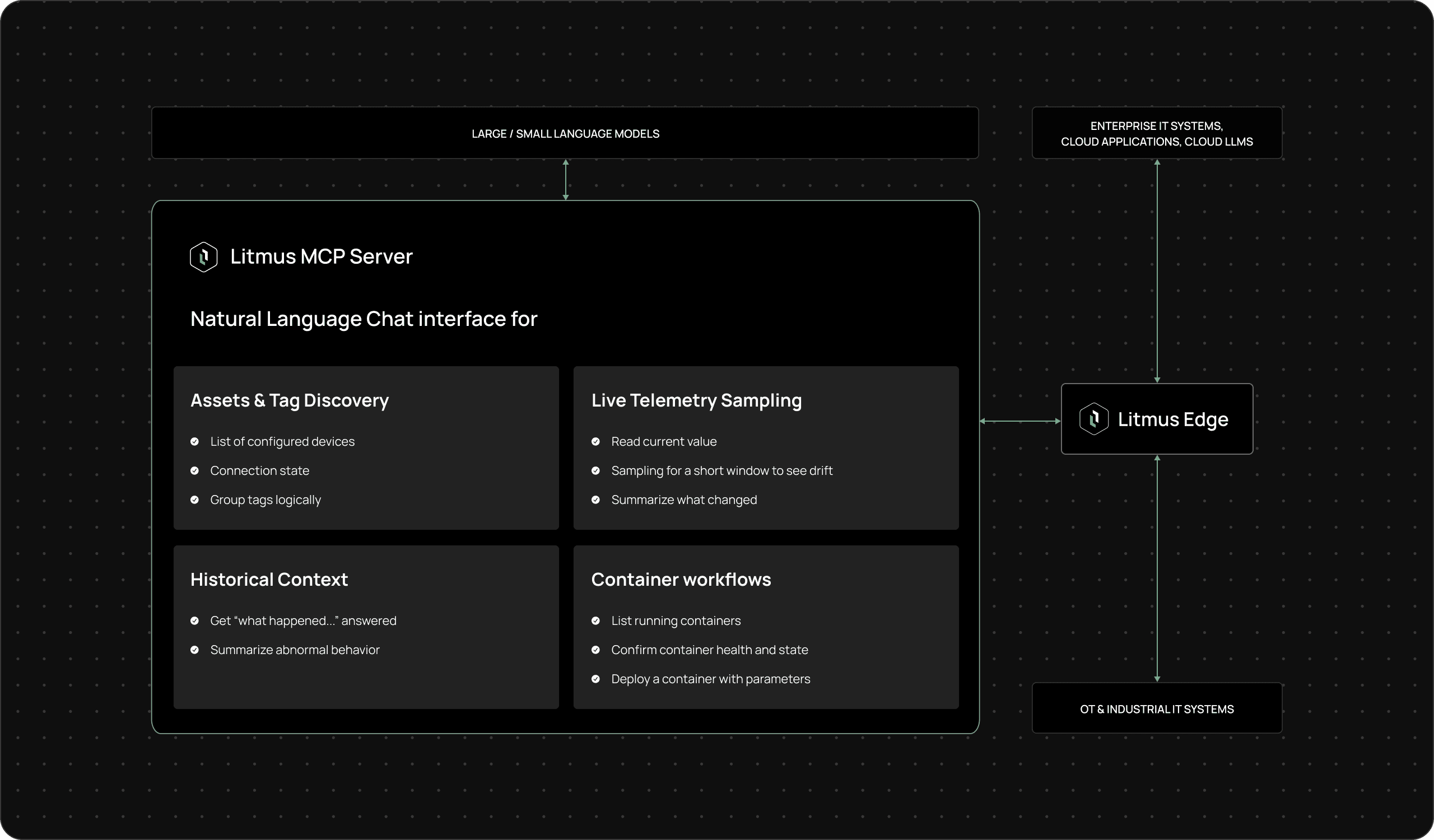
Litmus MCP Serverは、Litmus Edgeの上に会話型の運用レイヤーを導入し、チームが自然言語を使用してデバイス、遠隔測定、履歴データ、コンテナ、データモデルを照会できるようにします。MCPを通じて運用機能を公開することで、手作業を減らし、トラブルシューティング、検証、自動化を加速するAI支援ワークフローを実現します。
Litmus MCP Serverは、産業用エッジ運用におけるAIインタラクション層として機能します。Litmus Edgeが運用データを収集し、文脈情報を付与する一方で、Litmus MCP Serverは、AIシステム、チャットインターフェース、IDE、エージェントがアクセス可能な標準化されたMCPツールを通じて、それらの機能を提供します。
このアーキテクチャにより、産業チームは、デバイス、テレメトリ、およびアプリケーションにわたって、手作業によるエッジオペレーションからAI支援による実行に移行することができます。
製造データのアーキテクチャを標準化

梱包と数量追跡を最適化

複数拠点にわたる設備のリアルタイム監視
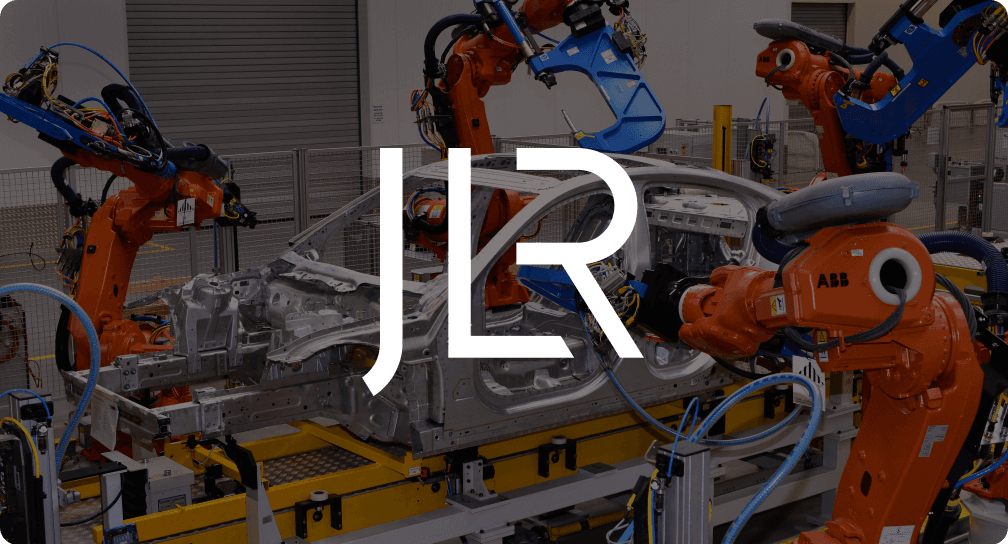
リアルタイムの監視と是正措置

産業エッジ環境との会話型インタラクションを可能にするコア機能。
ビルトインWeb UI
多くの MCP 実装では、チームがワークフローを検証する前に外部クライアントのセットアップが必要です。Litmus MCP Serverには、ブラウザベースのチャットインターフェイスが組み込まれているため、チームはサーバーを起動し、Litmus Edgeに接続して、すぐに運用データとのやり取りを開始することができます。
主な機能
主な機能
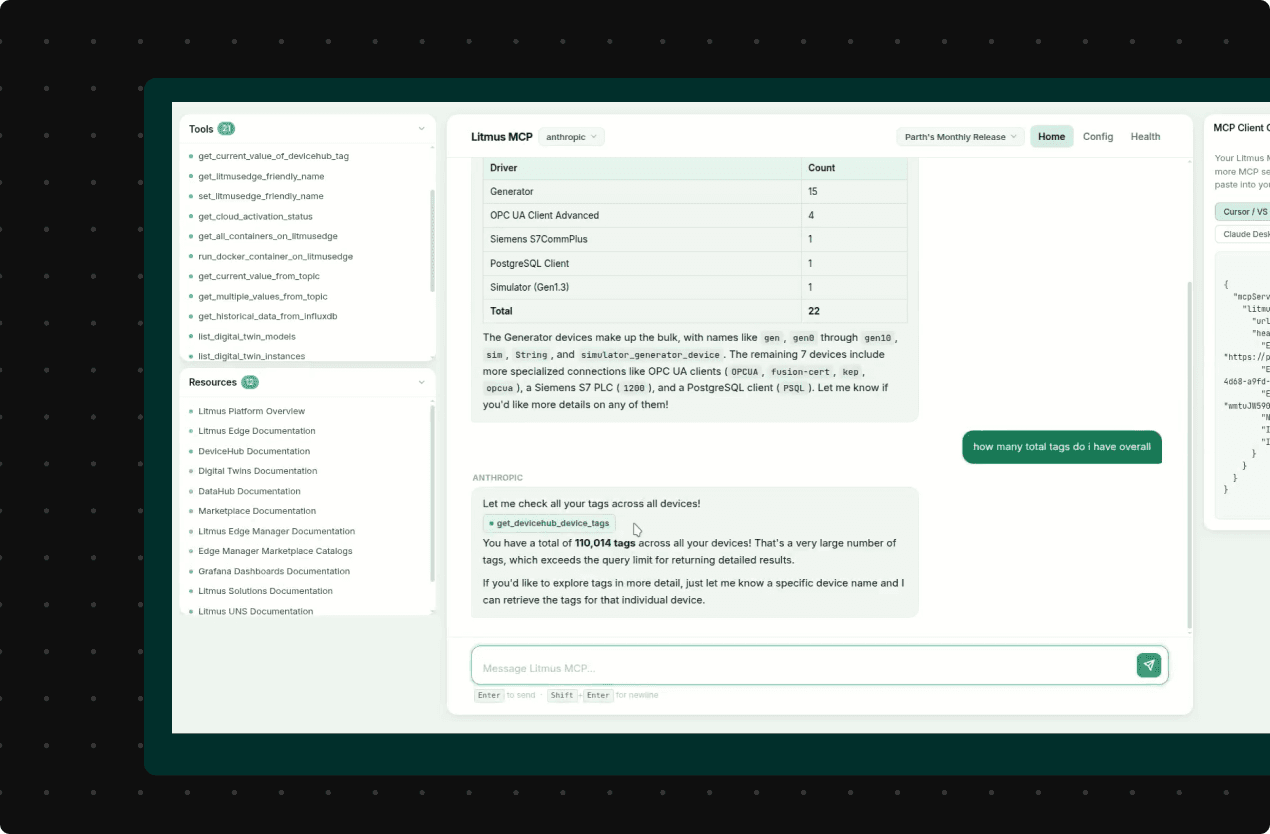
デバイスとタグの操作
リトマスMCPサーバーは、リトマスエッジデバイスのコア機能をMCPツールとして公開し、AIシステムや会話型ワークフローが産業用機器と直接対話できるようにします。
と直接対話することができます;
主な機能:
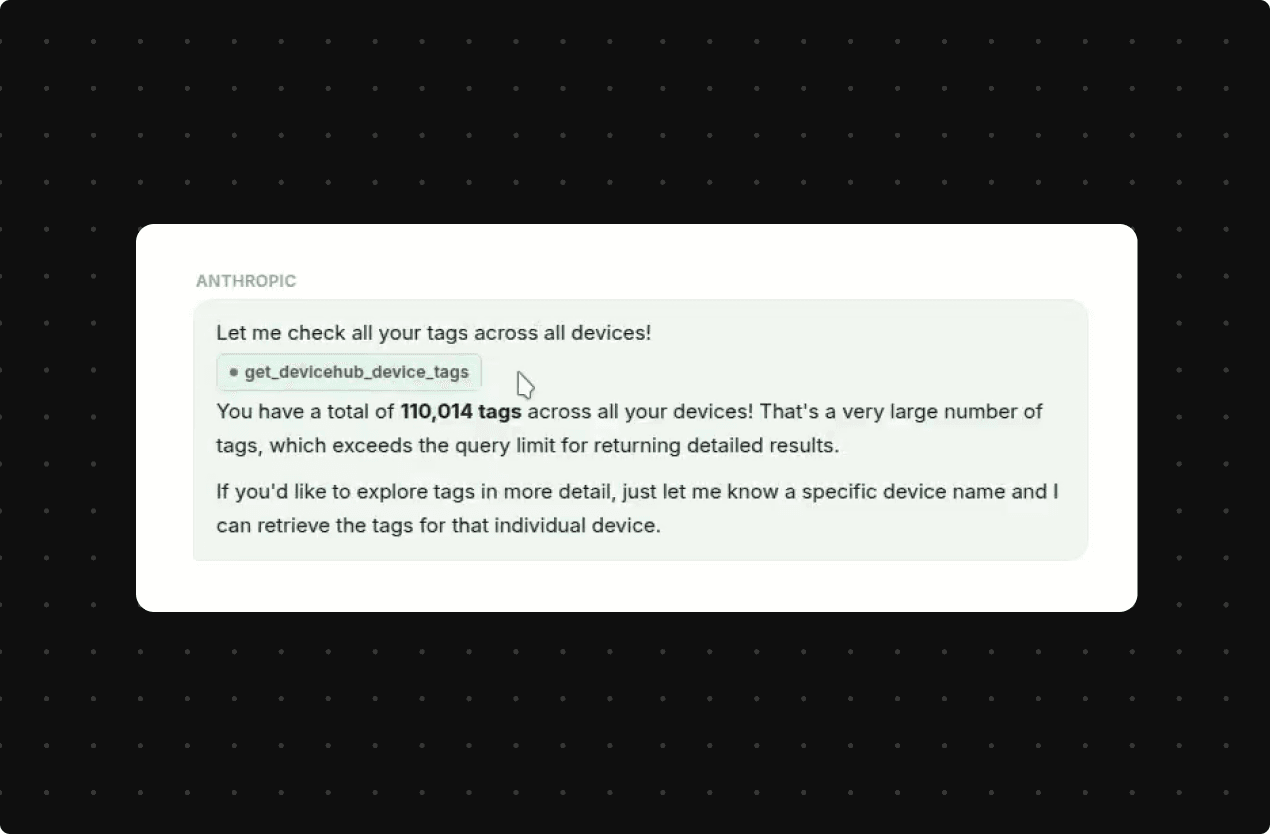
テレメトリー&ヒストリー・オペレーション
運用のトラブルシューティングでは、ライブの遠隔測定と最近の履歴の両方を確認する必要があることがよくあります。Litmus MCP Serverは、リアルタイムのトピック検査と時系列クエリをサポートしているため、チームは異常な状態や欠落したデータを迅速に調査することができます。
リトマスMCPサーバーの主な機能
主な特徴:_
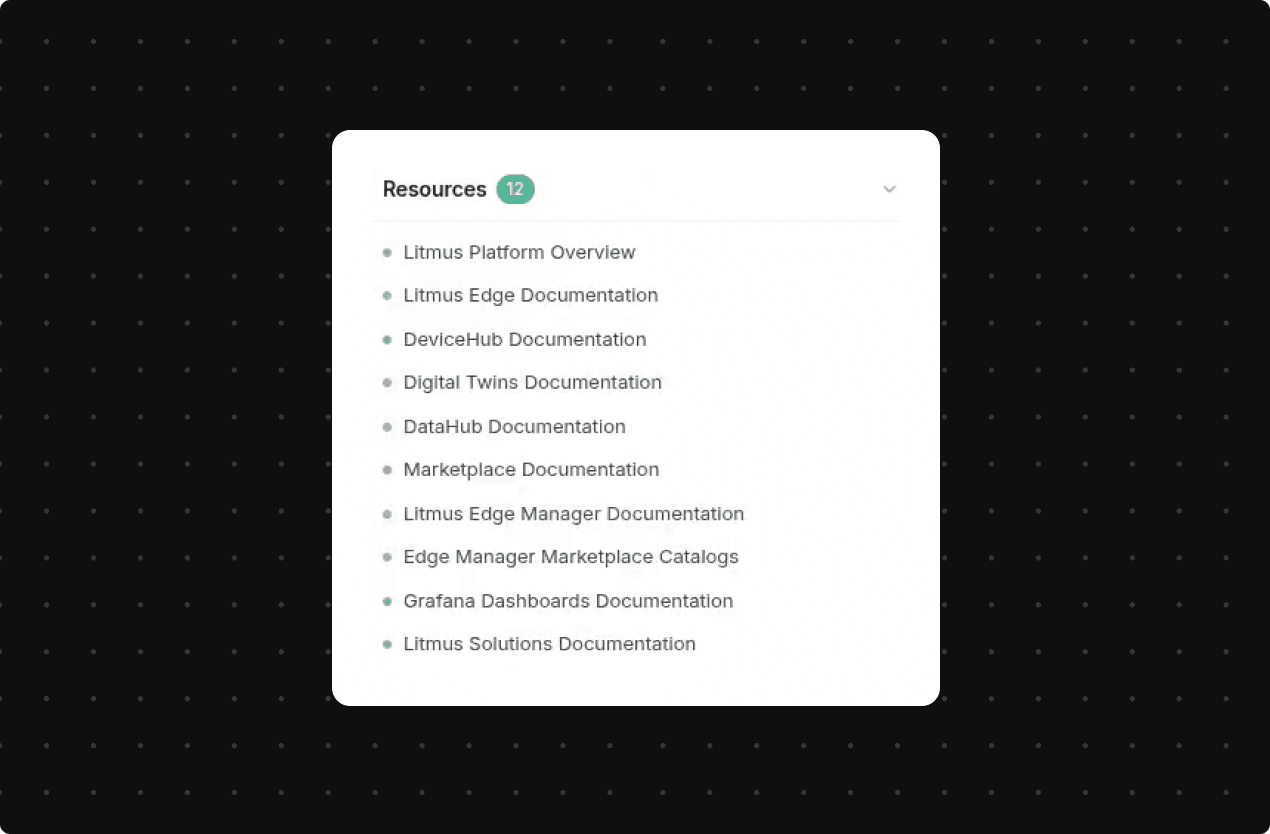
コンテナ事業
エッジアプリケーションはますますコンテナで実行されるようになっていますが、デプロイと監視は手作業で行われることが多くなっています。Litmus MCP Server はコンテナ操作を MCP ツールとして公開し、AI システムとオペレータが Litmus Edge 上で動作するアプリケーションを検査、デプロイ、検証できるようにします。
主な機能
主な機能
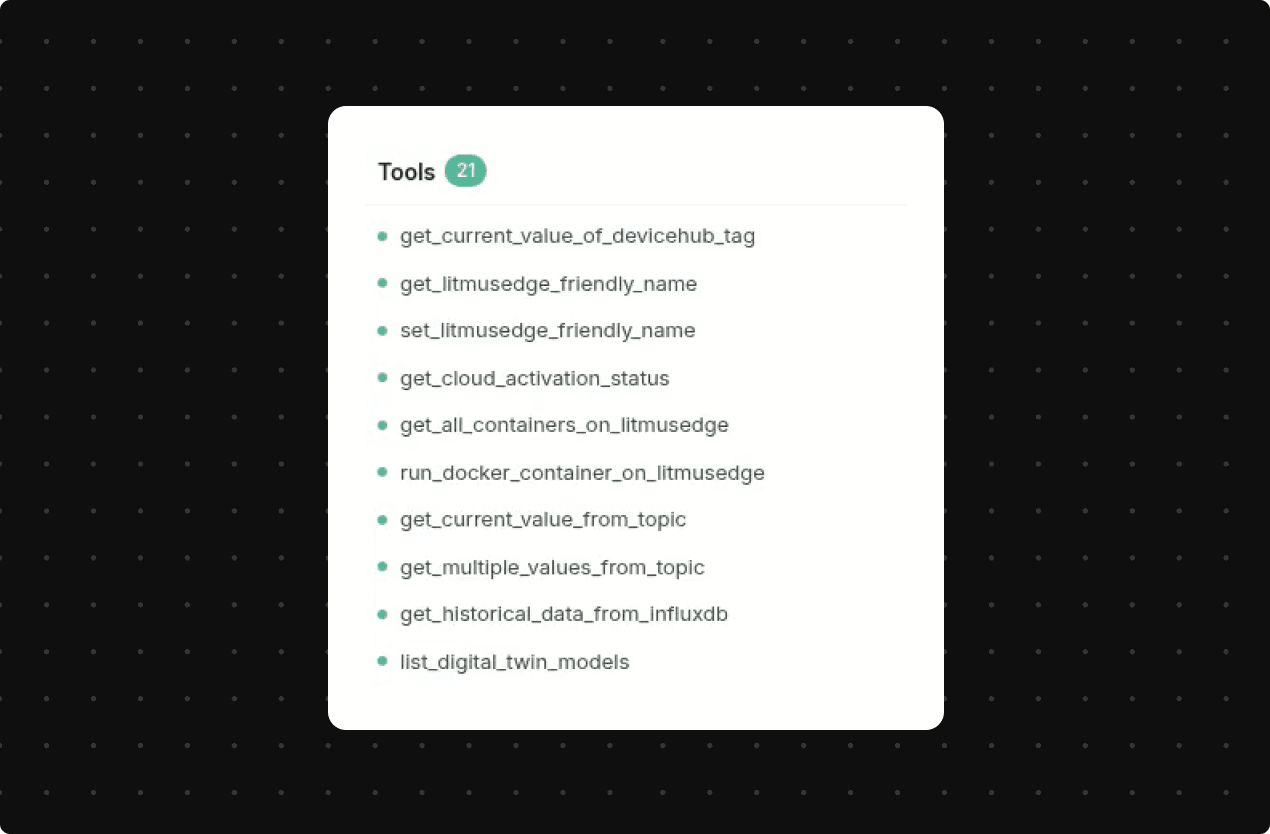
データモデル操作
プラントのコンテキストが構造化されていると、AI支援操作はより強力になります。リトマスMCPサーバーは、データモデルとアセットコンテキスト操作を公開し、AIシステムが生の信号だけでなく、アセット、階層、属性と対話できるようにします。
を提供します;
主な機能
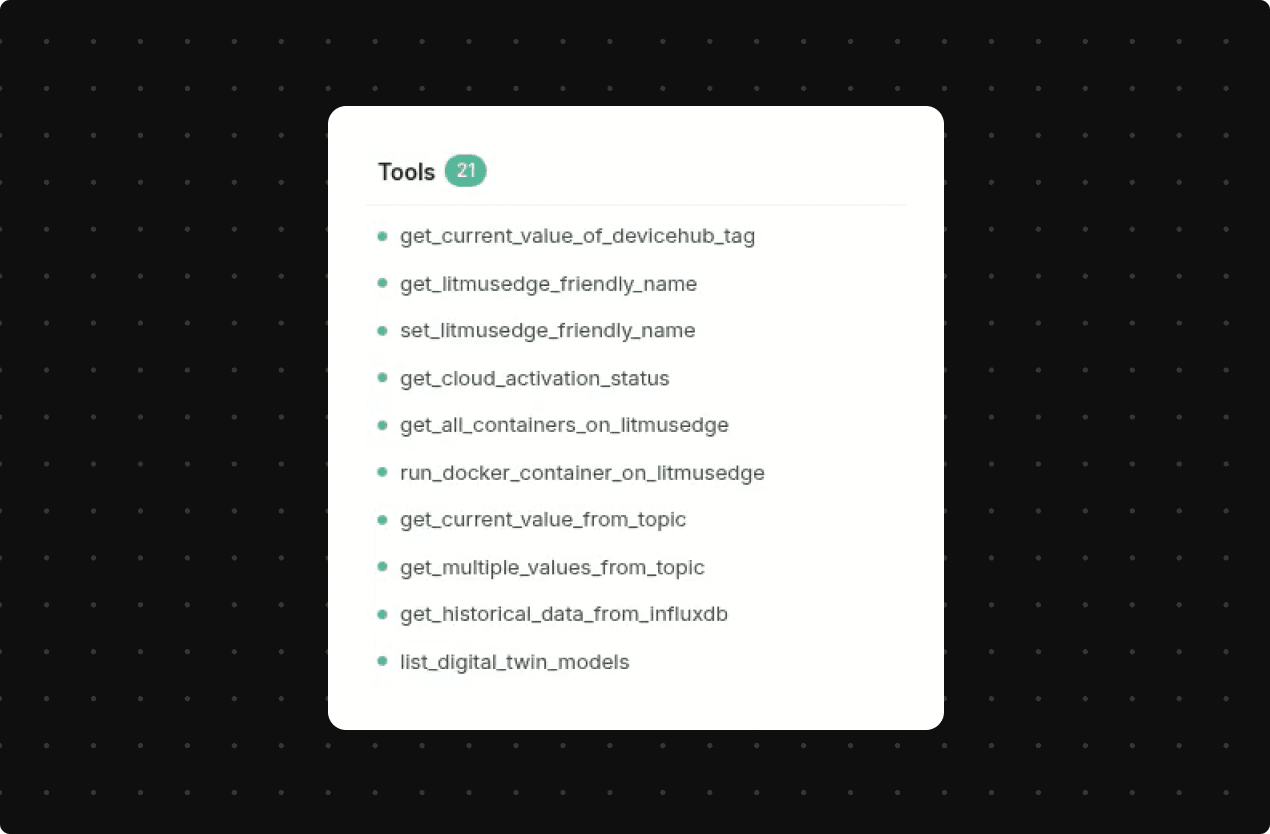
オープンMCPの互換性
Litmus MCP Server は Model Context Protocol 標準に準拠しており、AI システムと開発者環境がアクセスできる一貫したツールレイヤーを提供します。チームは、同じ操作インターフェイスを使用して、ブラウザチャット、開発者ツール、または自動化エージェントを通じて対話することができます。
主な機能
主な特徴
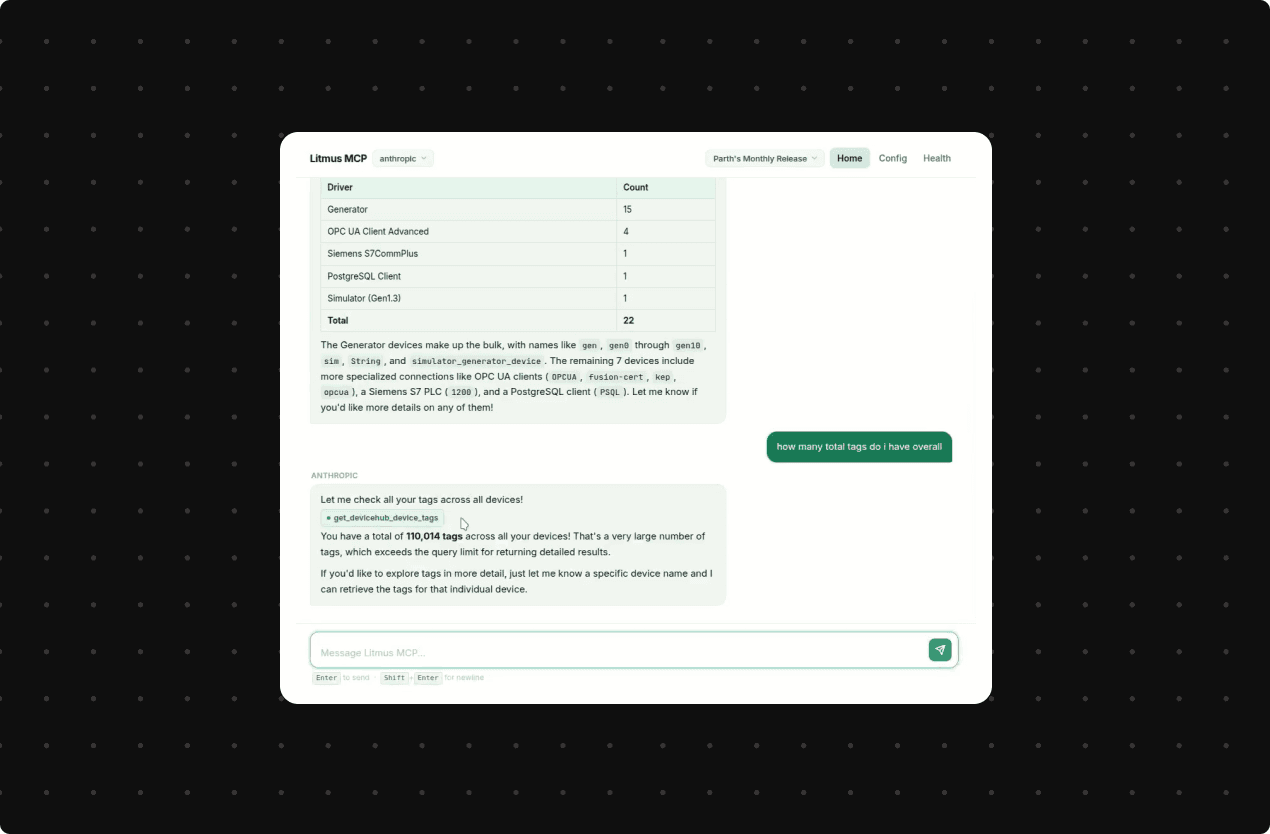
産業データに関するご質問への簡単な回答です