paper-machine-logo-512
Paper machine

Eight machine sections and a traversing QCS over OPC UA, where a stuck dilution valve quietly costs fibre on every tonne and then breaks the sheet two sections downstream.

v0.1.0

どのように動作しますか

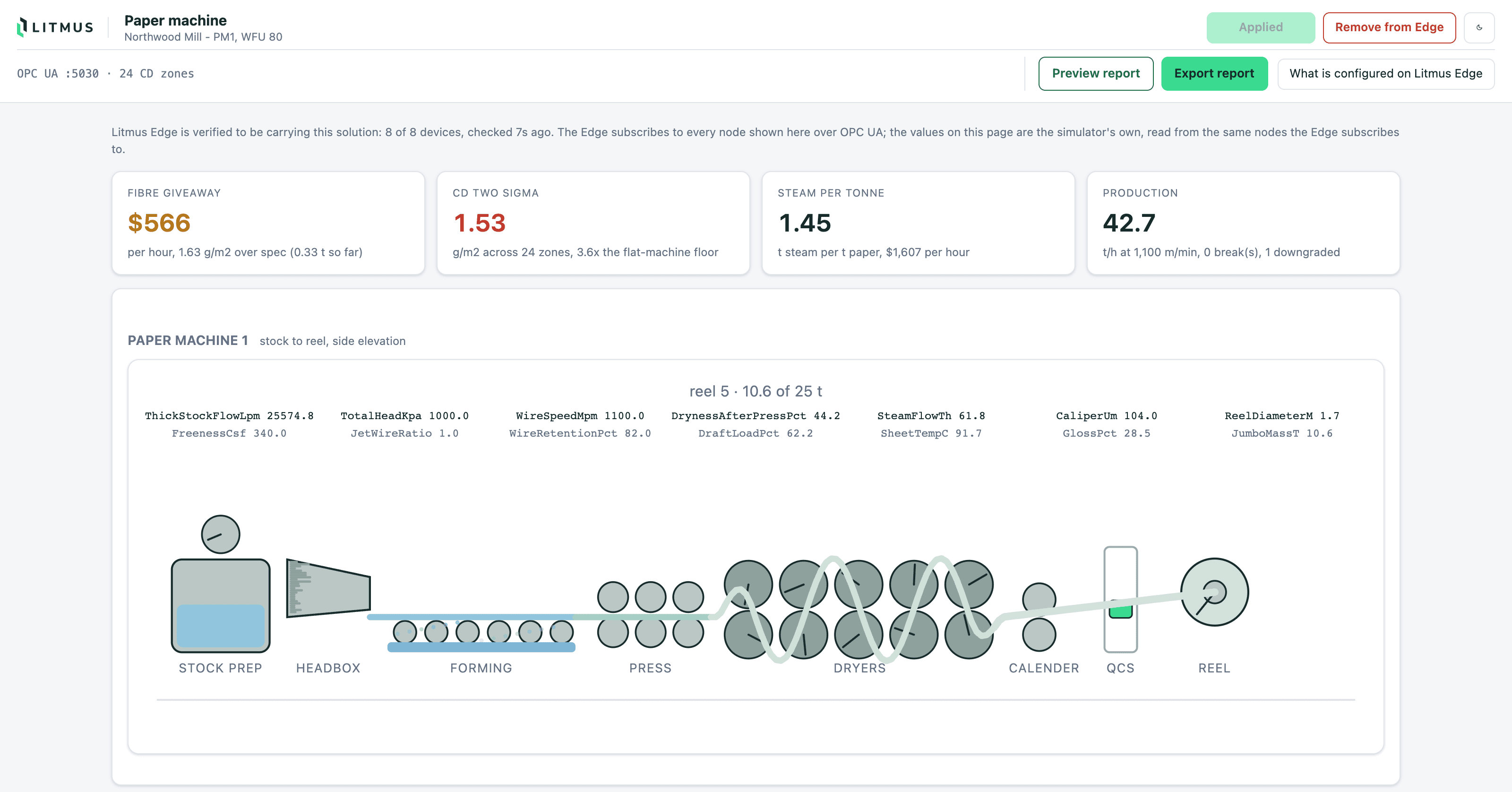
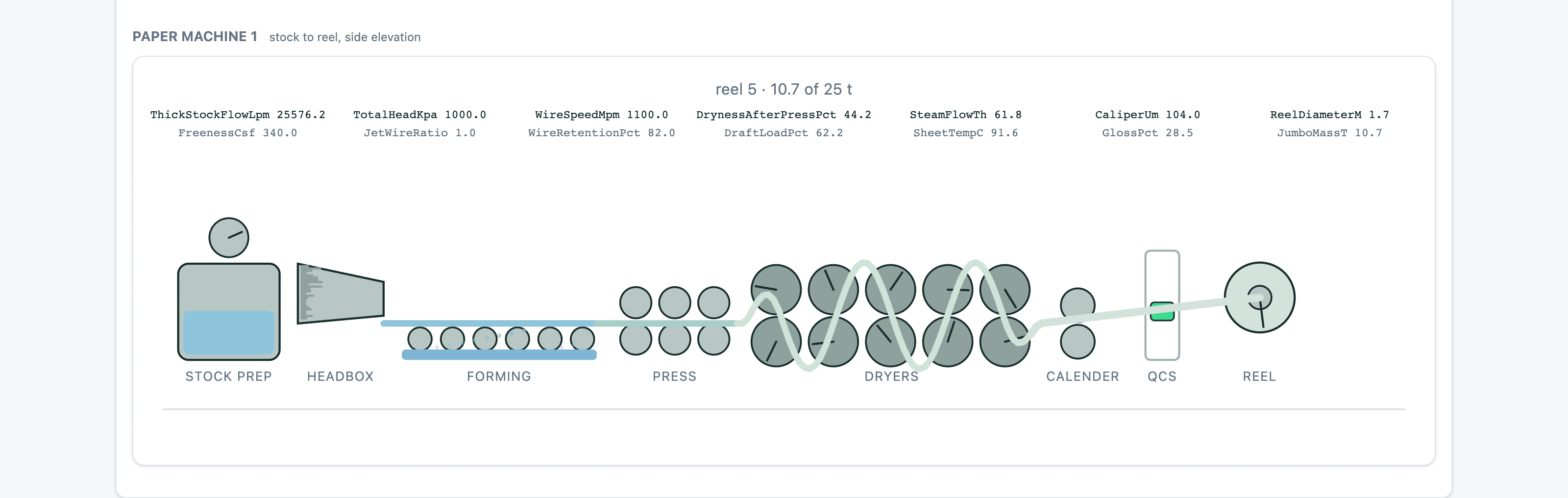
A fine-paper machine and its scanning quality control system: eight sections from stock preparation to the reel, 118 nodes, over OPC UA.

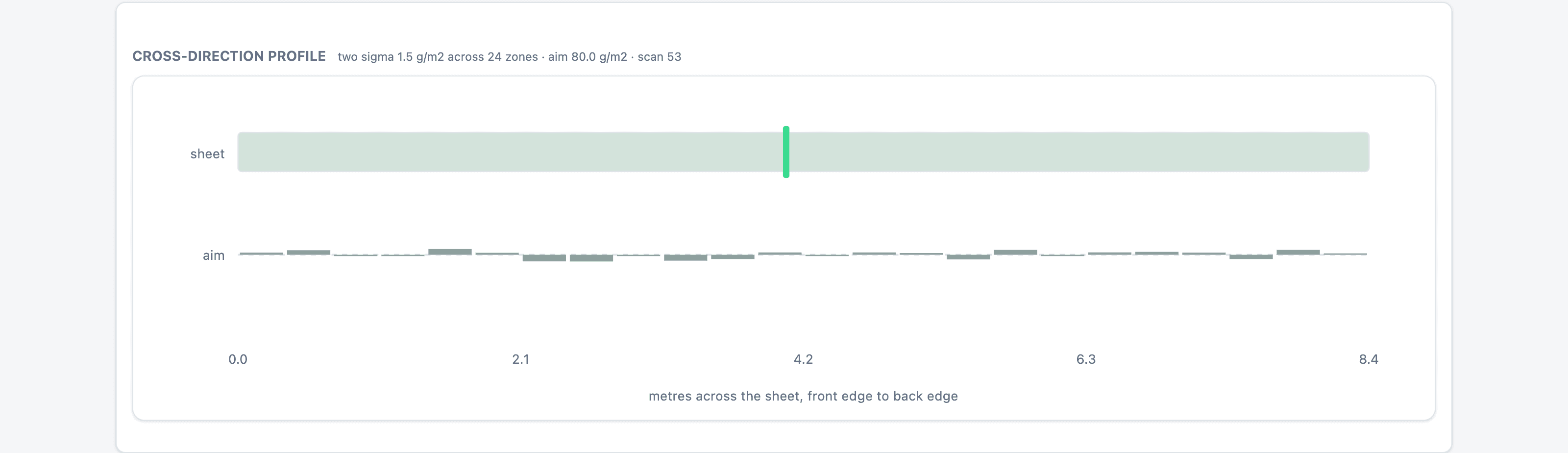
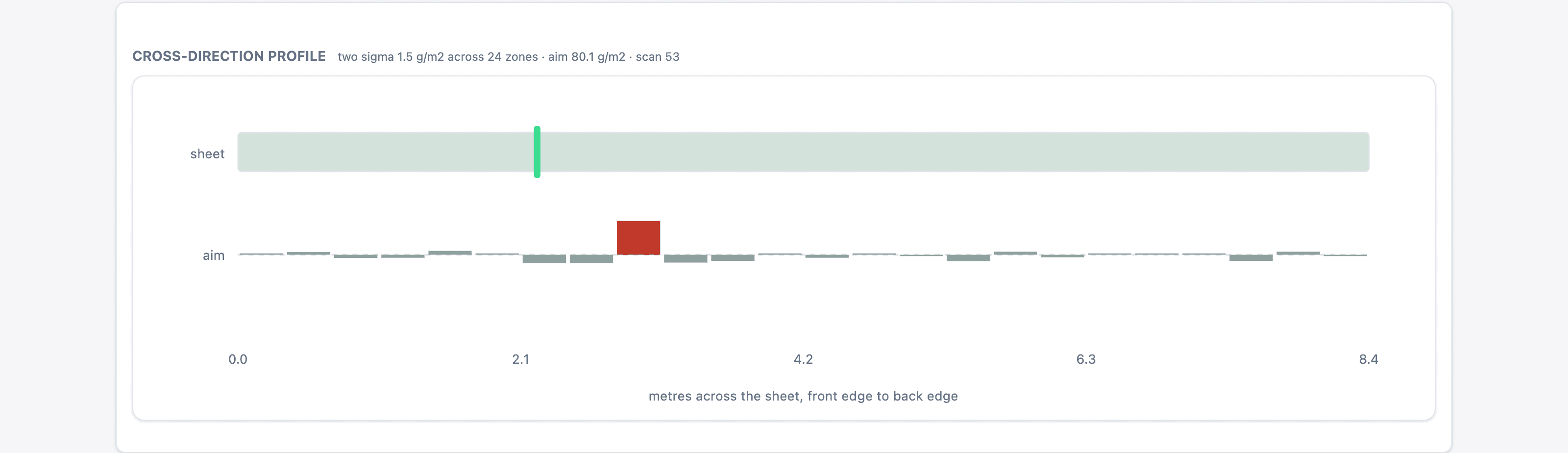
Every other continuous solution in this set reports a point value: a pressure, a level, a flow. A paper machine reports a profile. The quality control system drags a scanning head across a sheet 8.4 m wide moving at 1,100 m/min, so a single measurement is a curve across the sheet rather than a number. The operator view shows both axes, because a side elevation alone cannot show a profile: the machine along the top with the sheet threaded through it, and below it the sheet seen from above, one bar per dilution zone, with the scanner head drawn where it actually is.

Fibre giveaway is the first thing on screen, and it is not a fault anyone injects. Paper is sold by area and made by mass, so every gram per square metre above the customer minimum is fibre nobody paid for. The mill must keep the thinnest part of the sheet legal rather than the average, so the aim point is the specification minimum plus the profile spread plus a small operating margin. A machine that cannot hold a flat profile is forced to run heavier and pays for that margin on every tonne, all shift, with nothing alarming.

Inject a stuck headbox dilution valve and the chain runs on its own. A dilution valve does not affect only its own slice, so a controller cannot correct anything narrower than its own response width: cross-direction two-sigma goes from 0.43 to 1.55 g/m2 and one bar never returns to the line. The aim point follows it up within a scan or two and giveaway rises with it. The heavier slice is also a wetter slice, and the dryers are controlled on the scanner average, so the average comes right while the streak stays wet. A wet line through the sheet is a weak line, and the open draw between the press and the first dryer is where it lets go. The sheet breaks two sections downstream from the valve that caused it, with no fault injected there.

Two more scenarios: a mill steam header that sags, which the machine answers by trading speed for dryness rather than shipping wet paper; and a plugged press felt, which raises steam per tonne from 1.45 to 1.85 with quality and production untouched, which is exactly why it can run for months.

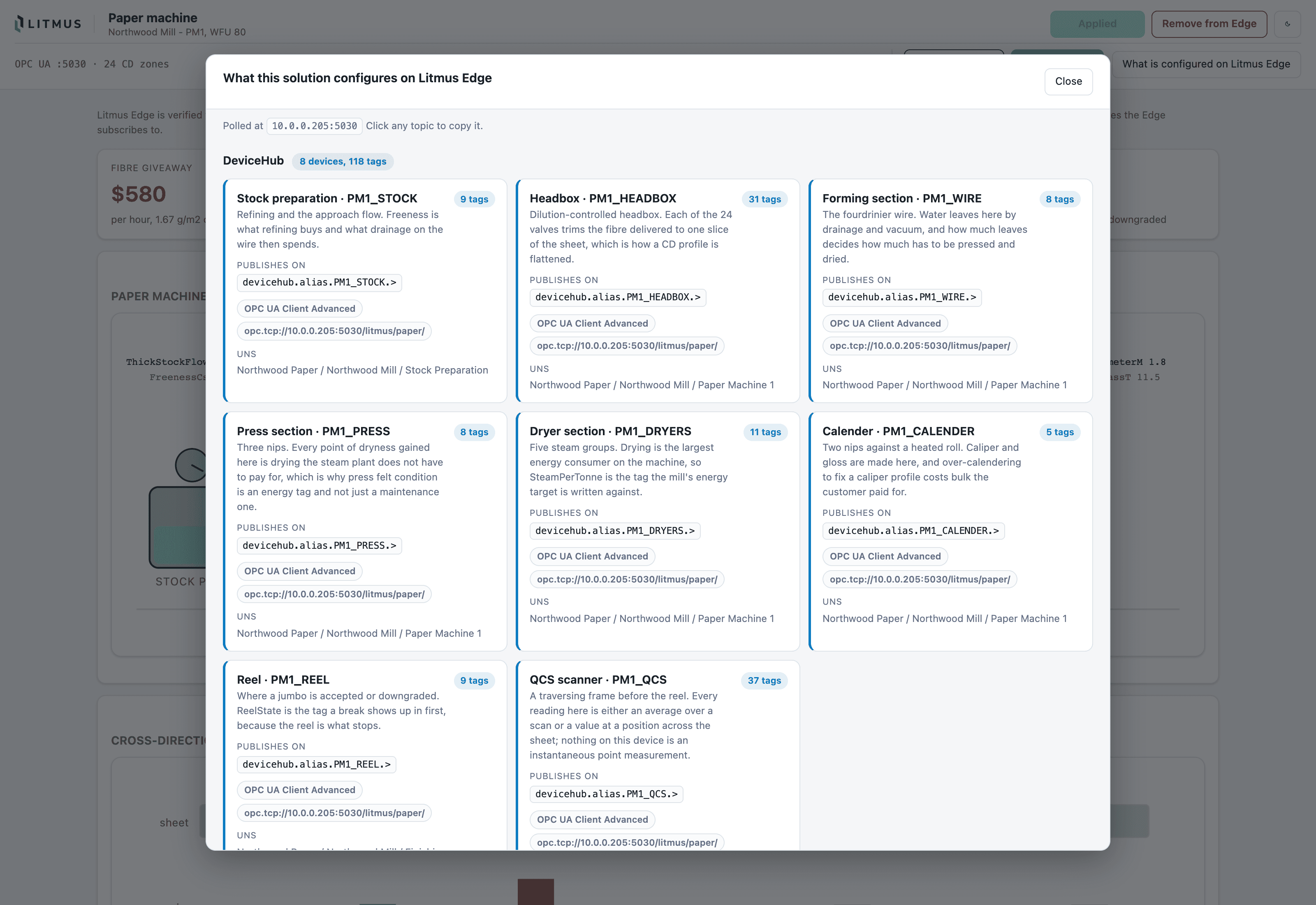
On startup the solution configures Litmus Edge itself: eight DeviceHub devices on the OPC UA Client Advanced driver, eight Digital Twin models with one instance each, and four Analytics groups. Every group is multi-input, because a single threshold on a single tag is what a SCADA alarm already does; the join is what the Edge is for. It removes exactly what it created.

Paper machine screenshot 1
Paper machine screenshot 2
Paper machine screenshot 3
Paper machine screenshot 4
Paper machine screenshot 5