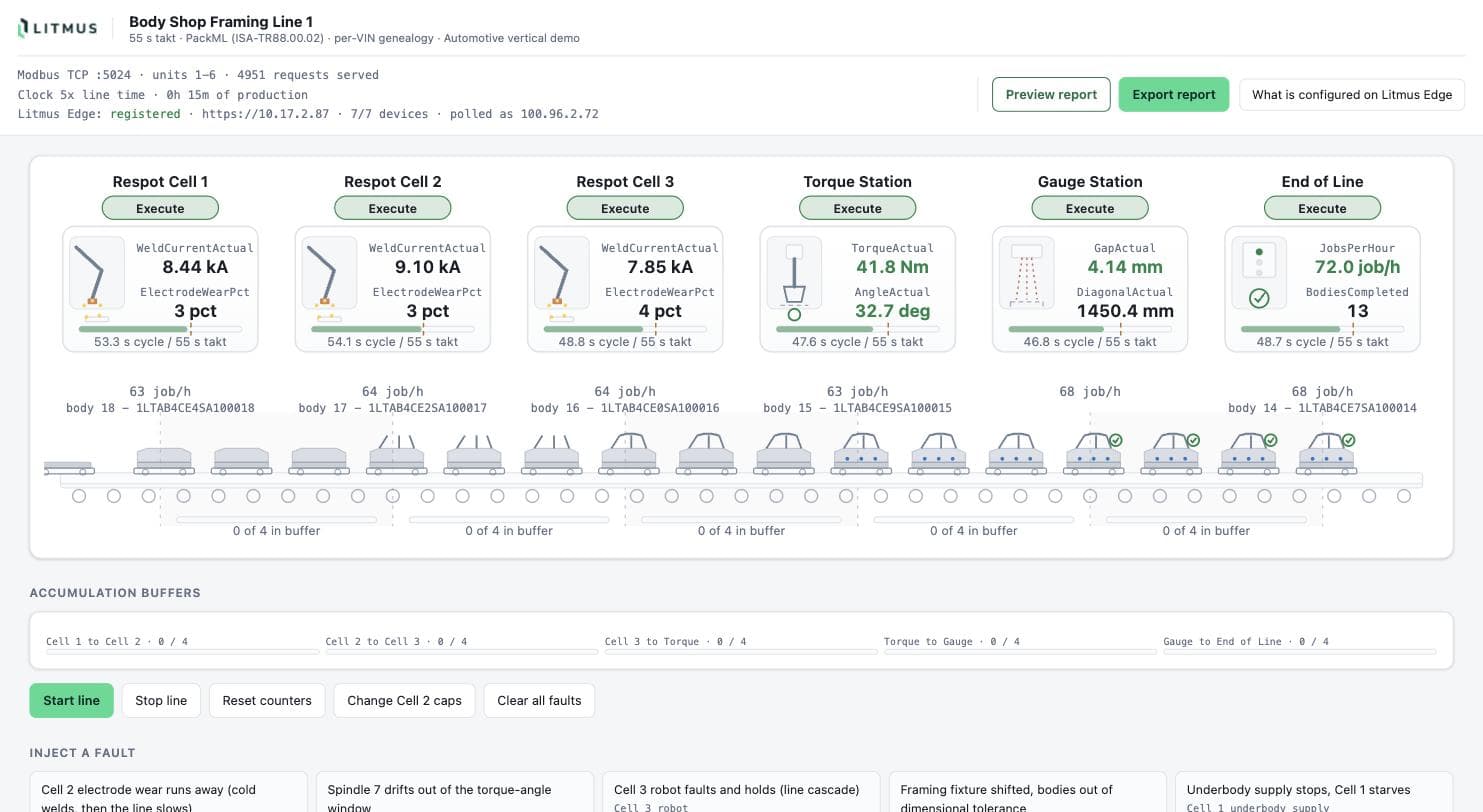
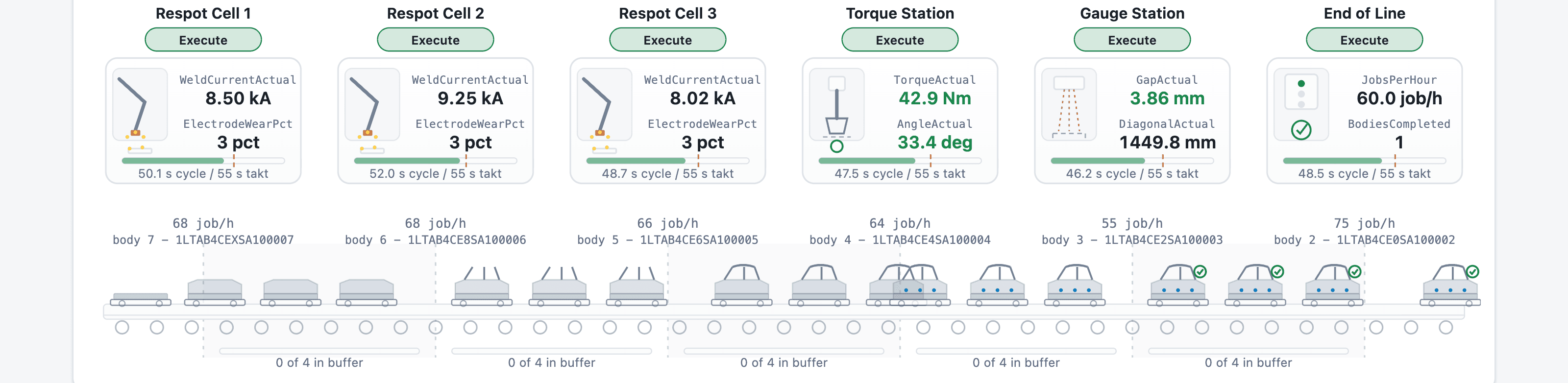
A seven-station automotive framing line speaking two protocols, where the tightening tool is a device in its own right.
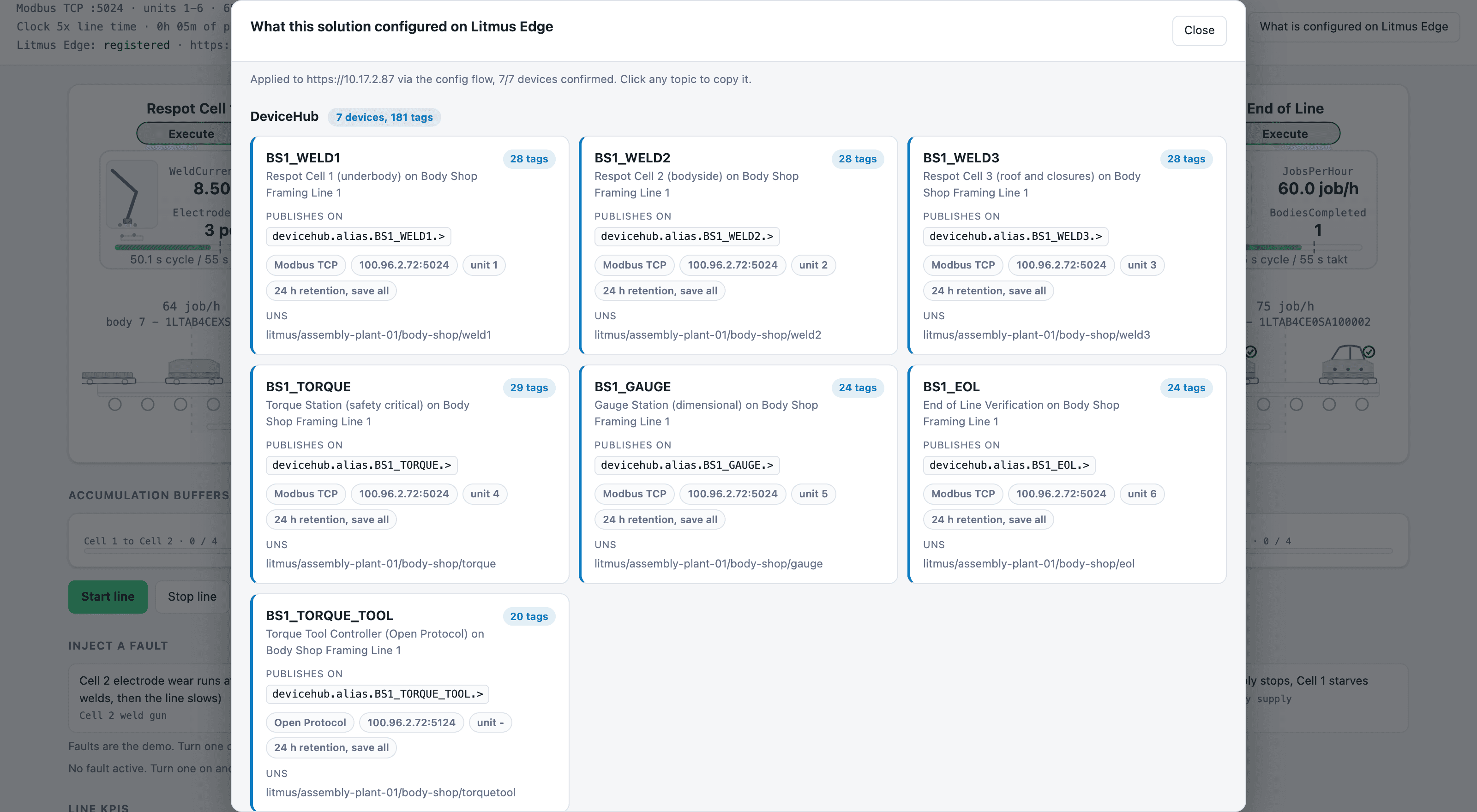
An automotive body shop framing line: seven stations welding and fastening one body at a time, 181 tags, over Modbus TCP with a tightening tool controller on Atlas Copco Open Protocol.
Two protocols on purpose. The tool controller's own field names are the domain model, so torque and angle arrive as the controller reports them rather than as numbers somebody mapped by hand.
On startup, and it removes exactly what it created when you are finished:
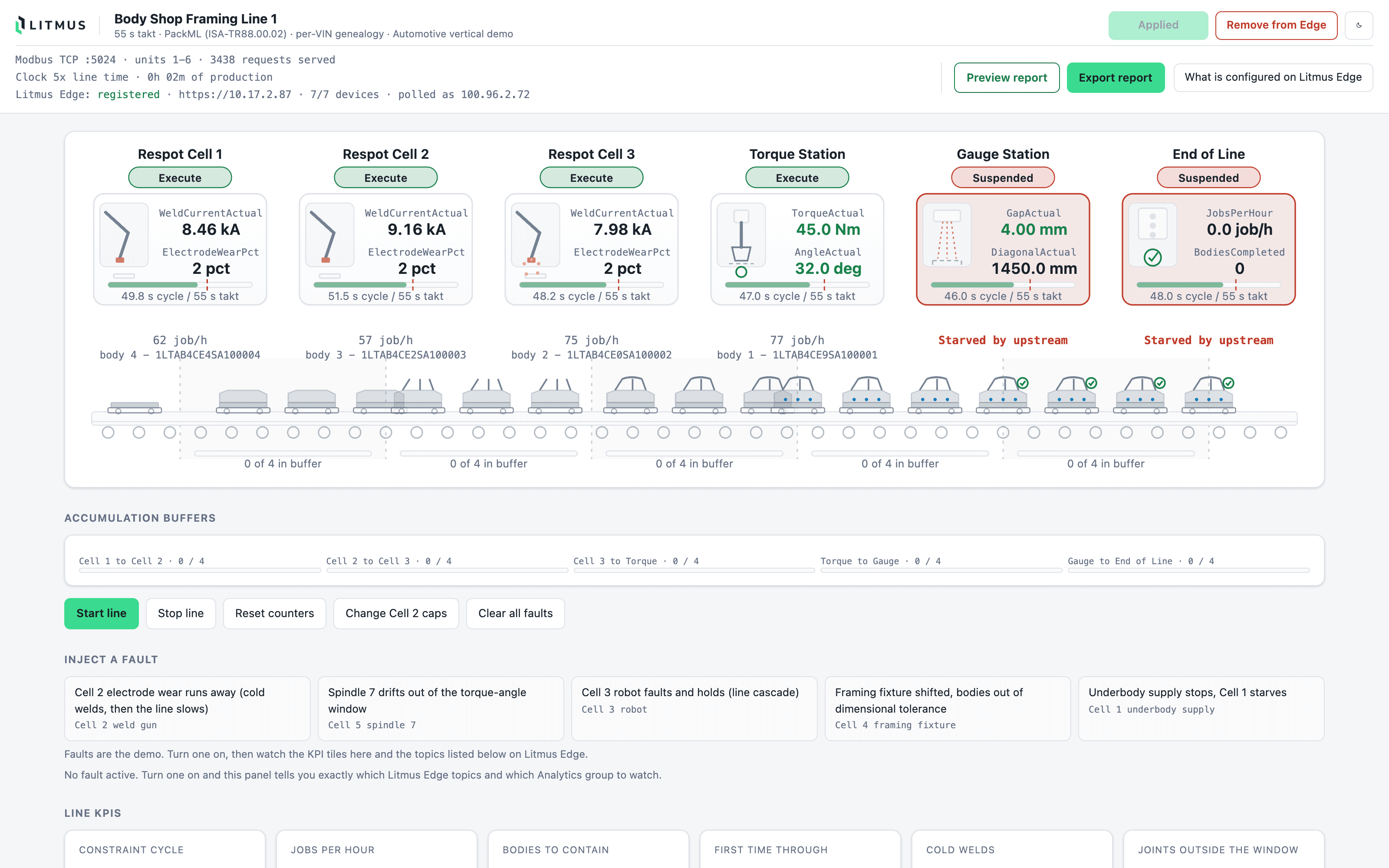
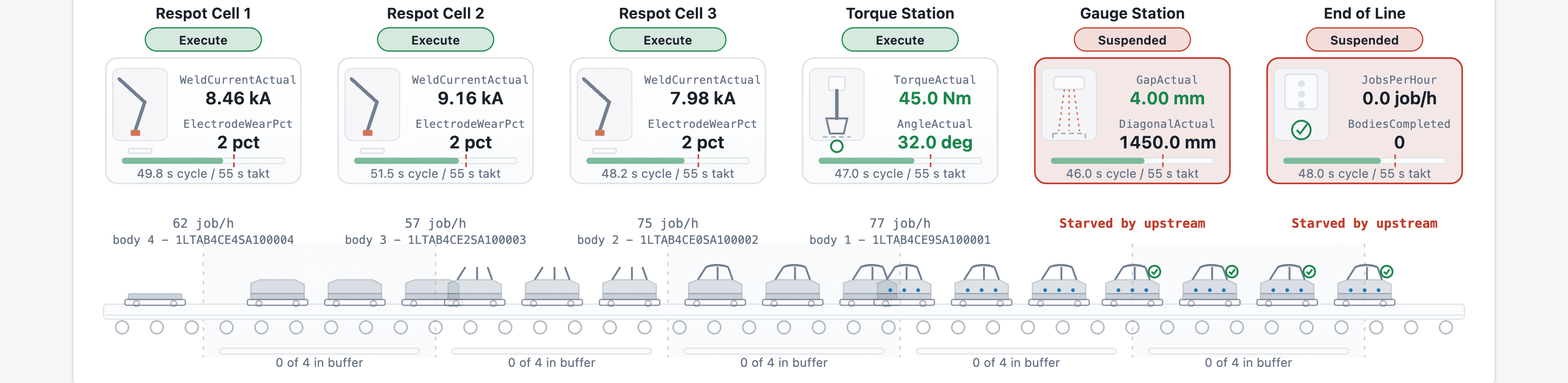


A six-machine bottling line, simulated end to end, that configures Litmus Edge itself and turns filler giveaway, CIP verification and downtime into money.

Camera inspection running on the Edge: fill level read from frames and published as tags, with a drift forecast for the filler.

The control panel for the whole set: start any solution, connect a Litmus Edge once, and provision or remove each one from its card.