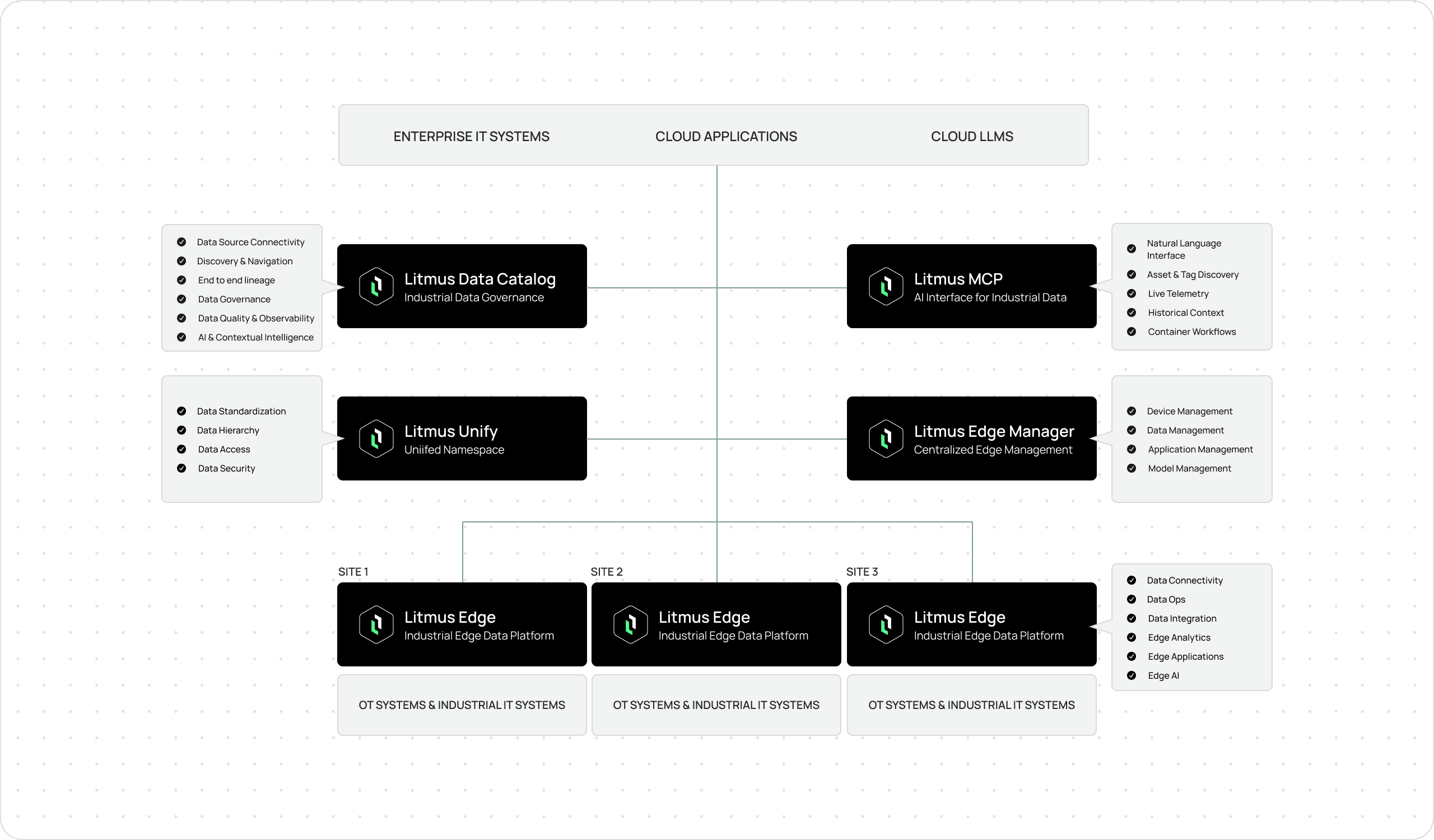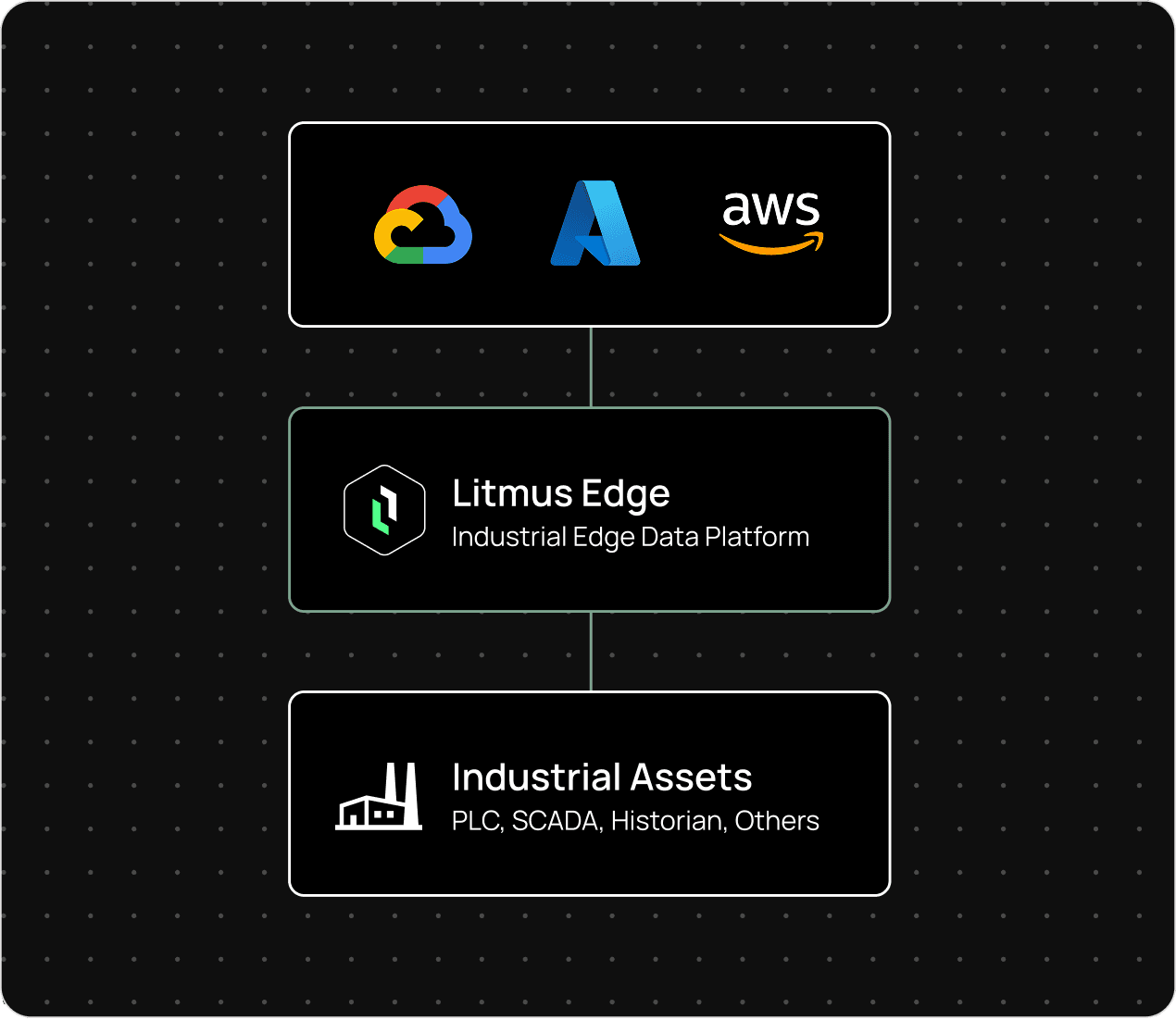









Industrial data must be connected, structured, governed, and distributed before it becomes usable for analytics and AI. The Litmus platform manages this lifecycle from data collection at the edge to enterprise consumption.

standardized industrial data architecture

optimized packing and volume tracking

standardized industrial data architecture

Real-time monitoring and corrective action

Integrated products that manage industrial data from edge data collection to enterprise governance.
Industrial Data Edge Platform
Connect, contextualize, and act on data at the edge
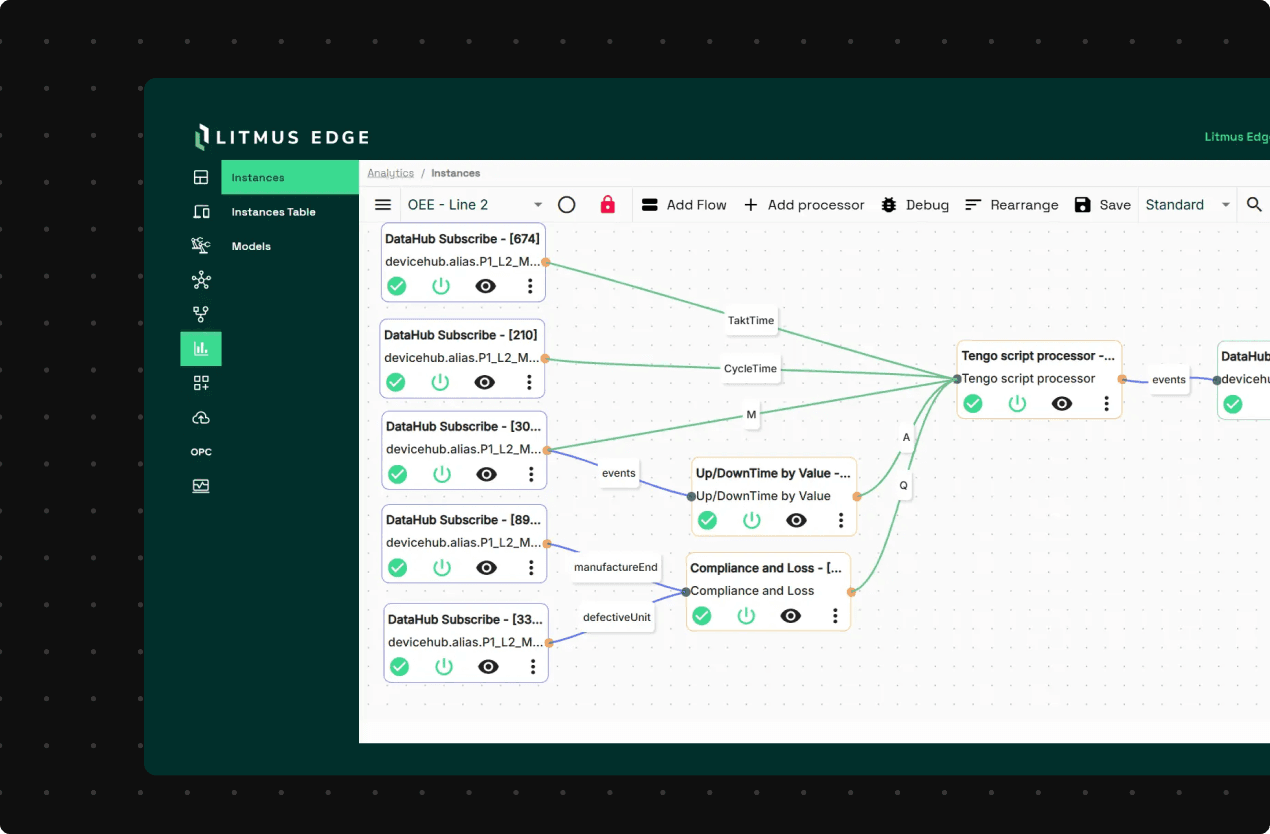
Industrial systems generate large volumes of raw machine signals that must be structured before they can support analytics or AI. Litmus Edge connects machines and industrial systems, transforms raw signals into contextualized operational data, and runs applications, analytics, and AI directly at the edge.
Key features:

Centralized Edge Management
Scale edge operations across sites from one control plane
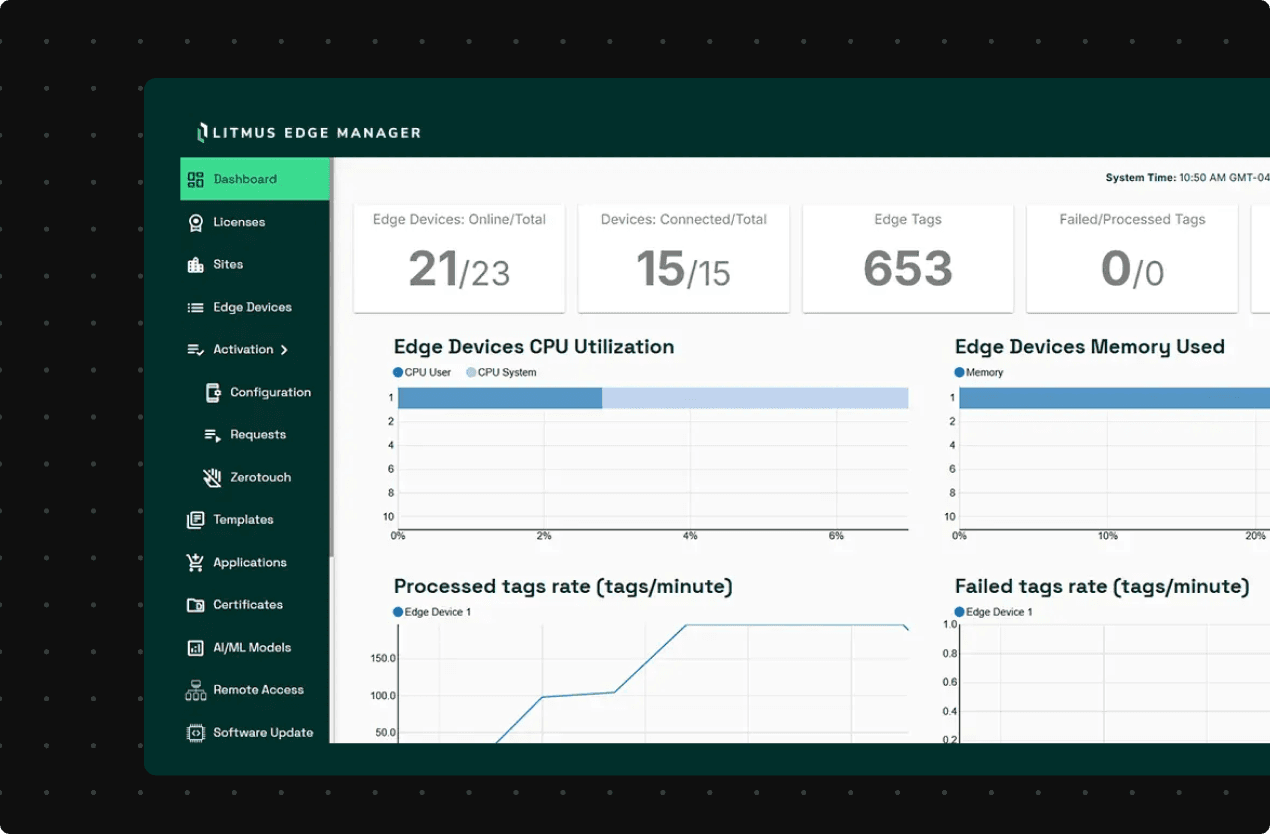
Managing hundreds of edge deployments across plants requires consistent configuration, monitoring, and governance. Litmus Edge Manager provides centralized control for distributed Litmus Edge environments, enabling teams to standardize deployments and manage applications, data models, and AI workloads across facilities.
Key features:

Unified Namespace
Govern real-time OT-IT data exchange
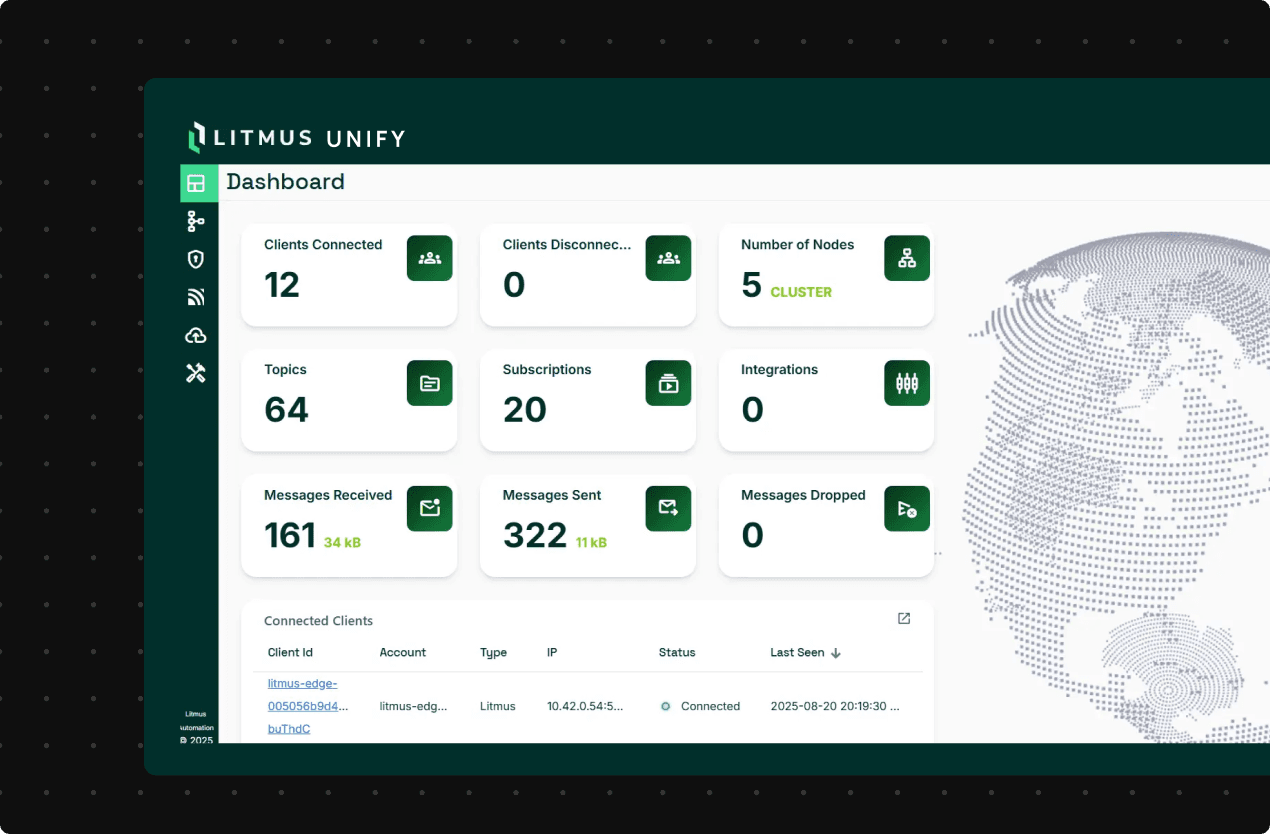
Industrial applications require consistent operational data across systems. Litmus Unify standardizes how data is structured, published, and consumed through a governed Unified Namespace, enabling applications, analytics platforms, and enterprise systems to access real-time industrial data without custom integrations.
Key features:

Industrial Data Discovery
Make operational data discoverable and trusted
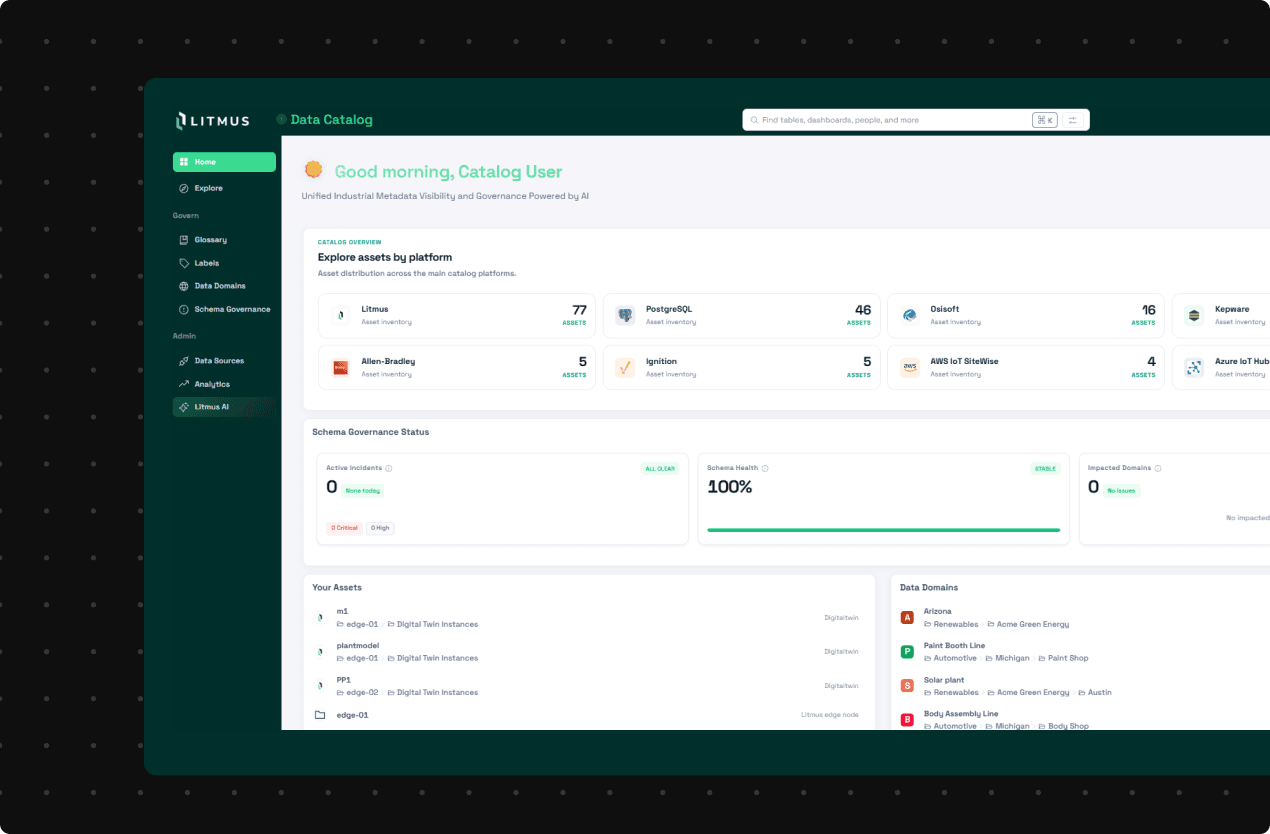
As industrial data environments grow, teams need visibility into metadata across systems, pipelines, and ownership. Litmus Data Catalog provides a unified metadata layer that enables teams to discover data, trace lineage, define shared terminology, and apply governance across OT and enterprise environments—so data can be understood, trusted, and used for analytics and AI.
Key features:

AI Interface for Industrial Data
Enable AI systems to interact with operational data
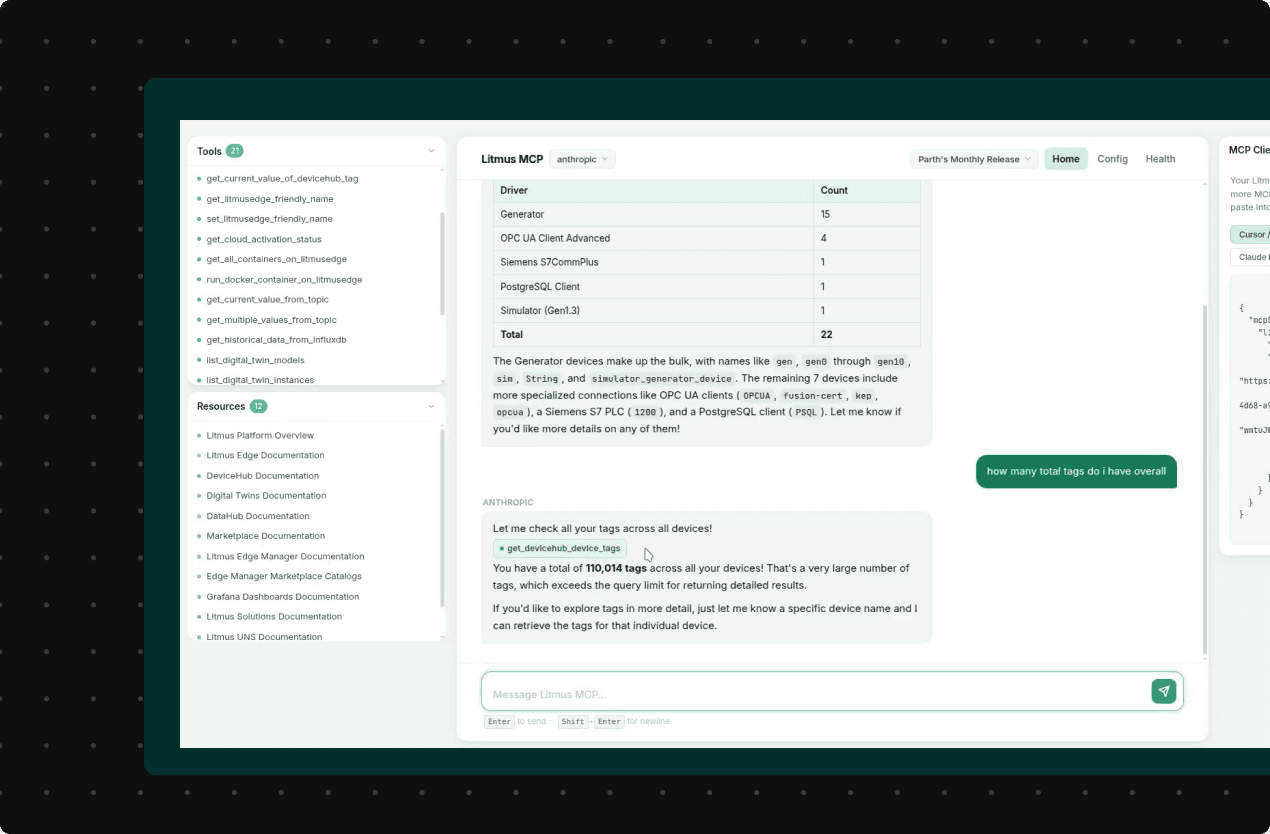
AI systems require structured interfaces to safely interact with industrial environments. The Litmus MCP Server exposes Litmus Edge capabilities through the Model Context Protocol (MCP), allowing AI assistants, applications, and agents to query operational data, monitor edge systems, and trigger workflows through a governed interface.
Key features:

Replace site-by-site integration work and point solutions. Connectivity, DataOps, UNS, governance, and AI in one architecture.
Run applications and AI close to machines with support for offline and air-gapped environments.
Standardize data models and deployments across plants consistently.
Integrate with existing OT / IT infrastructure, enterprise platforms, and cloud systems.
Industrial teams use Litmus to standardize data architecture across plants and scale analytics and AI in production environments.
Case Study
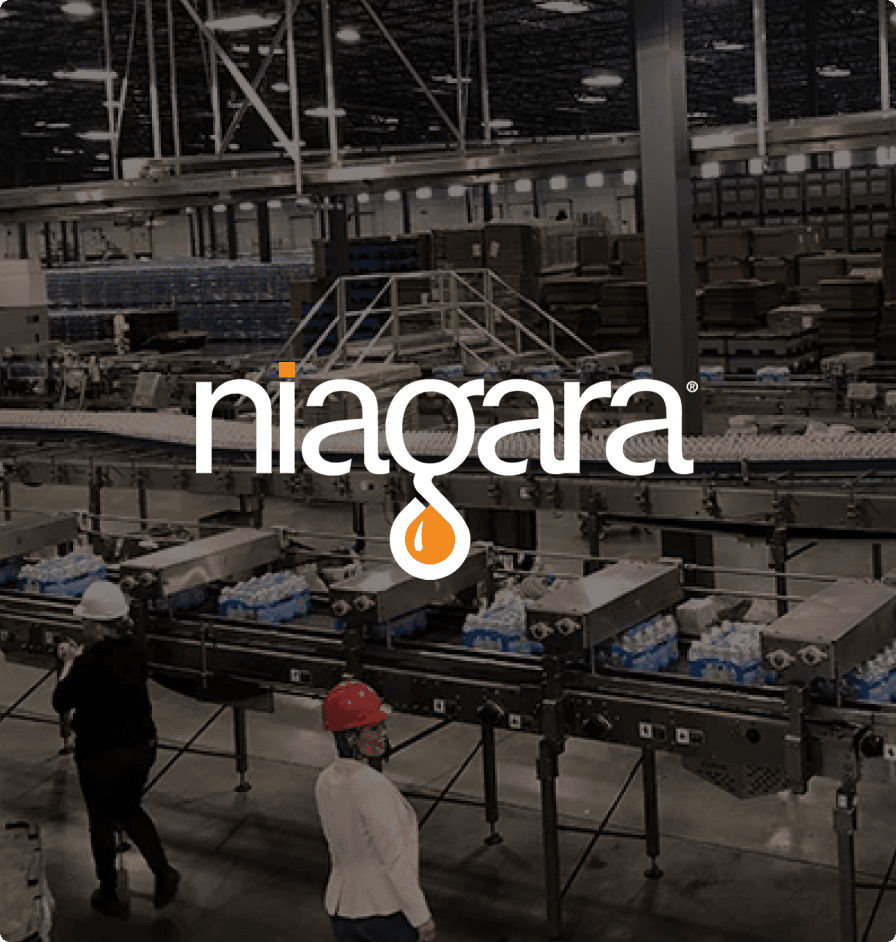
Niagara Bottling deployed Litmus Edge across 50+ plants to standardize industrial data from production lines and utility systems. Data is normalized at the edge and streamed to Databricks for advanced analytics and AI. This architecture establishes a consistent, trusted data layer across operations.
Impact:

Quick answers to your industrial data questions.